

.jpeg)
.png)
A new way of determining the phenotype of wheat is being tested by a master’s student at Montana State University (MSU), a project that could accelerate the process using technology.
Ricardo Javier, a second-year Master’s student in Plant Sciences and Plant Pathology, is testing aerial phenotyping to assess the plant growth and health in winter wheat breeding lines.
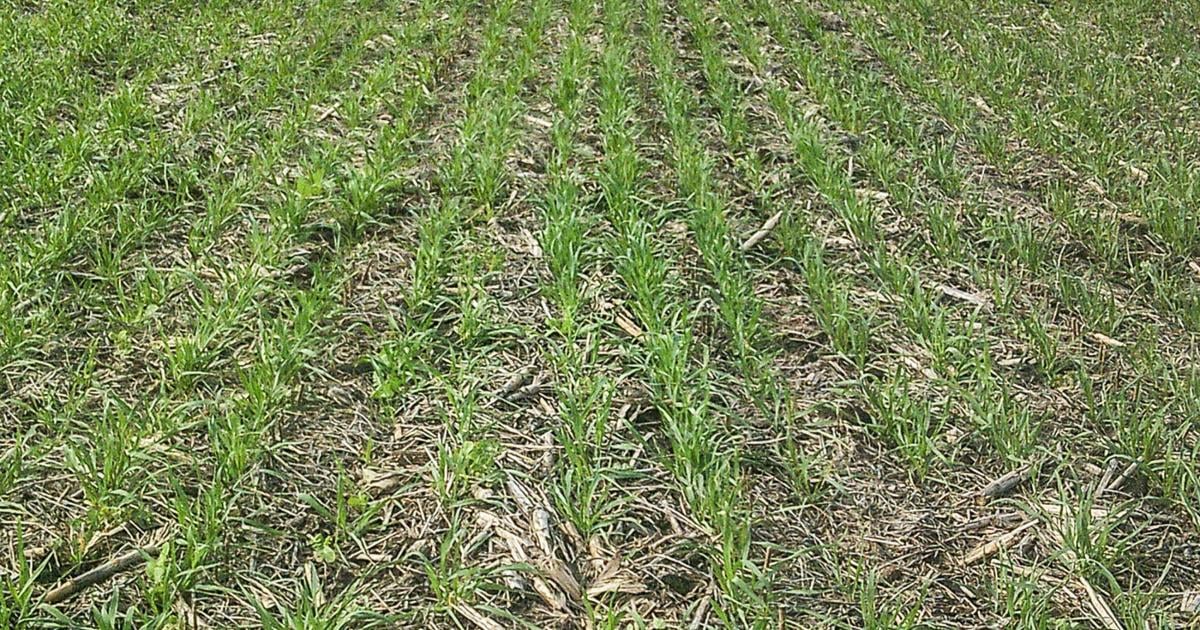
In wheat, phenotyping refers to the measurement and analysis of observable traits like growth, physiology, and biochemical properties. Phenotyping is crucial for understanding how wheat plants respond to different environments and for breeding new varieties with improved traits.
“The main focus of my project is to estimate grain yield, plant biomass, and disease severity using unmanned aerial vehicle (UAV) imagery,” Javier explained. “The disease measured in this study is Fusarium head blight (FHB), a disease with some recent outbreaks in Montana.”
Javier took biomass and grain yield data samples at the Arthur H. Post Agronomy Farm in Four Corners, Mont., while the FHB severity data was collected in the Southern Agricultural Research Center in Huntley near Billings, Mont.
“The images were taken with a M200 drone with a Multispectral RedEdge-P sensor. These images were assembled in orthomosaics in the six different light bands, through which a value of each plot of the field was extracted,” he said. “The different values were used to calculate vegetation indices (VIs) to estimate the plant health and growth. These VIs will be compared using machine learning (ML) models to the real values of grain yield, plant biomass, and FHB severity.”
In addition to seeing if the UAV imagery will work, the project will also see how accurate the ML models are.
“The idea is to measure how accurate the ML models are in predicting these traits using VIs,” Javier said. “The use of aerial phenotyping coupled with ML models can help the Winter Wheat Breeding Program to improve selection accuracy and rate of variety release, focused on productivity and disease resistant phenotypes.”
Be the first to know
Get local news delivered to your inbox!



.png)
