

.jpeg)
.png)
Canola prices were relatively strong the two weeks prior to Aug. 12, when China announced a 75.8 percent tariff on Canadian canola imports in retaliation for tariffs imposed by Canada on sectors of its economy last year. Canola futures immediately dropped the limit of CAD $45 per metric tons (MT) on the news but recovered to close down $30 per MT on the day.
Several news sources reported that China, the world’s largest canola importer, will be unable to replace the canola supplied to it from Canadian imports as there is simply not enough canola to be had from other exporting countries. Australia produces less than a third of the canola produced in North America and most of it is exported to the European Union, but changes in trade flows are expected in reaction to the tariff announcement. One such change is the expectation that more Canadian canola will be exported to the United Arab Emirates where it will be crushed and the resulting oil and meal will then be exported to China.
Canola export predictions for the coming year had been pared back before this announcement as the supply of canola is expected to be much tighter. Exports were predicted to drop from 9 million metric tons (MMT) to 6 MMT. Canola production in Canada is projected to be 17.8 MMT, according to Agriculture Canada, while private analysts have higher estimates of 18.6 to 20.2 MMT. Still, the tariff is likely to cause a substantial increase in canola ending stocks according to industry analysts.
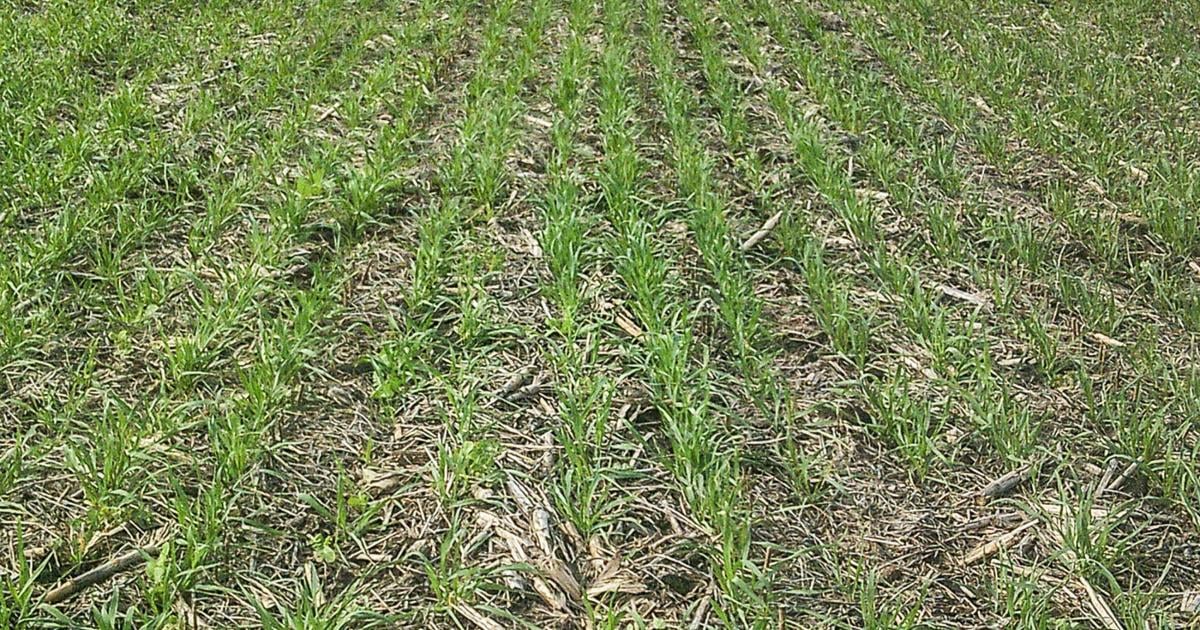
Weekly crop progress reports as of Aug. 10 show that 70 percent of the canola in North Dakota is coloring, similar to last year. Crop ratings indicate 69 percent of the crops are in good/excellent condition, compared to 75 percent last year at this time. However, this has been an improvement from 57 percent two weeks ago. The crop ratings have improved in the last two weeks due to cool, wetter conditions. Overall, the canola crop remains slightly below last year’s condition ratings and slightly ahead of last year’s maturity.
In Montana, the canola crop continues to show poorer conditions as the USDA indicates 10 percent of the crop is rated good/excellent, an improvement from 6 percent in the last two weeks. However, this is still a large drop from last year’s 60 percent. Condition ratings have improved somewhat as industry analysts have been expecting, but the ratings continue to show a significant drop from last year.
The Energy Information Administration reported that 142 million pounds of canola oil was used for biofuel production in May, down from 397 million pounds last year. Through the first five months of the year, canola oil use for biofuels has dropped 56 percent. Usage is expected to pick up in the latter half of the year. While canola oil use struggles to rebound, soybean oil use appears to be recovering sooner, as the 1.025 billion pounds used in May was almost on par with one year ago use of 1.076 billion pounds. Still, soybean oil use is down 21 percent for the first five months of the year compared to last year.
The November ICE canola futures closed on Aug. 13 at $659 per MT, up $9.50 on the day but down $37 in the last two weeks. The January ICE canola futures contract closed at $672 per MT, up $9.70 on the day but down $35 in the last two weeks. Canola has recovered some of its initial losses from the China tariff announcement as of Aug. 13.
Local cash prices on Aug. 13 at nearby crush plants ranged from $20.45 to $21.14 for August and September deliveries, down approximately $1.12 per hundredweight in the last two weeks. October and November canola prices ranged from $20.12 to $21.39, down $1.15 to $1.50 per hundredweight in the last two weeks.
Be the first to know
Get local news delivered to your inbox!









.png)
