
 1 hour ago
3
1 hour ago
3

.jpeg)
.png)
Press play to listen to this article
Voice
Agricultural drones have become a practical farm technology rather than a laboratory curiosity, giving producers new ways to inspect crops, map field conditions, and apply selected inputs with greater precision.
For African agriculture, their importance is especially clear because drone services can provide access without requiring every farmer to purchase and maintain expensive aircraft, batteries, sensors, software, and supporting equipment.
Monitoring drones can help farmers identify unusual crop patterns, while spraying drones can distribute permitted agricultural products over fields where aerial access offers operational advantages. These applications can complement established agronomic practices.
The technology does not automatically guarantee higher yields or lower costs. Results depend on crop type, farm scale, operator skill, regulations, equipment quality, weather, maintenance, and the availability of dependable technical support.
This guide examines what agricultural drones actually do, how farmers can choose between ownership and services, the costs involved, regulatory considerations, operational barriers, maintenance requirements, and practical ways to measure their value.
What Agricultural Drones Actually Do
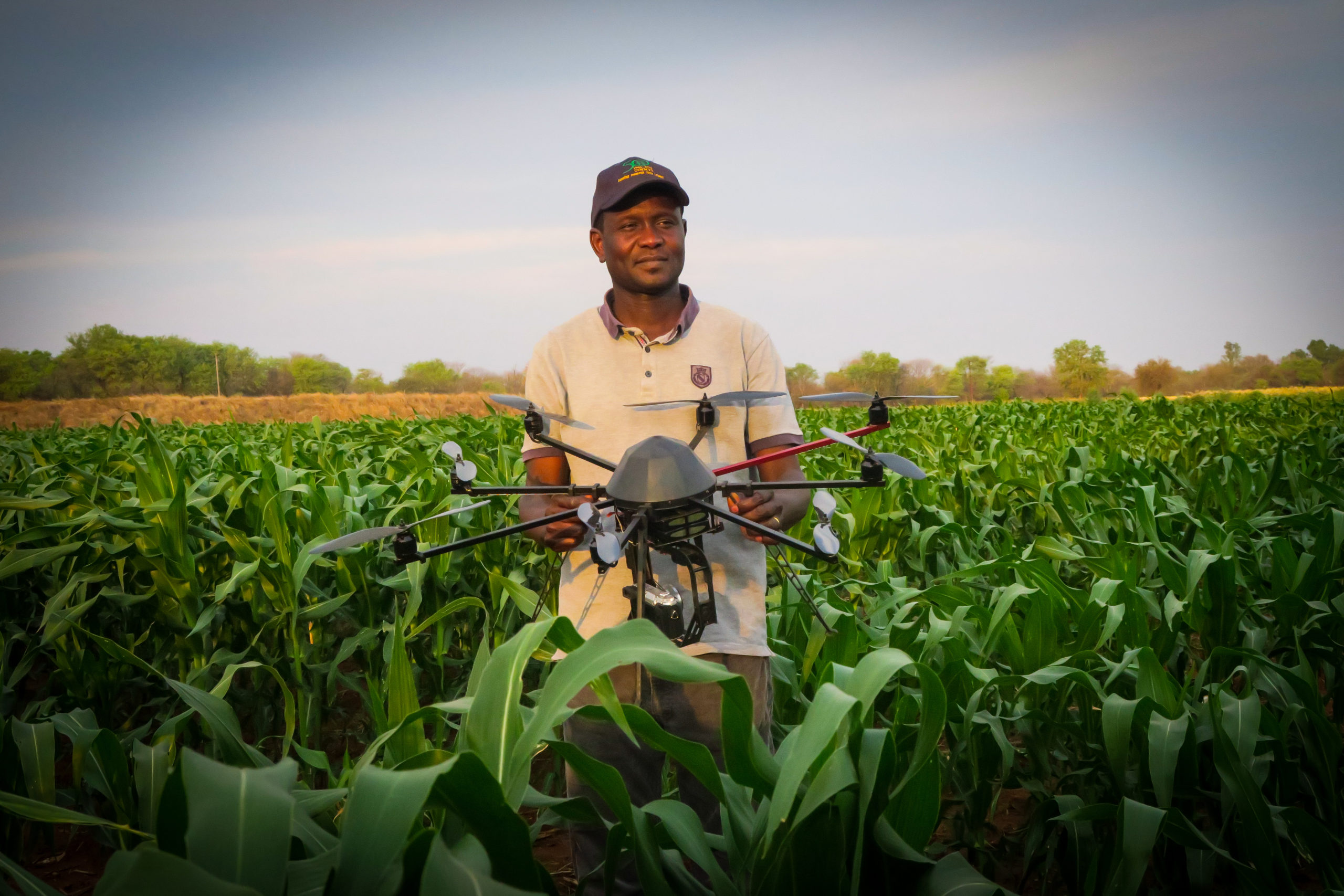
Agricultural drones are unmanned aircraft designed to collect field information or deliver farm inputs with greater speed and precision. Their practical value depends on choosing the right drone for each job.
🌿 Go Organic on Your Farm: Instead of harmful chemical pesticides and fertilisers, try our organic farming products — including neem oil spray, bio-pesticides, natural plant treatments, organic seeds and seedlings, suckers, and many more organic products that are safe for your health, your family, your soil and your harvest. Shop Now →
Spraying drones carry tanks, pumps, and nozzles that distribute pesticides, fertilizers, biostimulants, or other permitted agricultural products across crop areas. Their aerial position helps operators reach difficult terrain and growing crops efficiently.
Monitoring drones perform a different role by carrying RGB, multispectral, thermal, or other sensors. They capture aerial images that can reveal crop variation, water stress, unusual growth, or potential management problems.
Multispectral imagery can support vegetation analysis by showing differences that ordinary photographs may not reveal. When processed correctly, these images help farmers identify field zones that deserve closer inspection or targeted management.
Drone monitoring can cover large areas far faster than walking every field manually. This does not replace agronomic judgment, however, because collected images still require suitable interpretation, field verification, and timely management decisions.
🔧 Free Farm Tool Available: Use our free Agric4Profits Farm Tools to calculate your farm profits, formulate feeds, identify pests and diseases on both your crops and animal farms, plan your planting and harvesting season, including many more farm tasks to get free expert advice and recommendations — completely free, no registration required. Access Free Tools →
Spraying and monitoring can also work together as one workflow. A monitoring flight can identify suspected problem areas, after which a spraying drone can treat those locations more selectively instead of applying inputs uniformly.
The technology therefore connects naturally with precision agriculture, where management decisions are based on field variation rather than treating every part of a farm identically. This approach can improve efficiency when data quality is dependable.
For African farmers, the most useful question is not whether drones are impressive, but whether their specific crop, terrain, labor situation, and service availability justify using them. Practical farm economics should guide adoption.
How to Get Started the Right Way
Farmers considering agricultural drones should begin by defining the exact problem they want technology to solve. Monitoring, spraying, mapping, and scouting can require different equipment, software, training, and operating procedures.
Start with farm size, crop type, field structure, terrain, and expected annual drone use. These factors help determine whether purchasing equipment is sensible or whether paying a service provider offers better value.
💬 Have a Farming Question? Join thousands of farmers across Africa on the Agric4Profits Community — ask questions, share experiences and connect with agricultural experts. It is completely free. Ask Your Question Now →
A smaller farmer may gain more from booking a trained drone operator during critical spraying or scouting periods. This avoids tying up capital in batteries, maintenance, training, insurance, and equipment that may remain idle.
Larger commercial farms should calculate expected annual operating hours before purchasing. Compare equipment depreciation, labor, maintenance, training, insurance, energy, software, and downtime against what equivalent external drone services would cost.
Before any commercial operation, confirm the rules that apply in the country where the drone will fly. Requirements can cover registration, pilot competency, operating permissions, airspace restrictions, and agricultural chemical application.
Choose an established local service provider when outsourcing, and ask for evidence of relevant training, equipment maintenance, insurance, regulatory compliance, and previous agricultural work. Clear documentation helps reduce operational and legal uncertainty.
Farmers who purchase equipment should prioritize agricultural models designed for spraying or mapping. Purpose-built systems normally provide more suitable payload capacity, navigation, batteries, pumps, software, and field durability than adapted consumer drones.
Finally, begin with a measurable pilot project. Record treatment area, input quantities, labor time, pest observations, crop response, service cost, and operational problems so the farm can judge whether adoption creates genuine value.
Read Also: Precision Agriculture Guide: What You Need to Know
Genuine Efficiency Gains: The Numbers Behind the Technology
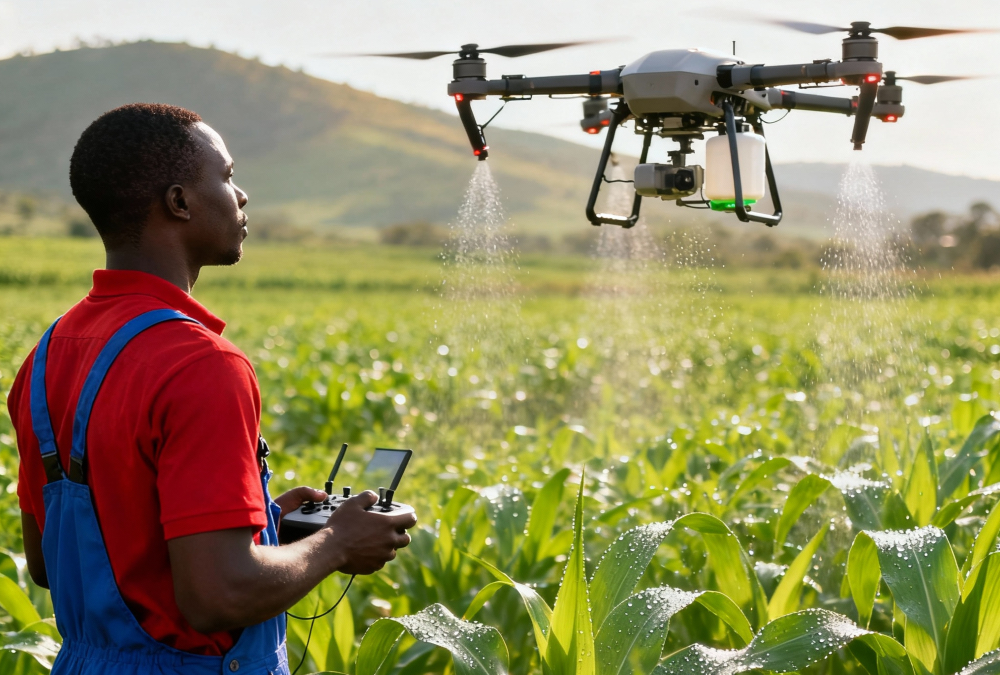
Drone technology can improve field efficiency by reducing the time required to inspect crops or apply selected inputs. The strongest benefits occur when operations are planned carefully and equipment matches farm requirements.
Spraying drones can operate close to crop canopies while following programmed flight paths. This aerial application can reach areas where tractors struggle, particularly when wet conditions make ground machinery difficult to use.
📖 Want to Go Deeper on This Topic?
Our expert agricultural ebooks cover poultry, fish farming, different crops production, snail farming, organic farming, mushrooms, sheep, cattle, flowers, pig farming, goat farming, agribusiness, etc. in practical step-by-step detail — written by agricultural professionals for African farmers.
Targeted spraying may also reduce unnecessary passes across healthy areas when monitoring data identifies specific zones requiring treatment. The resulting savings depend on crop conditions, product labels, weather, flight quality, and operator discipline.
Water efficiency is another commonly discussed advantage of drone spraying. Lower spray volumes can be possible with suitable products and equipment, although farmers should never assume one universal reduction applies across every crop or chemical.
Monitoring flights can create another efficiency gain by helping farmers inspect large fields quickly. Maps and images can direct scouts toward unusual areas, reducing the time spent searching blindly across otherwise healthy acreage.
Timing is important for pest and disease management. Earlier detection gives farmers more opportunity to investigate and respond before problems spread widely, although imagery should not replace physical confirmation when diagnosis is uncertain.
The combined workflow creates a stronger efficiency model than using either application alone. Monitoring identifies variation, agronomic assessment confirms the problem, and targeted spraying delivers the selected treatment where appropriate.
Farmers should measure efficiency using their own records rather than relying entirely on manufacturer claims. Comparing labor hours, input volumes, coverage time, crop outcomes, and costs before and after adoption gives stronger evidence.
Understanding the Real Cost Picture

The purchase price of an agricultural drone is only one part of its economic cost. A complete budget should include batteries, chargers, pumps, nozzles, software, training, insurance, transport, maintenance, and replacement parts.
Spraying drones generally cost more than basic mapping drones because they require tanks, pumps, spray systems, stronger motors, specialized controls, and additional field equipment. Larger payloads usually increase both purchase price and operating complexity.
Monitoring systems can also become expensive when farmers add multispectral or thermal sensors, positioning equipment, analytics software, cloud services, and high-capacity storage. The right configuration should match the decisions the farm actually needs.
Service pricing is easier to understand when quoted per hectare or acre, but farmers should ask exactly what the fee covers. Important details include travel, chemical mixing, batteries, operator time, mapping, processing, and repeat visits.
Training is a recurring cost consideration because safe operation requires practical skill, not simply possession of a certificate or manual. Operators need familiarity with flight planning, batteries, weather, maintenance, emergency procedures, and application settings.
Insurance can protect against selected losses involving equipment damage, theft, or liability, depending on the policy. Farmers should examine exclusions carefully and confirm whether commercial agricultural operations are specifically covered.
Software subscriptions may add ongoing costs, particularly when a drone depends on advanced mapping, cloud analytics, fleet management, or artificial-intelligence tools. These expenses should be included when calculating total ownership cost.
Before buying, calculate the expected annual cost per hectare based on realistic utilization. Comparing that figure with reputable local service rates can show whether ownership is financially sensible for the farm.
Read Also: Introduction to Farm Equipment and Technology
Ownership Versus Service: A Genuine Scale-Dependent Decision
The ownership-versus-service decision depends mainly on utilization. A drone that flies frequently across a large area can spread fixed costs over more hectares, while occasional use can make ownership unnecessarily expensive.
Farmers should calculate projected annual hectares rather than relying on total farm acreage alone. A large farm may still have limited drone demand if crops, terrain, weather, or management practices restrict the number of applications.
Ownership provides greater control over timing and availability. Farmers can schedule operations around weather windows, crop stages, and urgent field conditions without depending entirely on an outside provider’s calendar.
Service providers, however, remove many responsibilities from the farmer. They can supply trained operators, equipment, batteries, maintenance, software, and operational expertise, reducing the technical burden associated with owning a drone.
Smallholder farmers may gain practical access through cooperative arrangements. Several farmers can coordinate service bookings or organize shared equipment, allowing technology to serve a wider area without requiring every producer to purchase a separate system.
Before signing a service agreement, confirm pricing, minimum acreage, travel charges, chemical responsibilities, rescheduling terms, data ownership, and liability. These details can significantly affect the final cost and reliability of outsourced operations.
Before purchasing, compare annual service spending with realistic ownership costs under different utilization assumptions. Include downtime, repairs, replacement batteries, operator wages, certification, insurance, software, and depreciation rather than comparing purchase price alone.
The best choice can change over time. A growing farm may begin with outsourced services and later purchase equipment after utilization becomes high enough, while another may continue outsourcing because specialist providers offer better efficiency.
Return on Investment for Farms That Do Purchase

Return on investment from an agricultural drone should be calculated from measurable financial effects rather than optimistic expectations. The key question is whether annual savings or additional value exceed the full annual cost of ownership.
Potential benefits include lower labor requirements, faster field operations, improved timing, reduced input waste, better scouting coverage, and more precise treatment. However, none of these benefits should be assumed without farm-specific records.
Chemical savings can contribute to payback when monitoring supports targeted application. The actual result depends on pest pressure, product choice, treatment thresholds, field variability, and whether the farm previously applied inputs uniformly.
Labor savings may also matter where manual spraying or scouting requires many workers. Drones can reduce exposure to physically demanding tasks, but trained personnel are still necessary for planning, supervision, maintenance, and safe application.
Downtime must be included in return calculations because equipment that is unavailable during a critical weather window can reduce the value of ownership. Battery failures, repairs, spare-part shortages, and software problems can interrupt operations.
Financing can change the cash-flow profile significantly. A farmer should compare interest costs, repayment schedules, collateral requirements, and expected seasonal income before accepting a loan for drone equipment. This matters in practice.
Subsidies or grants may improve affordability where legitimate programs exist, but farmers should verify eligibility and program conditions carefully. A grant should strengthen an economically sound project rather than disguise an otherwise weak investment.
A useful return-on-investment review should be repeated after each season. Compare projected costs with actual figures, then update utilization, maintenance, input savings, labor costs, and crop results before deciding whether to expand drone operations.
Understanding Drone Regulations Across Africa
Drone regulations differ across African countries, so farmers should never assume that a permit or operating procedure accepted in one country automatically applies elsewhere. National civil aviation authorities normally determine the applicable framework.
Commercial operations can involve requirements for registration, pilot competency, operating authorization, insurance, airspace compliance, and restrictions around airports or sensitive locations. Agricultural chemical application may also involve separate environmental or pesticide rules.
South Africa provides a useful example of a formal regulatory environment, where the South African Civil Aviation Authority oversees civil drone operations. Commercial users may need appropriate registration, licensing, and operational approvals.
Other countries follow their own frameworks, and requirements can change as drone technology becomes more common. Farmers should therefore check current official rules directly before buying equipment or scheduling commercial flights.
Registration alone does not necessarily mean an operator is legally permitted to perform every agricultural activity. Farmers should determine whether the specific flight, location, payload, and commercial purpose require additional approvals.
Chemical application introduces further responsibility because pesticide labels and national agricultural regulations can specify permitted products, concentrations, application methods, buffer zones, and environmental precautions. Drone operators must follow those rules carefully.
Service providers should be able to explain their regulatory status clearly. Farmers should request relevant documents and avoid relying solely on verbal claims that an operator is authorized to fly or apply agricultural products.
Because regulations can change, record the date and source of every approval used for a commercial operation. Maintaining documentation protects the farm and helps demonstrate that drone activities were planned responsibly and lawfully.
The Broader Barriers Beyond Cost and Regulation
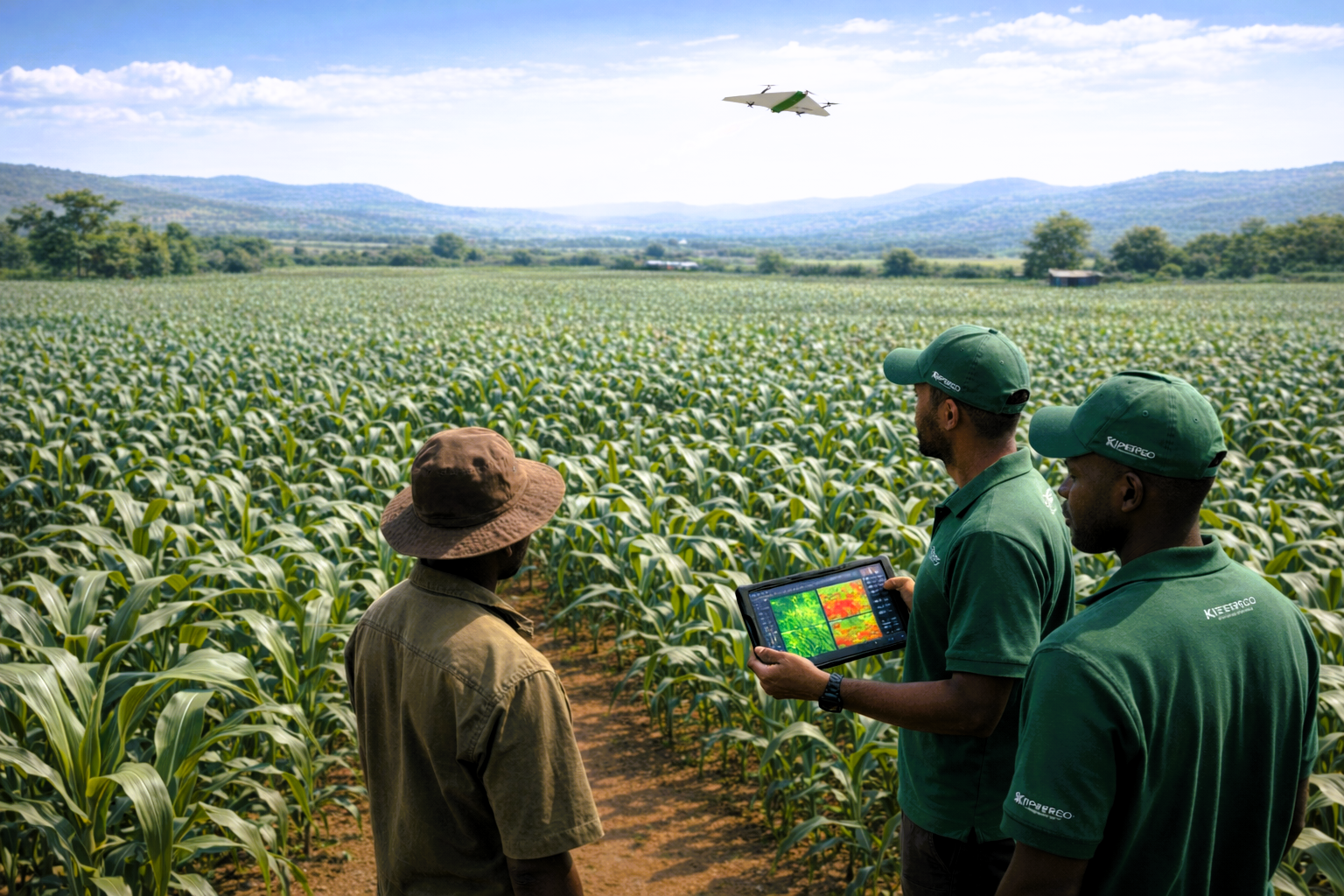
Cost and regulation are not the only barriers to agricultural drone adoption. Technical skills, electricity, connectivity, spare parts, weather conditions, data interpretation, and reliable local support can influence whether the technology performs well.
Operating a drone safely requires training in flight planning, battery management, emergency response, maintenance, field conditions, and relevant agricultural practices. The operator must understand both the aircraft and the farm task.
Monitoring creates another challenge because collecting images is easier than turning them into useful decisions. Farmers need suitable software, interpretation skills, field verification, and clear management rules for acting on detected variation.
Power reliability can influence drone operations because batteries require dependable charging before and during fieldwork. Farms without stable electricity may need suitable charging arrangements, backup systems, or service providers with mobile operational infrastructure.
Connectivity can matter when software depends on cloud platforms, online maps, data transfer, or remote support. Where network access is limited, farmers should confirm that critical functions can still operate locally when necessary.
Spare-part availability is another practical consideration. A damaged arm, pump, nozzle, motor, sensor, or battery can become a serious problem if replacement parts must be imported and delivery takes weeks.
Weather conditions can also interrupt flights. Strong winds, rain, heat, dust, or unsuitable visibility may create safety and application problems, making operational planning and flexible scheduling essential for dependable drone use.
These barriers suggest that adoption works best as an agricultural support system rather than a standalone gadget purchase. Reliable training, maintenance, agronomic guidance, infrastructure, and local service capacity all strengthen results.
Choosing Reliable, Purpose-Built Equipment
Choosing an agricultural drone should begin with the job rather than the brand. A farmer needing crop mapping has different requirements from one needing spraying, spreading, terrain surveying, or detailed multispectral monitoring.
Purpose-built spraying drones usually include tanks, pumps, nozzles, flight-control systems, and application software designed around agricultural workloads. This integration can simplify field operations compared with adapting equipment intended for unrelated uses.
Mapping drones may prioritize flight endurance, sensor compatibility, positioning accuracy, image quality, and stable data capture. Farmers should choose sensor capabilities according to the decisions they need to make from collected information.
Battery architecture deserves careful attention because flight time, charging speed, battery lifespan, and replacement cost can strongly affect daily productivity. A drone that looks affordable may become expensive when its battery ecosystem is considered.
Payload capacity also matters for spraying operations because heavier tanks change flight behavior, energy use, refill frequency, and daily coverage. Farmers should compare practical field capacity instead of focusing only on maximum advertised payload.
Navigation and obstacle-avoidance features can improve operational confidence, particularly where fields contain trees, poles, buildings, terraces, or uneven terrain. However, automated features do not remove the need for trained human supervision.
Support after purchase can be as important as the equipment itself. Access to local technicians, training, spare parts, software updates, and warranty assistance can reduce downtime and protect the investment over several seasons.
Before purchasing, test or observe the equipment in conditions similar to your farm. A practical demonstration can reveal battery endurance, spray quality, control simplicity, maintenance needs, and local service limitations that brochures may not show.
Maintenance and Operational Discipline

Regular maintenance is essential because agricultural drones operate around dust, moisture, chemicals, vibration, and repeated battery cycles. Small maintenance problems can become expensive failures when equipment is used intensively during narrow farm schedules.
After spraying, tanks, lines, pumps, filters, and nozzles should be cleaned according to the equipment manufacturer and product requirements. Residue can affect application accuracy, damage components, or contaminate a later treatment.
Rotors, motors, landing gear, frames, sensors, and connectors should be inspected routinely. Operators should look for cracks, unusual vibration, loose components, corrosion, or signs of impact before the drone returns to regular service.
Battery care deserves particular attention because poor charging, storage, overheating, physical damage, or excessive cycling can shorten battery life. Operators should follow manufacturer procedures for charging, transport, storage, inspection, and disposal.
Software and firmware should also be managed carefully. Updates can improve performance or security, but changes should be tested before critical field operations so that compatibility problems do not appear during urgent spraying windows.
Maintenance records should include dates, parts replaced, faults observed, battery condition, cleaning activities, and software changes. A simple log can help identify recurring problems and support warranty or service discussions when needed.
Operators should also carry basic field spares and tools where practical. Extra nozzles, filters, connectors, fasteners, and charged batteries can reduce downtime when minor problems occur far from a workshop.
Maintenance is ultimately part of farm economics. Preventive care can reduce unexpected downtime, protect expensive equipment, improve application consistency, and extend the useful life of the drone, batteries, sensors, and supporting infrastructure.
Looking Ahead: Where Drone Technology Is Heading

Agricultural drones are likely to become more integrated with digital farm management as sensors, navigation systems, batteries, artificial intelligence, and analytics improve. The important shift will be from isolated flights toward connected workflows.
Future systems may combine crop imagery, weather information, field maps, and agronomic rules to help prioritize scouting or treatment. Human oversight will remain important because automated recommendations still depend on data quality.
Sensor improvements may make it easier to detect subtle changes in plant vigor, water stress, disease patterns, or nutrient-related variation. Better imagery could help farmers investigate problems before visible symptoms become widespread.
Spraying systems may also become more adaptive, adjusting application rates or flight paths according to mapped field conditions. Such capabilities could make precision treatment more practical where regulations and product labels permit their use.
Battery technology remains a key development area because longer endurance and faster charging can increase daily coverage. Better batteries could reduce downtime between flights and make service businesses more efficient.
On-demand drone services are also likely to expand because they reduce the need for every farmer to purchase and maintain equipment. This service model can help smaller farms access specialized technology during important production periods.
Integration with farm software may become increasingly important. Drone data can potentially feed into crop records, scouting platforms, variable-rate planning, irrigation decisions, and other management systems, creating a more complete digital picture of farm performance.
Despite these developments, future adoption will still depend on affordability, skills, regulation, infrastructure, and local support. Technology will create the strongest value when it solves a clear production problem rather than simply adding complexity.
Read Also: The Role of Technology in Agriculture
Record Keeping for Drone-Based Farm Management

Good records help farmers determine whether drone technology is actually improving farm performance. Each operation should record the field, date, crop stage, purpose, area covered, operator, weather, and equipment used.
For spraying operations, record product names, rates, water volume, treated area, flight time, battery use, and application conditions. These details make later comparisons possible and support better planning for subsequent treatments.
For monitoring operations, record the areas inspected, sensor type, flight parameters, detected issues, verification results, and management actions taken afterward. This creates a link between drone observations and real farm decisions.
Cost records should separate service charges or ownership expenses from ordinary production costs. Include fuel avoided, labor hours saved, maintenance, batteries, software, insurance, training, and repairs when calculating the complete economic picture.
Farmers should compare drone-assisted operations with previous methods wherever possible. Useful indicators include time per hectare, input volume, labor requirement, treatment timeliness, crop response, and total cost per hectare. This matters in practice.
Records can also help identify patterns across seasons. A farmer may discover that drone monitoring is especially useful after heavy rain, during particular crop stages, or for specific pests and field zones.
Service providers should give farmers useful operational records when agreed in advance, supporting agricultural systems. Data such as treated hectares, application dates, flight details, and service costs can improve transparency and help farmers evaluate performance.
Over time, consistent records become an important farm-management asset. They can support budgeting, equipment decisions, service negotiations, compliance documentation, and evidence-based decisions about whether drone adoption should expand or remain occasional.
Summary on Complete Agricultural Drone Technology Guide for Farmers

| Agricultural Drone Uses | Agricultural drones can monitor crops, map field conditions, scout problem areas, and apply selected agricultural inputs through spraying operations. |
| Monitoring Technology | Monitoring drones use RGB, multispectral, thermal, and other sensors to identify crop variation, water stress, unusual growth, and potential management problems. |
| Spraying Applications | Spraying drones can distribute permitted pesticides, fertilizers, biostimulants, and other agricultural products, including targeted treatments where appropriate. |
| Getting Started | Farmers should first identify the specific problem they want to solve, then consider farm size, crop type, terrain, expected use, training, regulations, and available services. |
| Efficiency Gains | Drones can improve inspection speed, treatment timing, field coverage, and targeted application, although results depend on equipment, weather, crop conditions, and operator skill. |
| Cost Considerations | Total costs include equipment, batteries, software, training, insurance, transport, maintenance, repairs, replacement parts, and other operating expenses. |
| Ownership vs Service | Ownership may suit farms with high and regular utilization, while outsourced drone services can be more practical for smaller farms or occasional operations. |
| Return on Investment | ROI should be based on measurable savings or added value from labor efficiency, input savings, improved timing, scouting coverage, and other farm-specific benefits. |
| Regulations | Drone rules vary by African country and may include registration, pilot competency, operating permissions, insurance, airspace restrictions, and agricultural chemical requirements. |
| Operational Barriers | Training, electricity, connectivity, spare parts, weather, data interpretation, and dependable local technical support can significantly affect successful adoption. |
| Equipment Selection | Farmers should select purpose-built equipment based on the task, including payload capacity, sensors, batteries, navigation features, durability, and after-sales support. |
| Maintenance | Regular cleaning, inspection, battery care, software management, servicing, and maintenance records are essential for reliable performance and longer equipment life. |
| Future Development | Drone technology is expected to become more integrated with farm management, AI, sensors, weather data, analytics, adaptive spraying, and digital agricultural systems. |
| Record Keeping | Farmers should document dates, fields, crop stages, weather, operators, products, treated areas, flight time, battery use, costs, detected problems, and management actions. |
Frequently Asked Questions About Complete Agricultural Drone Technology Guide for Farmers
1. What are agricultural drones used for?
Agricultural drones are used for crop monitoring, field mapping, scouting, spraying selected agricultural inputs, and supporting precision farming decisions.
2. What is the difference between monitoring drones and spraying drones?
Monitoring drones collect field information using cameras and sensors, while spraying drones carry tanks, pumps, and nozzles to apply permitted agricultural products.
3. Are agricultural drones suitable for smallholder farmers?
Yes. Smallholder farmers can access drone technology through trained service providers, cooperatives, or shared equipment instead of purchasing and maintaining a drone themselves.
4. Is it better to buy an agricultural drone or hire a service provider?
It depends on utilization. Frequent, large-scale use may justify ownership, while occasional use may make professional drone services more economical.
5. How much does an agricultural drone cost?
The cost varies according to the drone type, payload, sensors, batteries, software, and supporting equipment. Farmers should consider the full ownership and operating cost rather than purchase price alone.
6. Can drones reduce the amount of agricultural chemicals used?
Targeted spraying can reduce unnecessary treatment in areas that do not require application, but actual savings depend on crop conditions, products, labels, weather, and application practices.
7. Do farmers need permission to operate agricultural drones?
Drone requirements vary by country and operation. Farmers should check current rules covering registration, pilot competency, operating authorization, airspace, insurance, and agricultural chemical application.
8. What maintenance do agricultural drones require?
Maintenance can include cleaning tanks and spray systems, inspecting rotors and motors, checking frames and sensors, caring for batteries, managing software updates, and keeping maintenance records.
9. Can agricultural drones operate in bad weather?
Weather conditions such as strong winds, rain, excessive heat, dust, or poor visibility can interfere with safe and effective drone operations, so flights should be planned around suitable conditions.
10. How can farmers measure the value of using drones?
Farmers can compare labor hours, input volumes, treatment timing, coverage, crop response, maintenance expenses, service costs, and total cost per hectare with previous farming methods.
Do you have any questions, suggestions, or contributions? If so, please feel free to use the comment box below to share your thoughts. We also encourage you to kindly share this information with others who might benefit from it. Since we can’t reach everyone at once, we truly appreciate your help in spreading the word. Thank you very much for your support and for sharing!
Read Also: Chicken Brooder House – Complete Chicks Brooding Care Guide


.png)
