
 3 months ago
52

.jpeg)
.png)
Press play to listen to this article
Voice
Cassava farming remains one of the most dependable crop businesses in Africa because the crop grows in many soil types, tolerates dry spells, and serves food, feed, and industrial markets.
Farmers like cassava because it can be produced with modest inputs, yet it still rewards careful planning, timely weed control, and good stem selection. That balance makes it attractive for smallholders and commercial growers who study cassava planting benefits first.
When managed properly, cassava can supply tubers for garri, fufu, flour, starch, and chips, while the leaves and peels can support livestock feed, composting, and other value-addition opportunities on the farm. Its place in root and tuber crop systems is also important.
Success in cassava farming begins before planting, because land choice, soil health, spacing, and stem quality all affect root development. Poor early decisions often reduce tuber size, marketable yield, and profit later.
This guide explains the practical steps that matter most, from land preparation to post-harvest handling, so farmers can build a more reliable production system and avoid the mistakes that quietly weaken returns.
Land Preparation for Cassava
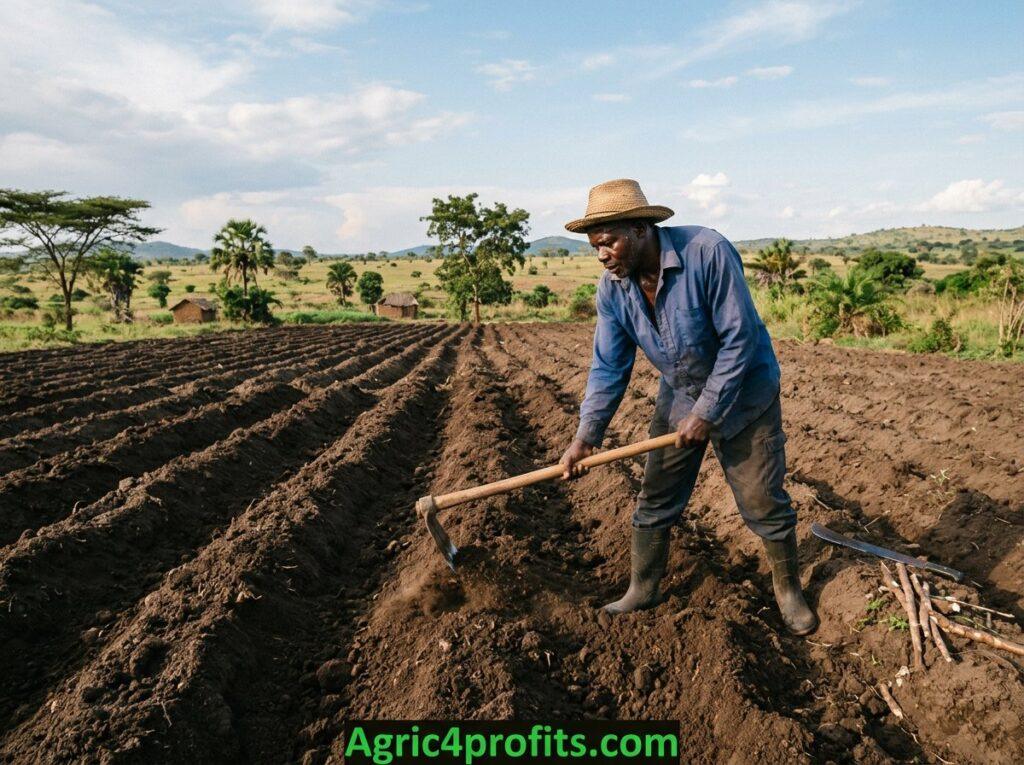
1. Choose Well-Drained Land: Start with a site that drains quickly after rain, because cassava roots dislike waterlogging and compacted soil. A deep, friable loam encourages better root expansion and easier harvesting.
🌿 Go Organic on Your Farm: Instead of harmful chemical pesticides and fertilisers, try our organic farming products — including neem oil spray, bio-pesticides, natural plant treatments, organic seeds and seedlings, suckers, and many more organic products that are safe for your health, your family, your soil and your harvest. Shop Now →
Good land selection also reduces disease pressure and improves fertilizer efficiency. Farmers who understand their terrain often save money later, especially when they build their plan around soil fertility guidance and simple field observation.
2. Clear The Field Properly: Remove shrubs, stones, old stumps, and crop residues before planting so the stems establish without competition. A clean field makes ridging, mounding, and spacing more precise.
Proper clearing also helps farmers spot soil problems early, including erosion channels, termite activity, and weak topsoil. That is why many growers combine field cleanup with lessons from soil and fertility relationships.
3. Check Soil Condition Early: Test the soil before land preparation so you know whether lime, compost, or mineral fertilizer is needed. Cassava performs best when the soil supports root bulking, not just leafy growth.
🔧 Free Farm Tool Available: Use our free Agric4Profits Farm Tools to calculate your farm profits, formulate feeds, identify pests and diseases on both your crops and animal farms, plan your planting and harvesting season, including many more farm tasks to get free expert advice and recommendations — completely free, no registration required. Access Free Tools →
Soil testing also helps farmers avoid blind spending on inputs. When the results show low organic matter, the farmer can improve the field with compost and insights from organic matter improvement.
After the basic checks, prepare the land to the depth that allows roots to spread freely. Deep cultivation matters because cassava roots are storage organs, and shallow, hard soil limits their size and shape.
Ridging or mounding can be useful where drainage is poor or where harvesting needs to be easier. The choice should match the local soil condition, rainfall pattern, and the farmer’s available labour.
Farmers should also think ahead about weed pressure, because land preparation affects how fast weeds return after planting. A smoother, well-turned field gives cassava a stronger head start during the first critical weeks.
Good field preparation is not only about appearance; it creates a root zone that supports long-term growth, better tuber quality, and more predictable profit at harvest for farmers in any growing season.
💬 Have a Farming Question? Join thousands of farmers across Africa on the Agric4Profits Community — ask questions, share experiences and connect with agricultural experts. It is completely free. Ask Your Question Now →
Read Also: How to Start a Cassava Farming and Processing Business
Planting Cassava Stem Cuttings
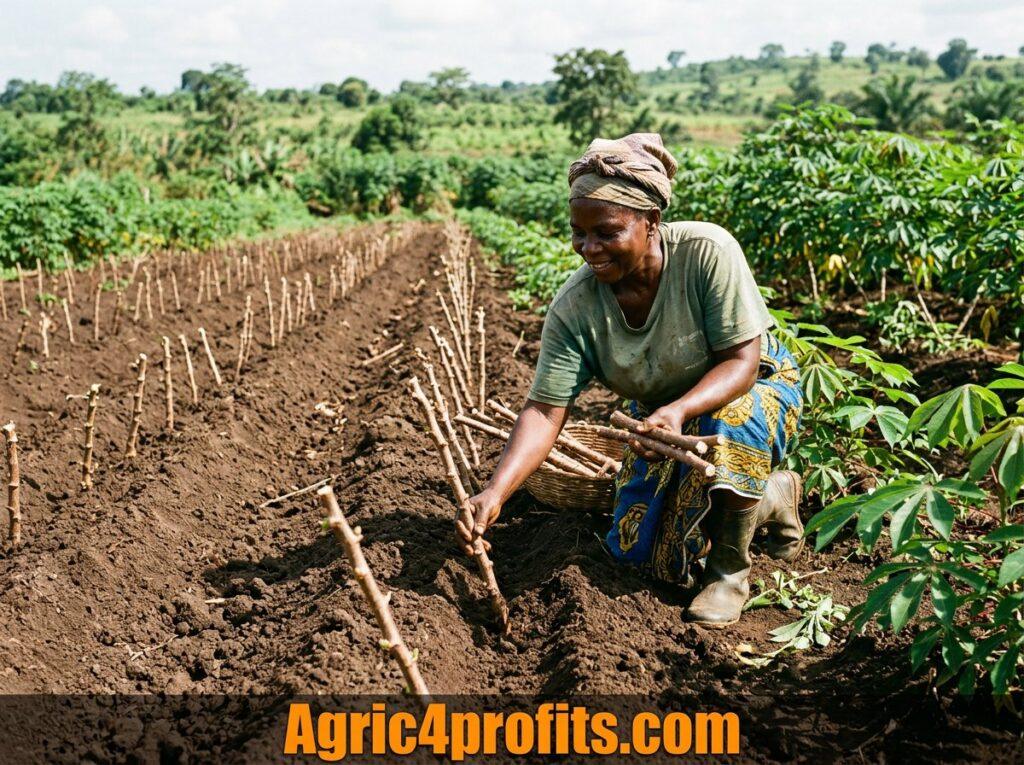
1. Select Healthy Stem Cuttings: Use mature stems from vigorous plants because weak stems usually produce weak stands. Healthy cuttings should be free from rot, heavy pest damage, and obvious disease symptoms.
Good planting material gives the crop a faster start and helps reduce field losses. Farmers who compare field performance with cassava root value often understand why quality stems matter so much.
2. Cut Stems To The Right Length: Each cutting should carry enough nodes to sprout well, but it should not be so long that handling becomes wasteful. A clean cut improves survival and reduces bruising.
The best stem pieces come from healthy middle sections, not overly woody bottoms or tender tips. This practical detail matters because the bud points determine how quickly the plant starts growing after planting.
3. Plant With Correct Spacing: Spacing affects light capture, root expansion, and weed suppression, so farmers should avoid overcrowding. Wider spacing may suit fertile land, while tighter spacing may fit poorer fields or intercropping plans.
Many growers improve planting layout by studying local experience and using a guide like cassava spacing discussions before they decide on their own row arrangement during the first month.
After spacing, plant the cuttings at the correct angle or position so that soil contact remains firm and buds are not exposed. Good placement helps the stems root quickly and resist early dryness.
Farmers should also separate planting rows in a way that allows future weeding and harvesting. Narrow paths may look efficient at first, but they often create labour problems when the tubers begin to bulk.
📖 Want to Go Deeper on This Topic?
Our expert agricultural ebooks cover poultry, fish farming, different crops production, snail farming, organic farming, mushrooms, sheep, cattle, flowers, pig farming, goat farming, agribusiness, etc. in practical step-by-step detail — written by agricultural professionals for African farmers.
Good planting plans also link to farm budgeting, because the choice of stems, labour, and spacing changes the cost structure. A farmer can measure those decisions more accurately with cassava business planning tools.
Strong establishment in the first few weeks is the foundation of the whole crop, and it usually comes from careful stem selection, smart spacing, and patient field supervision throughout early growth.
Crop Care and Weed Control
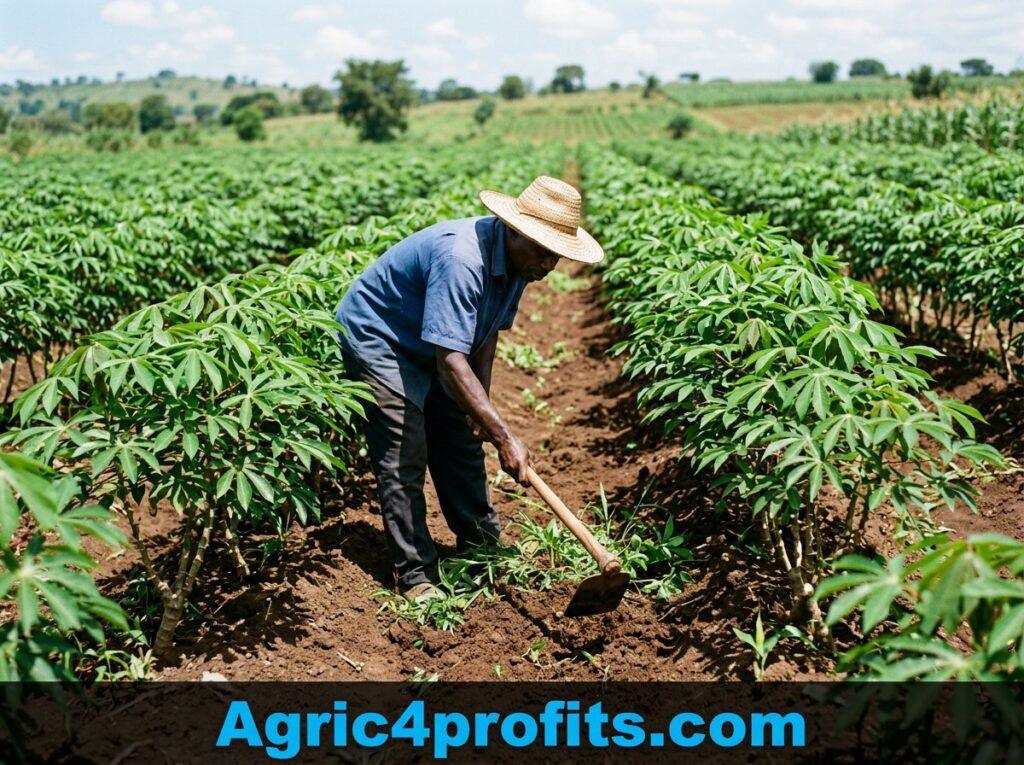
1. Weed Early And Often: Weeds compete with young cassava for moisture, nutrients, and sunlight, especially during the first three months. Early weeding protects growth, reduces stress, and keeps the stand uniform.
Many farmers prefer to combine routine weeding with lessons from soil fertility evaluation, because weak soil conditions often make weed pressure feel even worse than it really is in the field.
2. Feed The Crop Correctly: Cassava does not need excessive fertilizer, but it still responds well to balanced nutrition when the soil is poor. Compost, manure, and measured mineral inputs can support stronger root bulking.
Farmers who monitor nutrient supply carefully usually avoid the trap of lush leaves and small tubers. That is why practical guides such as cassava fertilizer advice are useful for decision-making.
3. Manage Mulch And Moisture: Mulching helps conserve moisture, suppress weeds, and protect topsoil from erosion. It can also moderate temperature around the roots, especially where rainfall is irregular or the sun is intense.
Good moisture management works best when it is paired with an understanding of soil health planning, because healthy soil holds water better and supports longer, steadier growth through the season.
Crop care should also include pest scouting, because insects and rodents can reduce stands before farmers notice the damage. Frequent walking through the field helps identify trouble while control remains affordable, especially on farms that study nutrient-rich soil practices.
Some farmers also use intercropping or boundary crops to reduce waste space, but that choice should never block sunlight or crowd cassava stems, because the crop needs room to expand both above and below ground.
At this stage, discipline matters more than speed, because missed weeds or neglected nutrition often show up later as thin roots, low starch content, and poor field uniformity at harvest.
Consistent crop care converts a promising field into a profitable one, and that is where many farmers separate average results from outstanding yields, better quality roots, and steadier market confidence over time.
Harvesting and Handling Cassava
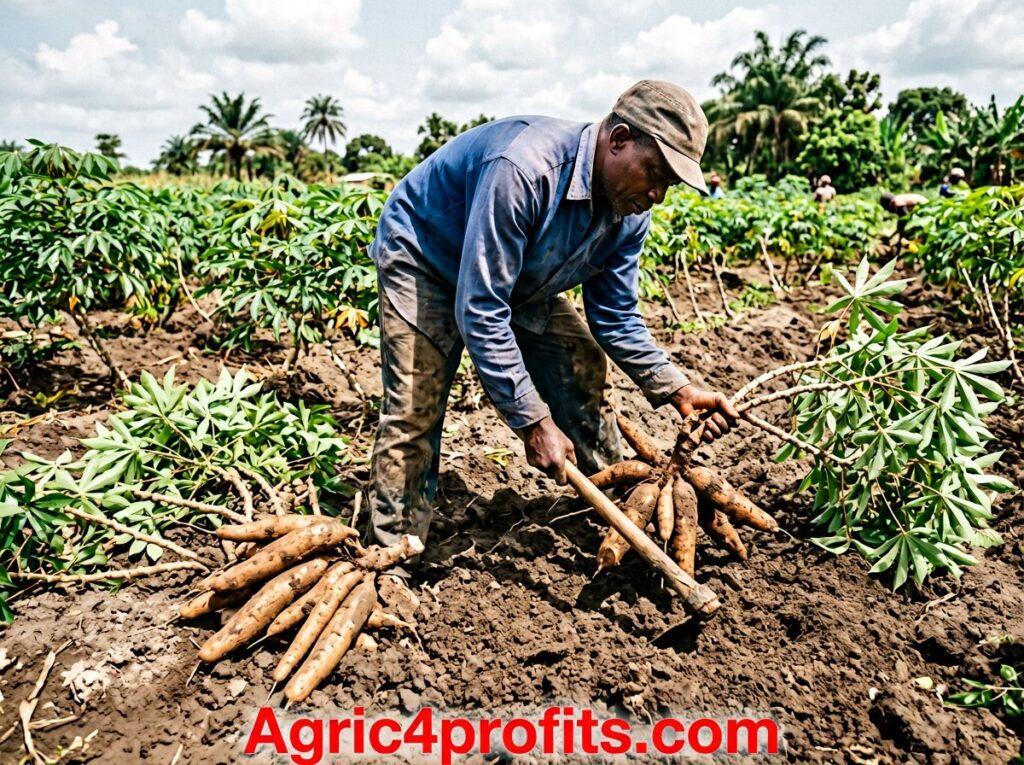
1. Harvest At The Right Time: Cassava maturity depends on variety, rainfall, and market demand, but roots need enough time to bulk before pulling. Early harvesting reduces yield, while late harvesting may reduce quality.
Farmers who study the crop’s uses often recognize that root size matters for both fresh sales and processing. A useful reference is cassava roots and their uses, because different markets reward different root qualities.
2. Dig Carefully To Avoid Damage: Harvesting should begin by loosening the soil around the plant, then lifting the roots gently to reduce cuts and bruises. Damaged roots spoil faster and fetch weaker prices.
Good harvesting practice also keeps the farm neat for the next cycle. Farmers who want to move into processing should remember that root quality determines the outcome of cassava processing and export.
3. Sort Roots Immediately: Sorting helps separate market-grade roots from damaged roots, oversized roots, and roots meant for processing. This simple step reduces confusion during sales and improves price negotiation.
Sorting also supports better storage and value addition, especially where farmers plan to transform roots into flour, starch, or chips. The logic is similar to the guidance in crop value addition methods.
Fresh cassava should not stay too long in the sun after harvest, because quality drops quickly when roots lose moisture and begin to deteriorate, especially under hot weather and rough handling.
Farmers who dry, peel, grate, or chip cassava early often reduce losses and extend the crop’s usefulness beyond the fresh market. That is especially important for households and processors working at small scale, including those following cassava bread-making methods.
Handling practices matter as much as field practices, because rough treatment after harvest can erase the benefits of months of careful farming. The best systems protect quality from the field gate to the buyer.
Careful harvest and handling build trust with buyers, reduce waste, and make it easier to grow cassava as a repeat business rather than a one-season experiment for any serious farmer.
Profit from Cassava Farming
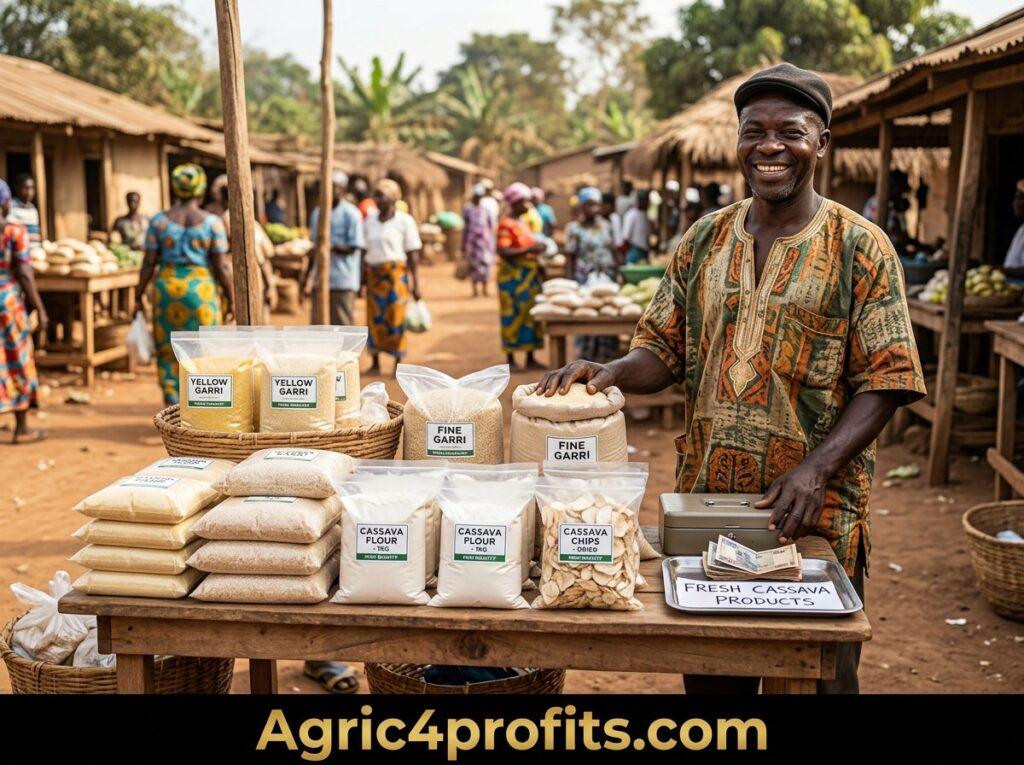
1. Think Beyond Fresh Tubers: Cassava farming becomes more profitable when the farmer looks beyond raw roots and considers flour, starch, chips, garri, and other processed products. Value addition often widens the market, especially when supported by cassava flour processing.
Many growers discover that processing is easier to understand when they study a practical guide like cassava farming and processing business, because profit often comes from the full chain, not the field alone.
2. Understand Market Demand: Prices rise and fall based on buyer type, season, and product quality, so farmers should never assume that every root has the same value. Reliable buyers prefer clean, well-graded produce.
Knowing the market also helps farmers decide whether to sell fresh roots or process them into higher-value products. In many cases, lessons from buyer matching can protect margins and reduce bargaining pressure.
3. Measure Profit Realistically: Profit is not only what comes in after sales; it is what remains after seed stems, land clearing, labour, transport, and processing costs are removed. Careful records reveal the business result clearly.
That is why many farmers use location-based planning and calculator tools, such as cassava profit calculations, to compare real expenses against expected returns and avoid costly guesswork in practice.
The same habit helps farmers choose better project sizes, because small plots and larger plots do not share the same labour demand or cash flow pressure. Planning ahead prevents hidden losses from surprise costs.
Processing can also improve shelf life, which matters when the fresh market is slow or transport is expensive. Drying, milling, and packaging turn a bulky root into a more flexible and tradable product, as shown in cassava profit planning.
Farmers who reinvest part of their earnings into soil improvement, better stems, and storage equipment usually build stronger long-term returns than those who chase quick sales without upgrading the system.
A profitable cassava enterprise is usually simple in design but strict in execution, because good records, market awareness, and value addition compound over time for the farmer in every season.
Read Also: How to Process, Package, and Export Cassava Flour
Summary on Complete Cassava Farming Guide from Planting to Harvest
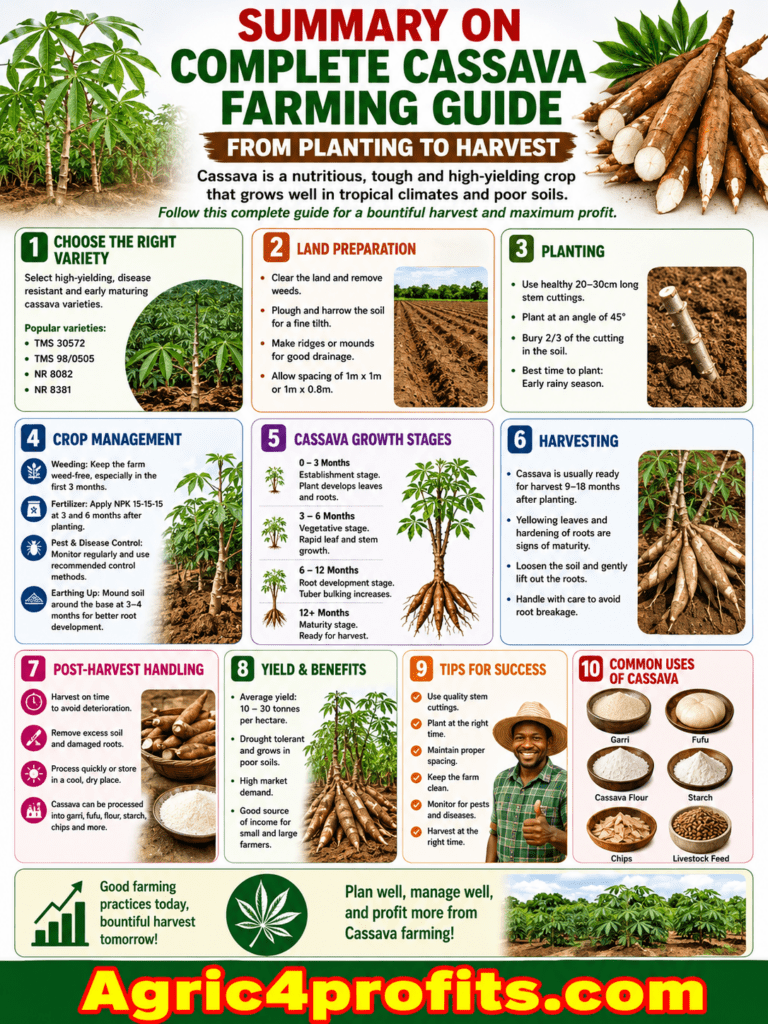
| Land Preparation | Choose well-drained land, clear it properly, and test the soil before planting. |
| Planting Material | Use healthy stem cuttings and space them correctly for strong establishment. |
| Crop Care | Weed early, manage moisture, and support the crop with balanced nutrition. |
| Harvesting | Harvest at the right time, dig carefully, and sort roots immediately. |
| Value Addition | Processing into flour, starch, chips, or bread expands the market and boosts returns. |
| Profitability | Track costs carefully, use buyer information, and reinvest in soil and stems. |
Frequently Asked Questions About Cassava Farming Guide: Start, Grow, and Profit More
1. What soil is best for cassava?
Cassava grows best on deep, well-drained soil with good structure. Very heavy, waterlogged ground can reduce root development, while loose loam usually supports stronger tubers and easier harvesting.
2. How often should cassava be weeded?
Weeding should start early and continue through the first months of growth, because young cassava competes poorly with aggressive weeds. After canopy closure, weed pressure usually drops significantly.
3. Does cassava need a lot of fertilizer?
Cassava does not need excessive fertilizer, but poor soils still benefit from compost, manure, or balanced mineral inputs. The aim is steady root bulking, not unnecessary leafy growth.
4. When is cassava ready for harvest?
Harvest time depends on the variety, rainfall pattern, and market plan. Many farmers wait until roots bulk properly, because early pulling often reduces yield and profit.
5. How can I reduce cassava post-harvest losses?
Handle roots gently, keep them shaded, and move them quickly into storage or processing. Fresh cassava deteriorates fast, so speed and cleanliness matter after harvesting.
6. Is cassava farming profitable?
Yes, cassava can be profitable when farmers manage land well, use healthy stems, control weeds, and add value through processing. Records and market awareness make the business stronger.
7. What products can be made from cassava?
Cassava can be turned into garri, flour, starch, chips, fufu, and other processed products. The peel and residue can also support compost, feed, or energy uses.
8. Why is spacing important in cassava farming?
Spacing determines how much light, water, and root space each plant receives. Proper spacing improves field access, reduces crowding, and helps farmers harvest better-quality roots.
Do you have any questions, suggestions, or contributions? If so, please feel free to use the comment box below to share your thoughts. We also encourage you to kindly share this information with others who might benefit from it. Since we can’t reach everyone at once, we truly appreciate your help in spreading the word. Thank you very much for your support and for sharing!




.png)
