
 3 months ago
44

.jpeg)
.png)
Press play to listen to this article
Voice
A concrete pond remains one of the most trusted structures for serious fish farmers who want a long-lasting production system. Unlike earthen ponds, a concrete pond gives farmers stronger control over water quality, sanitation, and predator protection, which explains why many commercial fish farms across Nigeria and beyond now rely heavily on this pond type.
Building a concrete pond is not just about pouring cement and blocks together. It requires proper planning, correct measurements, quality materials, and an understanding of fish biology, water flow, and drainage. Farmers who skip these steps often end up with cracked walls, poor water retention, or ponds that cannot support healthy fish growth.
This guide walks you through everything you need to know about a concrete pond, starting from site selection and construction all the way to stocking, feeding, water management, and common mistakes to avoid. Whether you are a beginner or an experienced farmer expanding your operation, this article gives you the practical knowledge required.
We will also compare concrete ponds with other pond types, explain the cost implications, and share tips that can help you avoid the expensive errors many new farmers make. By the end of this article, you should be confident enough to plan your own concrete pond project with clarity and purpose.
Why Farmers Choose a Concrete Pond
1. Durability and Long-Term Value: A concrete pond can last for decades when constructed properly, unlike tarpaulin or earthen systems that wear out faster. This durability spreads the initial cost over many production cycles, making it a smart long-term investment for farmers who plan to farm fish for years.
Because the structure does not erode easily, farmers spend less money on repairs compared to earthen ponds that need constant dike maintenance. This means your money goes into feed, fingerlings, and equipment rather than repeatedly fixing a collapsing pond wall after every rainy season.
🌿 Go Organic on Your Farm: Instead of harmful chemical pesticides and fertilisers, try our organic farming products — including neem oil spray, bio-pesticides, natural plant treatments, organic seeds and seedlings, suckers, and many more organic products that are safe for your health, your family, your soil and your harvest. Shop Now →
2. Better Water Quality Control: Concrete surfaces are easier to clean and disinfect than soil-based ponds, which reduces the buildup of harmful bacteria and parasites. This directly supports better water quality management throughout the production cycle.
Farmers can scrub algae, sludge, and leftover feed off concrete walls without damaging the pond structure. This level of sanitation is difficult to achieve in earthen ponds, where soil constantly interacts with organic waste and can harbor disease-causing organisms over time.
3. Predator and Pest Protection: Solid concrete walls make it much harder for burrowing predators, snakes, and rodents to access the pond from underground. This protection reduces fish loss significantly, especially for farmers operating close to bushes, farmland, or areas with wildlife activity nearby.
Unlike earthen ponds where crabs and rodents can dig tunnels that drain water or create escape routes for fish, a properly built concrete pond eliminates most of these entry points. This gives farmers peace of mind, especially during grow-out stages when fish are most valuable.
🔧 Free Farm Tool Available: Use our free Agric4Profits Farm Tools to calculate your farm profits, formulate feeds, identify pests and diseases on both your crops and animal farms, plan your planting and harvesting season, including many more farm tasks to get free expert advice and recommendations — completely free, no registration required. Access Free Tools →
4. Precise Space Utilization: Concrete ponds can be built in compact spaces, including rooftops, backyards, and small urban plots where earthen pond digging is impossible. This flexibility makes it the preferred choice for many fish farming site decisions in cities and peri-urban areas.
Farmers with limited land can still run a profitable operation because concrete structures do not require the sprawling footprint that earthen ponds demand. This makes concrete a practical choice for smallholders working with small plots of land near their homes.
Read Also: How to know if your Catfishes are Underfed or Overfed
Steps to Build a Strong Concrete Pond
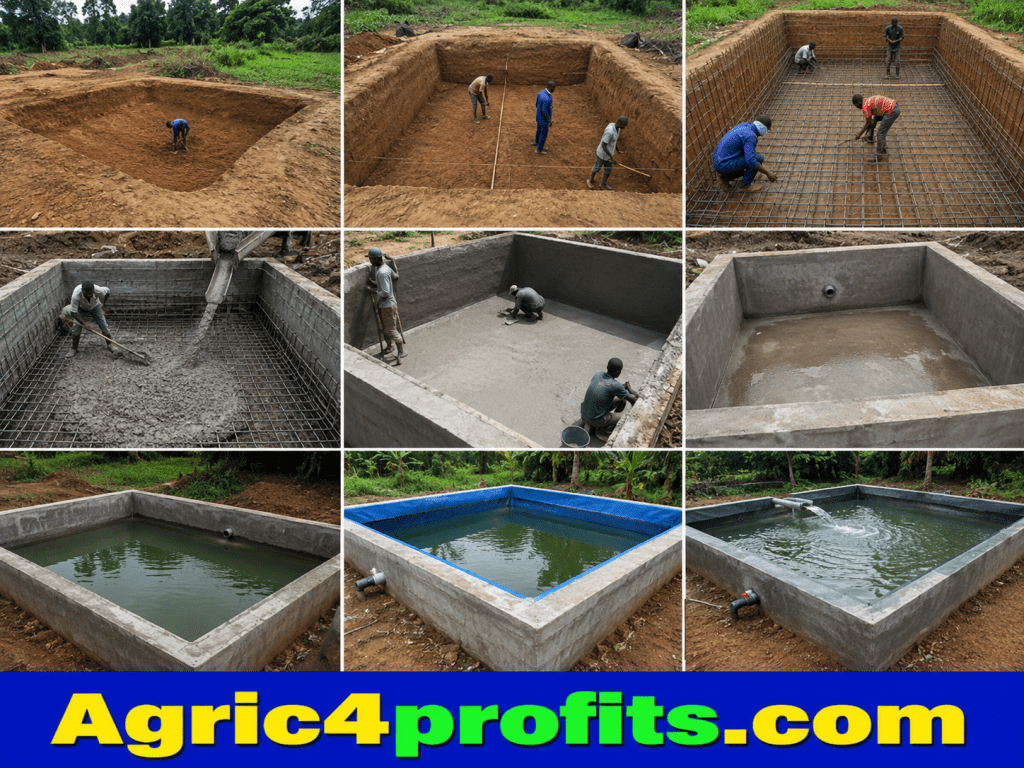
1. Site Selection and Layout Planning: Choose a level, well-drained area with easy access to water and electricity. The site should also allow for a proper outlet so that dirty water can drain away without flooding nearby structures.
Good site planning is closely tied to smart choices about pond management practices in general, since access, drainage, and stocking density all depend on where and how the pond is positioned on your land.
💬 Have a Farming Question? Join thousands of farmers across Africa on the Agric4Profits Community — ask questions, share experiences and connect with agricultural experts. It is completely free. Ask Your Question Now →
2. Excavation and Foundation Work: Even though it is called a concrete pond, some excavation is still needed to lay a firm foundation. The base must be compacted properly to prevent the structure from cracking or sinking after construction is complete.
A weak foundation is one of the leading causes of cracked concrete pond walls. Farmers should never skip proper soil compaction, blinding, or reinforcement, because repairs after construction are far more expensive than doing it correctly from the start. A general pond construction guide is a useful reference during this stage.
3. Reinforcement and Blockwork: Iron rods should be used to reinforce the pond walls and floor, especially for ponds deeper than four feet. This reinforcement prevents structural failure caused by water pressure once the pond is filled to capacity.
Blocks or poured concrete walls should be built with proper mortar mixing ratios. Using substandard cement or skipping curing time often leads to weak walls that crack within the first year, wasting both money and fish stock.
4. Plastering and Waterproofing: After the blockwork is complete, the interior walls must be plastered smoothly and treated with a waterproof coating. This step prevents seepage and keeps the pond from losing water gradually over weeks of use.
Waterproofing also protects fish from sharp or rough surfaces that could injure them during feeding, handling, or harvesting. A smooth, sealed interior additionally reduces the growth of algae in corners where rough concrete would normally trap debris.
5. Inlet, Outlet, and Drainage System: Every concrete pond needs a reliable inlet pipe for fresh water and an outlet for draining dirty water during cleaning or harvesting. Poor drainage design is one of the most common construction mistakes farmers make.
The outlet should be positioned at the lowest point of the pond floor, with a gentle slope guiding water toward it. This design allows farmers to drain the pond completely without leaving stagnant pockets of water behind.
Stocking and Managing Fish in a Concrete Pond
1. Curing the Pond Before Stocking: New concrete ponds must be filled with water and left for at least two weeks to reduce cement toxicity. Failure to cure the pond properly can poison fish and cause sudden, unexplained mortality shortly after stocking.
📖 Want to Go Deeper on This Topic?
Our expert agricultural ebooks cover poultry, fish farming, different crops production, snail farming, organic farming, mushrooms, sheep, cattle, flowers, pig farming, goat farming, agribusiness, etc. in practical step-by-step detail — written by agricultural professionals for African farmers.
Some farmers speed up curing by rubbing the walls with banana leaves, potash solution, or diluted acid, then rinsing thoroughly before refilling. Testing water with a few hardy fish first is a wise precaution before full-scale stocking begins.
2. Choosing the Right Fish Species: Catfish and tilapia are the most common species raised in a concrete pond because they tolerate moderate crowding and adapt well to controlled environments. Farmers exploring Nile tilapia farming often prefer concrete systems for easier monitoring.
Species selection should match your water supply, market demand, and management capacity. Farmers new to aquaculture may want to start with a single species before attempting more complex mixed culture systems that require more attention.
3. Stocking Density Guidelines: Overcrowding a concrete pond leads to poor growth, aggressive behavior, and disease outbreaks among fish. Farmers should calculate stocking density based on pond volume, water exchange rate, and available aeration equipment before introducing fingerlings.
Sourcing quality fingerlings matters just as much as density. Choosing the correct stage to start raising catfish significantly reduces early mortality and improves overall farm profitability.
4. Feeding Practices in Concrete Ponds: Because concrete ponds hold water more tightly, uneaten feed accumulates faster and can quickly spoil water quality. Farmers should follow a consistent feeding schedule based on water temperature and fish size.
Overfeeding is a costly and common mistake. Farmers who understand proper feeding methods waste less money and maintain cleaner, healthier water throughout the production cycle.
5. Disease Prevention and Treatment: Regular observation helps farmers catch disease symptoms early before they spread through the entire pond population. Knowing which medicated feed to use can save an entire stock during an outbreak.
Biosecurity practices such as quarantining new fish, disinfecting tools, and controlling visitor access to the pond area all reduce disease risk. Concrete ponds make these biosecurity measures easier to implement than open earthen systems, similar to lessons drawn from pond loach farming practices.
Concrete Pond Maintenance and Cost Considerations
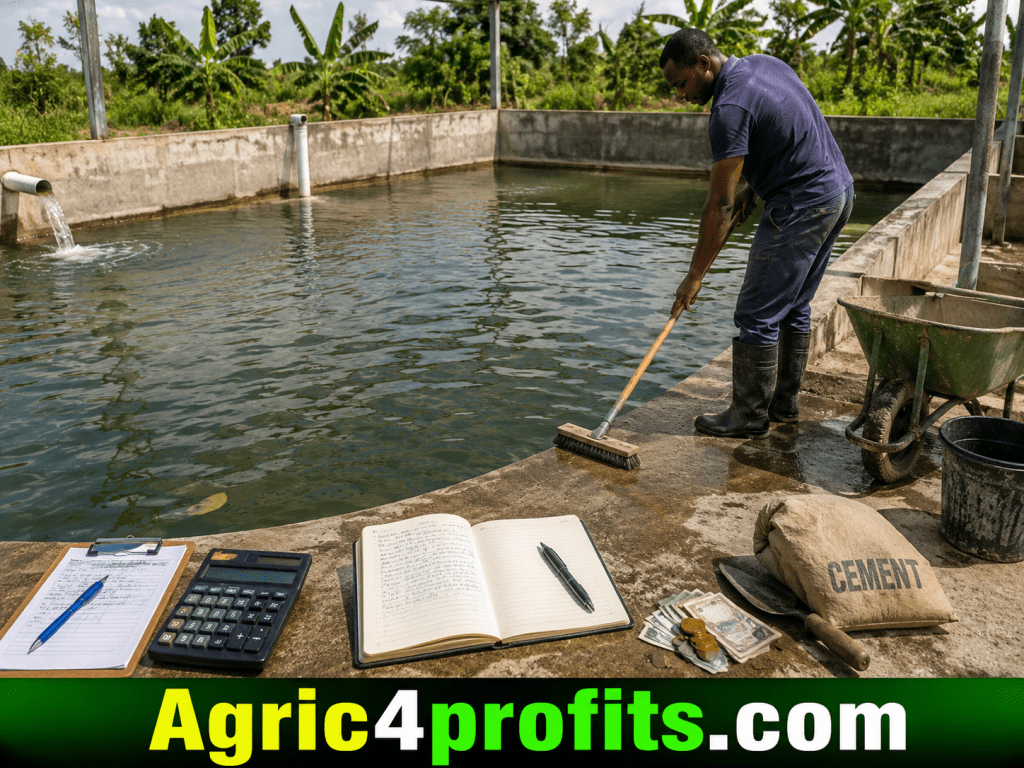
1. Routine Cleaning Schedule: A concrete pond should be scrubbed and partially drained regularly to remove sludge, algae, and leftover organic waste from the floor and walls. Neglecting cleaning leads to poor oxygen levels and stressed fish over time.
Farmers should schedule full drainage and cleaning between production cycles, while lighter spot cleaning happens weekly. This routine keeps ammonia and nitrite levels low, which protects fish health and supports faster, more consistent growth rates.
2. Managing Water Exchange and Aeration: Because concrete ponds do not exchange water naturally like earthen systems, farmers must plan for regular water changes or continuous aeration. This is especially important for higher stocking densities and intensive systems.
Aerators, water pumps, or simple paddle systems help maintain dissolved oxygen levels, particularly during hot afternoons or cloudy days when natural oxygen production from algae drops significantly, putting fish at risk of suffocation. Farmers can also refer to feeding levels at higher temperatures to adjust rations when oxygen is limited.
3. Repair and Crack Prevention: Small cracks should be repaired immediately before they widen and cause serious water loss or structural failure. Farmers should inspect walls and floors after every production cycle to catch early warning signs.
Using quality cement, proper curing time, and reinforcement during construction reduces future repair costs significantly. A well-built concrete pond should not require major structural repairs for many years if built correctly the first time, much like farmers learn from cooler temperature feeding routines to plan ahead.
4. Comparing Construction Costs: Concrete ponds generally cost more upfront than earthen or tarpaulin pond systems, but they offer better long-term value due to their durability and lower maintenance needs over time.
Farmers should budget carefully for cement, blocks, iron rods, waterproofing materials, and skilled labor. Comparing quotes from multiple contractors helps avoid overpaying while still ensuring the structure meets proper engineering standards.
5. Long-Term Return on Investment: Despite higher initial costs, a concrete pond often pays for itself through reduced repair expenses, better fish survival rates, and higher stocking capacity per square meter compared to other systems.
Farmers planning to farm fish for many years should view the concrete pond as a long-term business asset rather than a one-time expense. Proper planning today reduces financial strain and boosts profitability across future production cycles, and reviewing fish body shape and behavior helps with stocking decisions too.
Read Also: Types of Solid Waste and Sources of Solid Waste
Common Mistakes Farmers Make with a Concrete Pond
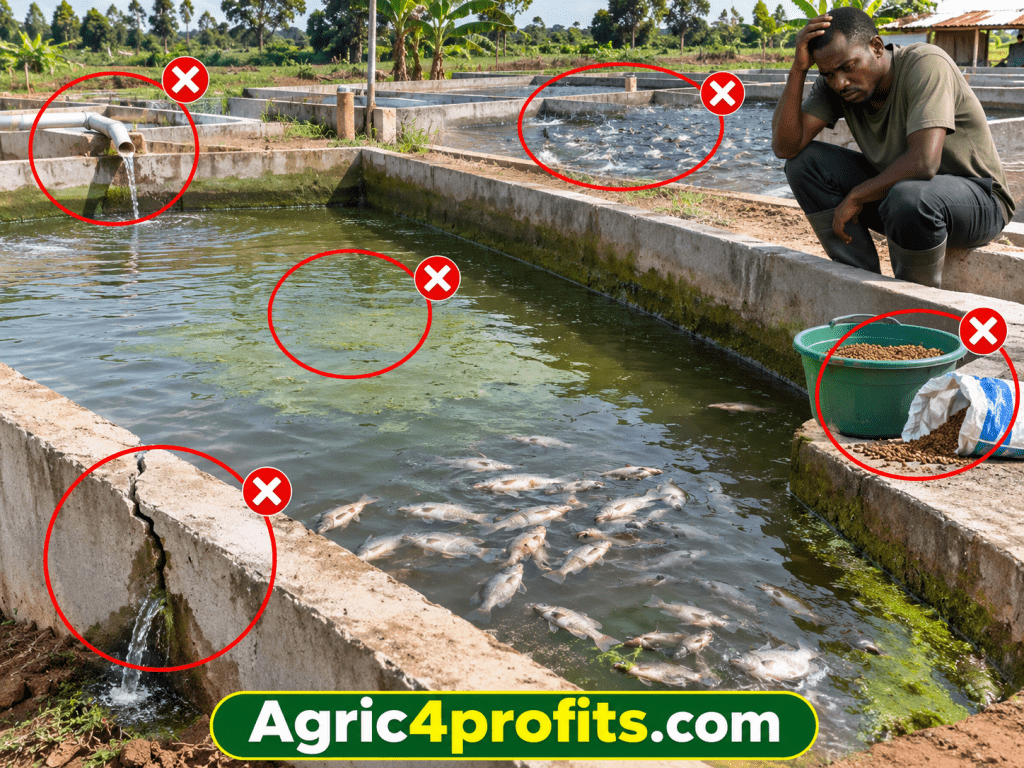
Many new farmers rush into construction without proper planning, leading to poorly positioned ponds that lack good access to water, electricity, or drainage. This oversight often causes daily operational stress that could have been avoided with better upfront farm planning tools.
Another frequent mistake is skipping proper curing time before stocking fish. Farmers eager to start production sometimes stock fingerlings too early, resulting in mass mortality from cement toxicity that could have been prevented with patience and testing.
Overstocking is also common among beginners who underestimate how quickly fish grow and how much space they eventually need. This leads to stunted growth, aggressive competition for feed, and declining water quality that stresses the entire pond population.
Some farmers neglect regular water testing, assuming that because the pond looks clean, the water chemistry must be fine. Ammonia and nitrite can build up invisibly, and farmers who understand water quality monitoring catch problems before they escalate.
Poor budgeting is another issue, where farmers spend heavily on construction but leave little money for feed, fingerlings, and equipment. A realistic farm profit calculator helps farmers plan their finances more accurately from the start. Similar tools exist for farmers in other regions, including a Senegal-focused calculator and a Cameroon-focused calculator.
Finally, many farmers underestimate the importance of proper species selection for their local climate and water source. Choosing hardy species suited to your region, such as those covered in guides on tilapia culture, reduces stress and improves long-term farm success significantly.
Farmers running mixed species systems should also study broader mixed culture planning approaches, and always confirm fingerling quality using guidance similar to catfish and tilapia farming records before scaling up production.
Summary on Concrete Pond Construction: The Complete Farmer's Guide
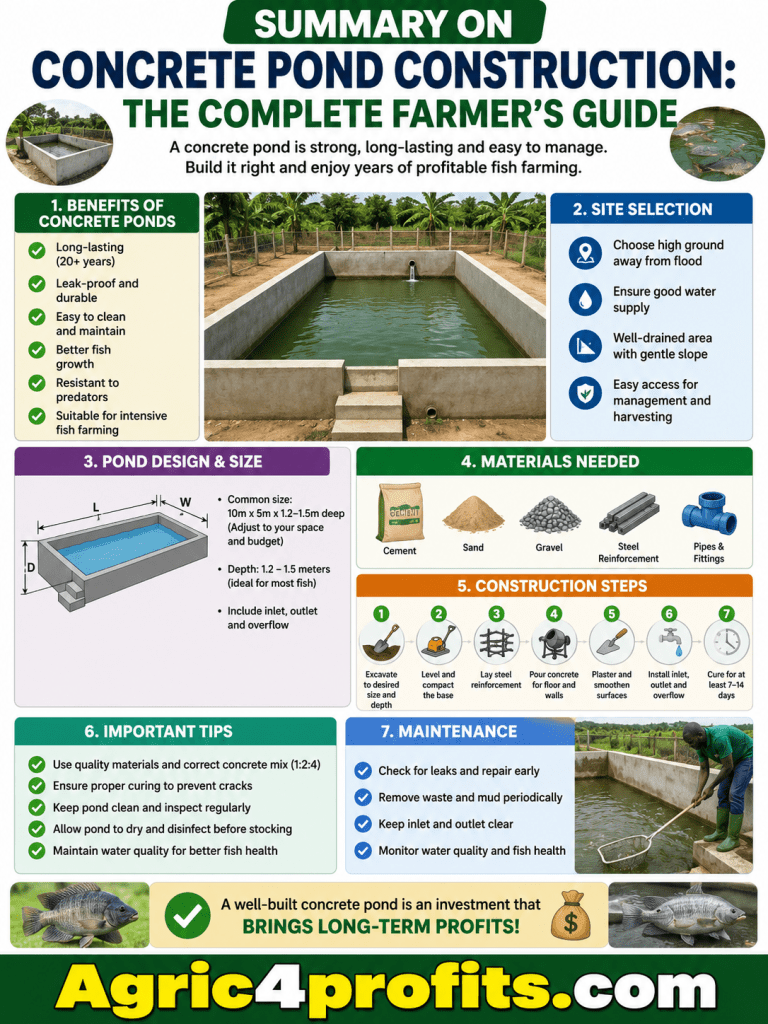
| Durability | Lasts decades with proper construction and maintenance |
| Water Control | Easier sanitation, disease prevention, and quality monitoring |
| Construction Steps | Site selection, foundation, reinforcement, plastering, drainage |
| Curing | Requires two weeks of curing before stocking fish |
| Best Species | Catfish and tilapia adapt well to concrete systems |
| Stocking Density | Must match pond volume, aeration, and water exchange |
| Maintenance | Regular cleaning, aeration, and crack inspection required |
| Cost | Higher upfront cost but stronger long-term return on investment |
Frequently Asked Questions About Concrete Pond Construction
1. How long does a concrete pond last?
A well-constructed concrete pond can last for several decades, provided it receives regular maintenance and repairs whenever small cracks or leaks appear on the surface.
2. How long should I cure a new concrete pond before stocking fish?
Most farmers cure their concrete pond for at least two weeks, filling and draining the water repeatedly to reduce cement toxicity before introducing fingerlings for the first time.
3. Is a concrete pond better than an earthen pond?
Each has advantages. Concrete ponds offer better sanitation and predator protection, while earthen ponds allow more natural food production and generally cost less to construct initially.
4. What fish species grow best in a concrete pond?
Catfish and tilapia are the most popular choices because they tolerate controlled environments well and adapt easily to the stable conditions that concrete ponds typically provide.
5. How often should I clean a concrete pond?
Light cleaning should happen weekly, while a full drain and scrub is recommended between each production cycle to remove sludge, algae, and leftover feed buildup.
6. Do I need aeration in a concrete pond?
Yes, aeration is highly recommended, especially for ponds with high stocking density, since concrete systems do not exchange oxygen as naturally as open earthen ponds do.
7. How much does it cost to build a concrete pond?
Costs vary based on pond size, materials, and labor rates in your area, but concrete ponds generally cost more upfront than tarpaulin or earthen alternatives.
8. Can I build a concrete pond on a rooftop?
Yes, but the roof must be structurally reinforced to bear the weight of water, concrete, and fish safely without risking damage to the building below.
9. What causes cracks in a concrete pond?
Poor foundation work, low-quality cement, insufficient reinforcement, and skipped curing time are the most common causes of cracks appearing in concrete pond walls.
10. How many fish can I stock in a concrete pond?
Stocking numbers depend on pond volume, water exchange rate, and aeration capacity, so farmers should calculate density carefully rather than guessing the appropriate number.
Do you have any questions, suggestions, or contributions? If so, please feel free to use the comment box below to share your thoughts. We also encourage you to kindly share this information with others who might benefit from it. Since we can't reach everyone at once, we truly appreciate your help in spreading the word. Thank you very much for your support and for sharing!








.png)
