
 3 months ago
56

.jpeg)
.png)
Press play to listen to this article
Voice
Ethology is the scientific study of animal behavior in natural settings, with special attention to what animals do, why they do it, and how behavior supports survival. It looks beyond isolated actions and asks how instinct, learning, and environment shape behavior.
In simple terms, ethology helps us read the behavioral language of animals without forcing human assumptions onto them. That makes it useful for students, farmers, conservationists, and researchers who need accurate insight into animal responses, social patterns, and welfare needs.
The field became especially important in the twentieth century through the work of scientists such as Konrad Lorenz, Nikolaas Tinbergen, and Karl von Frisch. Their research helped establish ethology as a serious biological discipline with a strong evolutionary foundation.
Ethology is also practical. It informs how animals should be housed, handled, bred, observed, and protected from stress. That is why the subject matters not only in laboratories, but also in farms, wildlife reserves, and animal welfare programs.
Today, ethology sits at the crossroads of zoology, ecology, neurobiology, and behavior science. It remains a powerful way to understand the deep reasons behind motion, communication, conflict, bonding, and adaptation in living animals.
What Ethology Studies
1. Natural Behavior Patterns: Ethology begins with observing animals where they normally live, feed, rest, and interact, because natural settings reveal behavior more honestly than artificial conditions. This approach helps scientists see repeated patterns, triggers, and survival-oriented responses.
🌿 Go Organic on Your Farm: Instead of harmful chemical pesticides and fertilisers, try our organic farming products — including neem oil spray, bio-pesticides, natural plant treatments, organic seeds and seedlings, suckers, and many more organic products that are safe for your health, your family, your soil and your harvest. Shop Now →
That natural focus is one reason history of ethology matters so much. The field grew from careful observation, not guesswork, and it became stronger when researchers started treating animal behavior as a scientific subject rather than a collection of anecdotes.
2. Instinct And Learning: Ethology studies the balance between inherited behavior and learned behavior. Some responses appear early and reliably, while others develop through experience, repetition, and social contact, which makes this balance central to understanding species differences.
This is closely related to learning and communication, because animals often adjust their actions after exposure to new surroundings, herd members, handlers, or threats. Behavior is not fixed in every case; it can be refined by experience.
3. Social Life And Communication: Ethologists pay attention to group behavior, signaling, dominance, cooperation, and conflict, because many species survive through social organization. Communication may involve body posture, scent, sound, movement, or timing.
🔧 Free Farm Tool Available: Use our free Agric4Profits Farm Tools to calculate your farm profits, formulate feeds, identify pests and diseases on both your crops and animal farms, plan your planting and harvesting season, including many more farm tasks to get free expert advice and recommendations — completely free, no registration required. Access Free Tools →
That is why studies such as social behavior in farm animals are useful. Social animals often establish hierarchies, defend resources, and maintain group stability through repeated patterns that become obvious only when behavior is observed carefully over time.
4. Adaptation And Survival: Ethology asks how behavior helps an organism avoid danger, find food, reproduce, care for offspring, and cope with environmental pressures. The value of a behavior is often revealed by its contribution to survival and reproductive success.
That adaptive lens connects naturally with animal welfare and health, because stress, pain, fear, and poor handling can distort normal behavior and reduce the animal’s ability to function properly in its environment.
Core Ideas Behind Ethology

1. Behavior Has A Function: One of the core ethological ideas is that behavior usually serves a purpose, even when that purpose is not immediately obvious. An animal may flee, court, groom, or vocalize in ways that improve survival or reproduction.
This idea is reflected in research on fixed action patterns, where a behavior can be triggered by a specific stimulus and then unfold in a fairly regular sequence. Such patterns show how deeply some responses are wired into an organism.
💬 Have a Farming Question? Join thousands of farmers across Africa on the Agric4Profits Community — ask questions, share experiences and connect with agricultural experts. It is completely free. Ask Your Question Now →
2. Behavior Can Be Innate: Ethology recognizes that some actions emerge without formal teaching. Animals may show inherited responses to danger, offspring, mates, or territory, and those responses can appear across members of the same species under similar conditions.
This principle becomes clearer in development of behavior, where early life experiences, maturity, and genetic inheritance combine to shape the final behavioral pattern an animal displays as it grows.
3. Behavior Also Learns: Ethology does not reduce animals to instinct alone. It also examines habituation, conditioning, imprinting, imitation, and other forms of learning that help animals respond more effectively to their surroundings.
That is why emotion in animals is often discussed alongside behavior. Fear, frustration, comfort, and security can all influence how quickly an animal learns, how it reacts, and how it stores experience for later use.
4. Behavior Is Contextual: The same action can mean different things in different environments. A sound, a posture, or a chase may signal aggression in one situation and play or courtship in another, depending on context and species.
That contextual thinking connects to causes and approaches to farm animal behavior, where housing, nutrition, group structure, temperature, and handling all shape how behavior is expressed in domestic animals.
How Ethologists Observe Behavior
1. Direct Field Observation: Ethologists often begin by watching animals in the open, recording what happens without interruption. This helps them see behavior as it naturally unfolds and reduces the distortion that can come from artificial setups.
That kind of careful watching is also useful when studying conflict behavior in animals. Aggression, retreat, submission, and displacement activities may look simple, but their meaning becomes clearer when timing, posture, and social context are all recorded together.
2. Ethograms And Pattern Recording: Researchers often build an ethogram, which is a structured list of behaviors seen in a species. This turns observation into organized data and allows comparisons between individuals, groups, and environments.
📖 Want to Go Deeper on This Topic?
Our expert agricultural ebooks cover poultry, fish farming, different crops production, snail farming, organic farming, mushrooms, sheep, cattle, flowers, pig farming, goat farming, agribusiness, etc. in practical step-by-step detail — written by agricultural professionals for African farmers.
That method connects strongly with behavioral ecology, because once behaviors are listed and tracked, it becomes easier to ask why they appear, what pressures shape them, and how they help the animal cope with its niche.
3. Comparative Analysis: Ethologists compare species, breeds, age groups, and sexes to identify what is common and what is unique. This comparison helps separate truly inherited behavior from habits that appear only under certain conditions.
This is especially relevant in social behavior among primates, where shared ancestry, group living, and competition for resources reveal patterns that also help explain similar behavior in domesticated herd species.
4. Experimental Support: While field observation is central, experiments may also be used to test a hypothesis. Researchers can modify one factor, measure the response, and then see whether the change supports the behavioral explanation.
That experimental spirit is valuable in livestock management systems, where housing design, group size, feed access, and human handling can all be adjusted to observe how behavior and productivity change under different conditions.
5. Evolutionary Interpretation: Ethologists do not just describe behavior; they also interpret it through evolution. A behavior may persist because it solved a recurring problem in the species’ ancestral environment and still carries value today.
That is why researchers also consult principles of livestock production. Understanding production without understanding behavior can lead to poor decisions, because animals do not respond well when their biological needs and social patterns are ignored.
Ethology and Animal Welfare
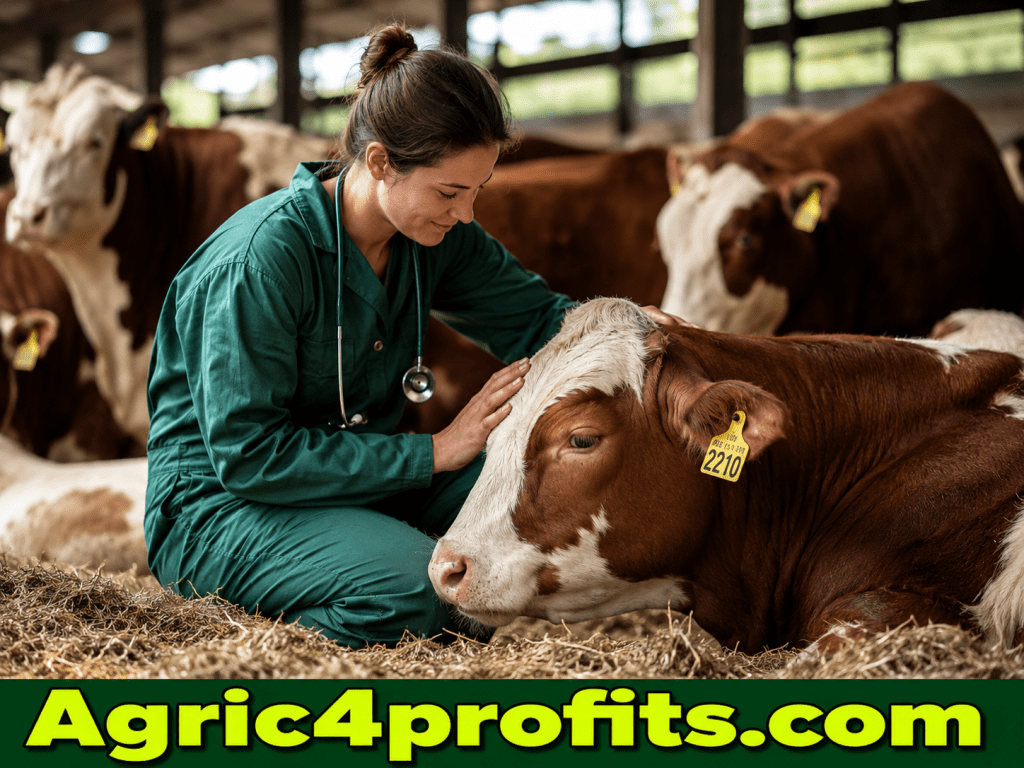
Ethology is one of the strongest foundations of animal welfare because it shows what normal behavior looks like before asking whether a system supports or suppresses it. When animals cannot express natural behavior, stress and frustration often rise quickly.
That is why humane care depends on more than feeding alone. A proper welfare system must consider movement, comfort, social contact, handling, rest, and the chance to express species-specific behavior without unnecessary restraint or chronic fear.
Observing behavior can also reveal invisible suffering. Changes in appetite, posture, group position, alertness, vocalization, or grooming often show that something is wrong long before a visible injury appears. Ethology therefore helps with early detection.
This is one reason proper livestock management matters. Good management is not only a production issue; it is also a behavioral issue, because well-managed animals are usually calmer, healthier, and easier to handle.
The same logic applies to housing. Crowding, poor ventilation, noise, heat, and rough handling can all alter behavior and make animals more reactive. Ethology helps managers identify which conditions cause unnecessary stress and which ones support stability.
Behavioral observation also helps prevent accidents. A frightened animal may bolt, bite, crush a weaker flock member, or injure itself on an obstacle, so understanding behavior is a practical safety tool as much as a scientific one.
Ethology also helps with comfort design. Animals spend far more time resting, exploring, feeding, and avoiding threats than they do in dramatic moments, so good welfare systems are shaped around everyday behavioral needs rather than rare events.
When welfare is supported, productivity usually improves too. Calm animals waste less energy on fear and conflict, feed more predictably, and cope better with routine handling, which benefits both the animal and the keeper.
For that reason, ethology should be seen as a practical tool for humane production, not as a purely academic subject. It gives farmers and animal handlers a better way to understand what animals need, fear, and communicate.
Ethology in Farming and Livestock
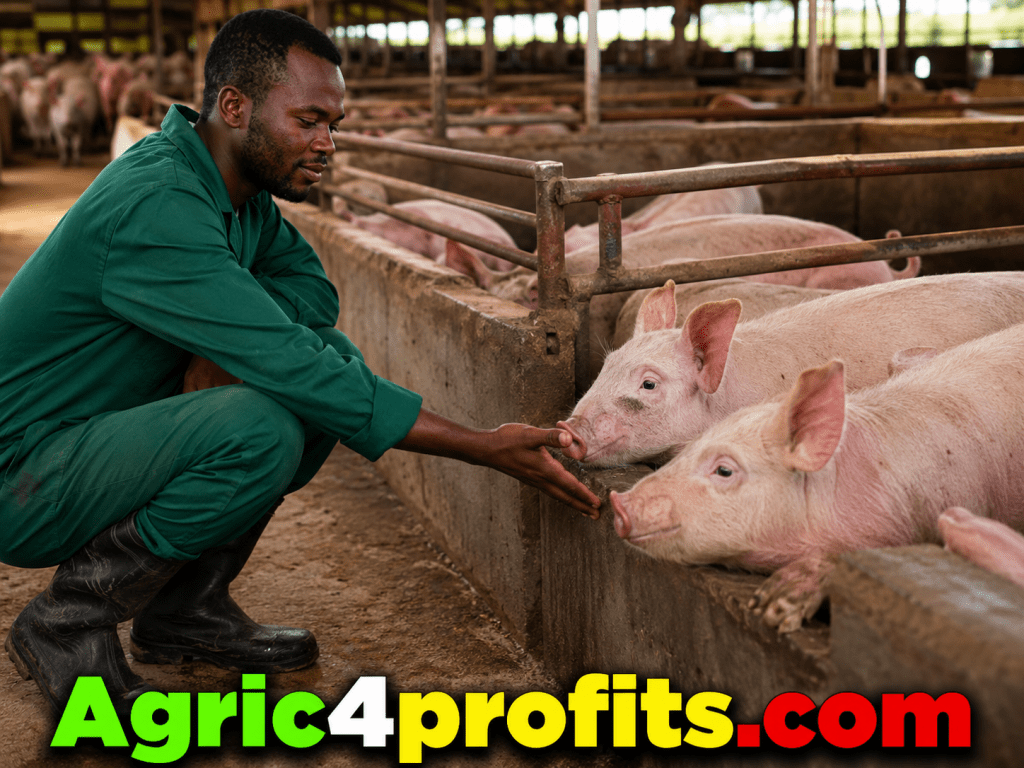
Ethology has major value in livestock work because domesticated animals still carry the behavioral heritage of their wild ancestors. Even under domestic conditions, they continue to show feeding preferences, social ranking, mating behavior, and avoidance responses.
That is why livestock farming depends on more than feed conversion and housing size. A farmer who understands behavior can reduce stress, improve handling, and create conditions that support better health and consistent output.
Ethology also helps with breeding. Animals choose mates, show courtship signals, compete for access, and protect reproductive success through specific behavioral patterns that can influence fertility, mating ease, and herd stability.
That is why best animal breeding practices should always consider temperament, social compatibility, and handling behavior, not just body size or visible performance traits. A breeding decision that ignores behavior can create stress later.
Ethology also helps explain feeding behavior. Animals may fight over feed, reject unfamiliar feed, or develop risky habits when routines are inconsistent. Understanding those patterns reduces waste and makes feeding systems more efficient.
This is especially relevant in cross-breeding animals, where behavioral compatibility matters alongside genetic goals. Some crosses perform well physically but struggle socially if the management system ignores inherited temperament differences.
Ethology also supports better daily management. If a flock startles easily, the keeper can improve movement control, reduce unnecessary noise, and schedule work around the animals’ more predictable behavioral rhythms.
In pig production, for example, understanding behavior can reduce fighting, improve grouping decisions, and support smoother finishing outcomes. Good management becomes easier once the keeper recognizes how social tension appears before performance drops.
In poultry, ethology helps explain pecking order, heat response, foraging, and fear behavior. Those patterns affect feed intake, egg production, growth consistency, and flock harmony, so behavior is a direct production variable.
In short, ethology gives livestock keepers a more intelligent way to work. Instead of fighting animal nature, the manager learns to design systems that cooperate with it, which is usually safer, cheaper, and more sustainable.
Read Also: Livestock Management Systems
Why Ethology Still Matters Today
Ethology remains relevant because animal behavior is still one of the best clues to health, stress, adaptation, and social stability. No modern agriculture, conservation program, or welfare policy can ignore what animals actually do.
It also matters because behavior research now reaches across disciplines. Conservation, veterinary care, neuroscience, breeding, ecology, and animal production all benefit when behavior is studied as part of the full biological system.
That broader relevance is one reason better poultry performance improves when handlers respect animal routines, space needs, fear thresholds, and environmental cues instead of relying only on feed and medications. Behavior is part of performance.
Ethology also helps people interpret conflict more accurately. An animal that appears “stubborn” may actually be confused, overstimulated, threatened, poorly socialized, or physically uncomfortable, and the behavioral explanation changes the management response.
In wildlife work, the discipline supports conservation planning, habitat design, and predator-prey analysis. In farming, it helps with handling, breeding, housing, transport, and daily care, making it one of the most versatile life sciences.
Read Also: How to Protect Your Livestock from Predators
Ethology also has educational value. It trains students to observe carefully, avoid lazy conclusions, and describe behavior with evidence. Those habits are useful in science, but they are also useful in everyday life and decision-making.
Its importance can be seen in modern discussions of social behavior, learning, and emotion. Animals are not machines that merely react; they are living organisms with adaptive histories, social pressures, and predictable ways of coping.
Ethology therefore remains a practical science for the present age. It helps us produce better, care better, observe better, and understand better, whether the subject is a wild primate, a flock of chickens, or a herd of cattle.
It also keeps the focus on evidence. When behavior is interpreted carefully, people make better animal decisions, avoid needless stress, and build systems that are both productive and humane. That combination is exactly why ethology endures.
Summary on Ethology: Understanding Animal Behavior in Natural Settings
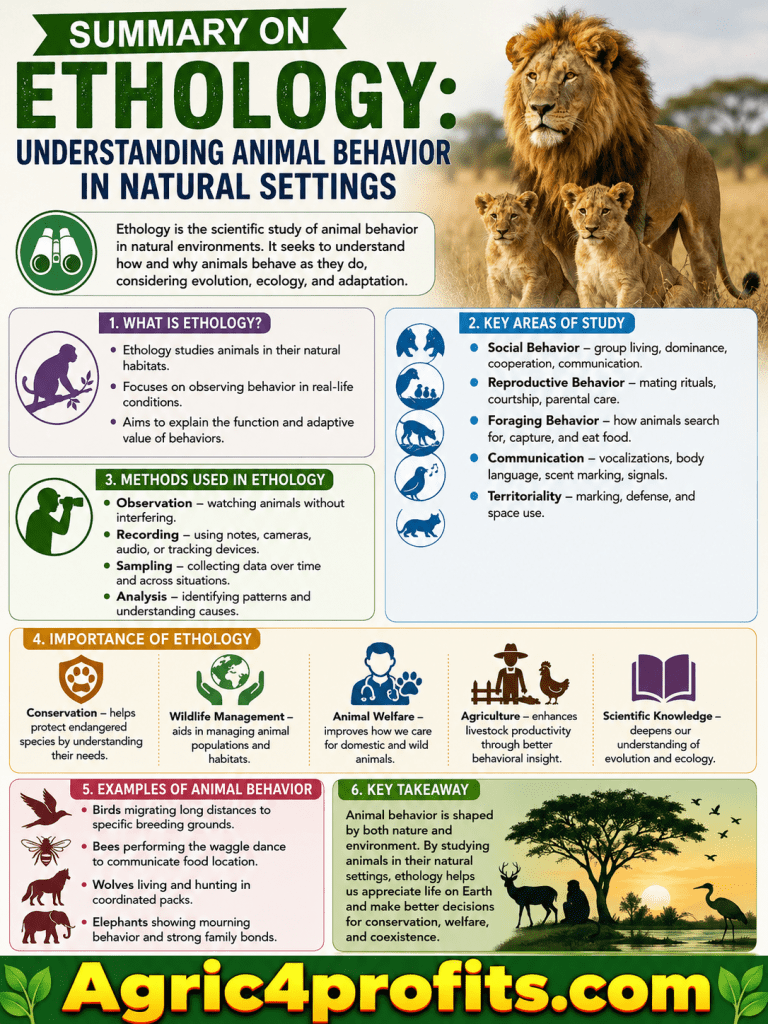
| Definition | Ethology studies animal behavior in natural settings. | It focuses on why animals act the way they do. |
| Core Ideas | It examines instinct, learning, function, and adaptation. | Behavior has biological meaning, not random movement. |
| Methods | Ethologists observe, record, compare, and test behavior. | Careful observation is central to the discipline. |
| Welfare | Behavior reveals comfort, stress, and normal needs. | Ethology supports humane care and early intervention. |
| Agriculture | It improves handling, breeding, housing, and flock management. | Better behavior knowledge leads to better production. |
| Modern Value | Ethology remains useful in research, conservation, and farming. | It still shapes evidence-based decisions today. |
Frequently Asked Questions About Ethology: Understanding Animal Behavior in Natural Settings
1. What is ethology?
Ethology is the scientific study of animal behavior, especially in natural conditions, with attention to instinct, learning, adaptation, and social interaction.
2. Why is ethology important?
It helps people understand how animals behave, reduce stress, improve welfare, manage farms better, and interpret signs of health or distress more accurately.
3. Who are the major founders of ethology?
Konrad Lorenz, Nikolaas Tinbergen, and Karl von Frisch are widely recognized as central founders of modern ethology, and they shared the 1973 Nobel Prize for their work.
4. How is ethology different from animal psychology?
Ethology focuses strongly on natural behavior, evolutionary function, and species-specific patterns, while animal psychology often emphasizes learning, testing, and controlled experimental settings.
5. What is an ethogram?
An ethogram is a structured record of the behaviors observed in a species, used to organize observations and compare patterns systematically.
6. How does ethology help farmers?
It helps farmers understand feeding behavior, aggression, stress, mating, and handling responses, which can improve welfare and production efficiency.
7. Does ethology study human behavior too?
Yes, some branches extend to human ethology, although the field is best known for the study of non-human animals.
8. What is the connection between ethology and welfare?
Ethology shows what normal behavior looks like, so managers can notice when housing, handling, or disease is disrupting comfort and safety.
9. Is ethology still relevant today?
Yes, it remains highly relevant in animal production, wildlife conservation, veterinary science, neuroscience, and behavior research.
10. Can ethology improve animal productivity?
Yes, because calmer, healthier, and better-understood animals usually perform better than animals kept in stressful or poorly designed systems.
Do you have any questions, suggestions, or contributions? If so, please feel free to use the comment box below to share your thoughts. We also encourage you to kindly share this information with others who might benefit from it. Since we can’t reach everyone at once, we truly appreciate your help in spreading the word. Thank you very much for your support and for sharing!
Read Also: Feed and Nutrition Management for Cattle









.png)
