
 3 months ago
53

.jpeg)
.png)
Press play to listen to this article
Voice
Animals mating selection for cultural displays sits at the point where breeding science meets tradition. It shapes which animals are admired, chosen, and showcased, while also influencing how communities read beauty, strength, and fertility.
In many places, people value more than meat, milk, or growth rate. They look for colour, posture, horn shape, plumage, gait, and calm temperament because these traits create memorable public displays and breeding appeal.
When those preferences are repeated across festivals, markets, contests, and ceremonial gatherings, they become cultural standards. Over time, the standards influence mating choices, breeding records, and the way animals are presented to audiences.
That makes the subject useful for farmers, animal scientists, and cultural leaders. It shows how selection can support tradition without ignoring health, productivity, or welfare, provided the process remains deliberate and humane.
This article explains the visible traits, social meanings, and practical breeding decisions behind those displays. It also shows how to balance performance, heredity, and ethics when cultural value becomes part of selection.
Cultural Signals In Mating Choice
1. Visual Traits Guide Attention: In many breeding communities, animals with striking colour patterns, strong body symmetry, and confident posture attract the first round of interest, because breeding systems often reward traits people can see quickly.
🌿 Go Organic on Your Farm: Instead of harmful chemical pesticides and fertilisers, try our organic farming products — including neem oil spray, bio-pesticides, natural plant treatments, organic seeds and seedlings, suckers, and many more organic products that are safe for your health, your family, your soil and your harvest. Shop Now →
These signals do not operate alone. They are read alongside age, fitness, and confidence, which means a visually impressive animal still needs strong health to remain desirable in serious selection contexts.
2. Courtship Performance Matters: Movement, calls, dance, head tossing, feather spreading, or repeated displays often communicate stamina and confidence, which is why selection standards should include behaviour, not looks alone.
A performer that repeats its display with energy often gains prestige, especially when audiences interpret movement as vitality. That is why behaviour deserves attention beside colour, size, and symmetry.
3. Selection Needs Clear Purpose: Breeders work better when they define what the cultural display should achieve, because selection goals prevent confusion between decorative preference, productive value, and long-term herd improvement.
🔧 Free Farm Tool Available: Use our free Agric4Profits Farm Tools to calculate your farm profits, formulate feeds, identify pests and diseases on both your crops and animal farms, plan your planting and harvesting season, including many more farm tasks to get free expert advice and recommendations — completely free, no registration required. Access Free Tools →
When the purpose is clear, the breeder can avoid random choices. The most admired animal is then chosen for a reason, and that reason can be defended across seasons and generations.
4. Family Lines Carry Memory: Communities often remember which families consistently produce admired animals, so cultural selection naturally begins to depend on heredity patterns and the reputations attached to those lines.
When a line consistently produces the same useful traits, breeders begin to trust it. That trust is practical, because repeatability reduces guesswork and helps communities preserve admired animal types.
5. Measurable Traits Strengthen Consistency: Cultural preference becomes stronger when it is supported by records, because trait inheritance is easier to manage when both visible quality and measurable performance are tracked carefully.
Written notes, award records, and family histories help communities remember which traits earned respect. Without that memory, a cultural display can drift into fashion instead of disciplined selection.
💬 Have a Farming Question? Join thousands of farmers across Africa on the Agric4Profits Community — ask questions, share experiences and connect with agricultural experts. It is completely free. Ask Your Question Now →
Read Also: Animal Welfare and Health
Why Communities Keep Rewarding Certain Traits in Animals
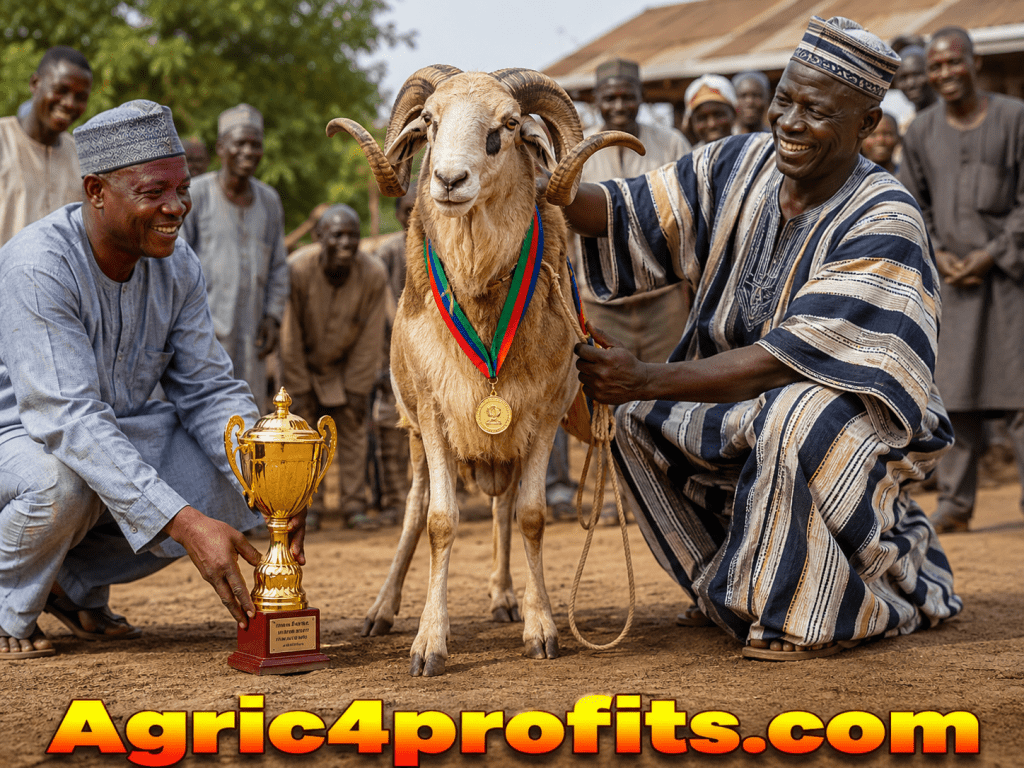
1. Heritability Makes Choice More Predictable: When a trait appears reliably in offspring, breeders become more confident about repeating the choice, which is why repeatability matters so much in display breeding.
Predictability saves time and money. It also makes cultural displays easier to standardise, because families know which matings are likely to produce the type of animal the community already admires.
2. Management Shapes The Outcome: Even a genetically promising animal can look ordinary if feeding, handling, or housing is poor, which is why livestock systems must support the look and health of the display animal.
Well-managed animals are less likely to show stress, dull coats, or weak posture. Good housing and calm handling therefore improve both visual quality and the credibility of the breeder.
3. Semi-Intensive Care Often Improves Presentation: A controlled environment can protect the animal while still allowing movement and natural expression, which is why semi-intensive care often suits cultural display goals.
Animals prepared for displays need nutrition, clean water, and regular observation. The more stable their environment, the easier it becomes to present them with confidence and physical balance.
4. Larger Species Often Carry Social Weight: In many communities, cattle symbolize wealth, prestige, and continuity, so cattle management remains closely tied to public honour and ceremonial visibility.
Size alone is not enough, but it can amplify the message a display sends. Strong body condition, impressive horn formation, and calm behaviour often make the animal feel culturally important.
📖 Want to Go Deeper on This Topic?
Our expert agricultural ebooks cover poultry, fish farming, different crops production, snail farming, organic farming, mushrooms, sheep, cattle, flowers, pig farming, goat farming, agribusiness, etc. in practical step-by-step detail — written by agricultural professionals for African farmers.
5. Welfare Gives The Display Meaning: A cultural tradition stays strong only when the animals remain healthy, which is why welfare principles must sit beside every breeding decision.
Ethics matters because admired animals are still living beings with limits. A beautiful display loses value if the breeding process causes pain, exhaustion, or chronic stress, so welfare should remain non-negotiable.
Read Also: The Different Breeds of Sheep and Goats
Behavior, Meaning, And Cultural Interpretation
1. Structured Breeding Supports Display Goals: When a community wants a consistent display type, it usually benefits from planned mating, because production systems help convert preference into repeatable breeding outcomes.
Structure reduces confusion. Instead of choosing animals only because they look impressive on one day, breeders can compare performance across seasons and keep the cultural standard stable.
2. Husbandry Protects The Image: Attractive public presentation depends on feeding, hygiene, and calm handling, so management routines matter even when the animal is selected mainly for cultural display.
Clean surroundings and regular care keep the animal ready for observation. They also reduce stress, which means the animal can move naturally and remain confident during important public moments.
3. Performance Aims Need Clarity: A breeder must know whether the goal is decoration, prestige, competition, or heritage, because performance goals shape the type of animals that enter the programme.
When the aim is clear, breeding decisions become easier to defend. That clarity also stops a community from praising traits that look impressive but weaken productivity or adaptability later.
4. Balance Produces Better Results: A display animal should still be fertile, resilient, and manageable, which is why growth standards and aesthetic appeal should be judged together, not separately.
Balance protects the future. If beauty is chased without function, the line may weaken; if function is chased without form, the cultural display may lose the meaning people value.
5. Behaviour Should Be Read Carefully: Some animal behaviours are part of social interaction, exploration, or courtship practice, which is why behavioural displays should be observed with context before any conclusion is drawn.
Not every unusual action is a problem. Careful interpretation prevents overreaction, protects animal dignity, and keeps the breeder focused on evidence rather than assumptions or embarrassment.
Read Also: Importance of Animal Agriculture
Practical Lessons For Animal Breeders And Communities
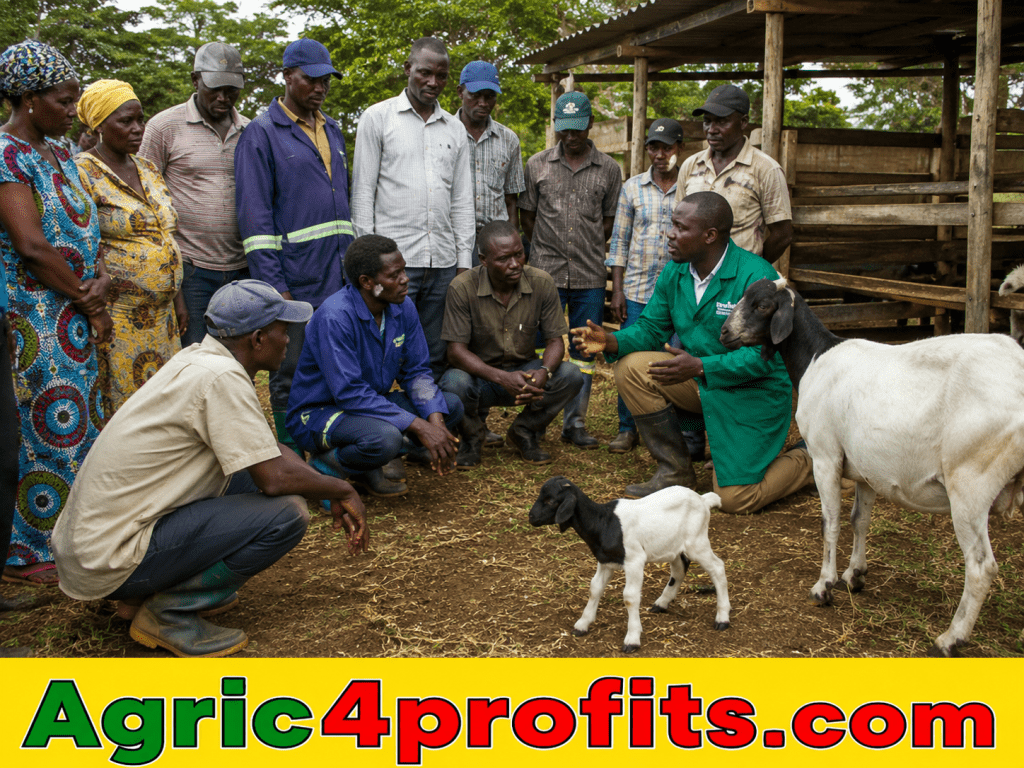
1. Observation Must Be Patient: Good selection comes from watching the animal across different situations, because cross-species observations remind breeders that behaviour can change with age, environment, and social pressure.
Careful observation is more valuable than fast labels. Watching the whole herd over time helps distinguish stable traits, passing phases, and genuine patterns worth recording for future selection.
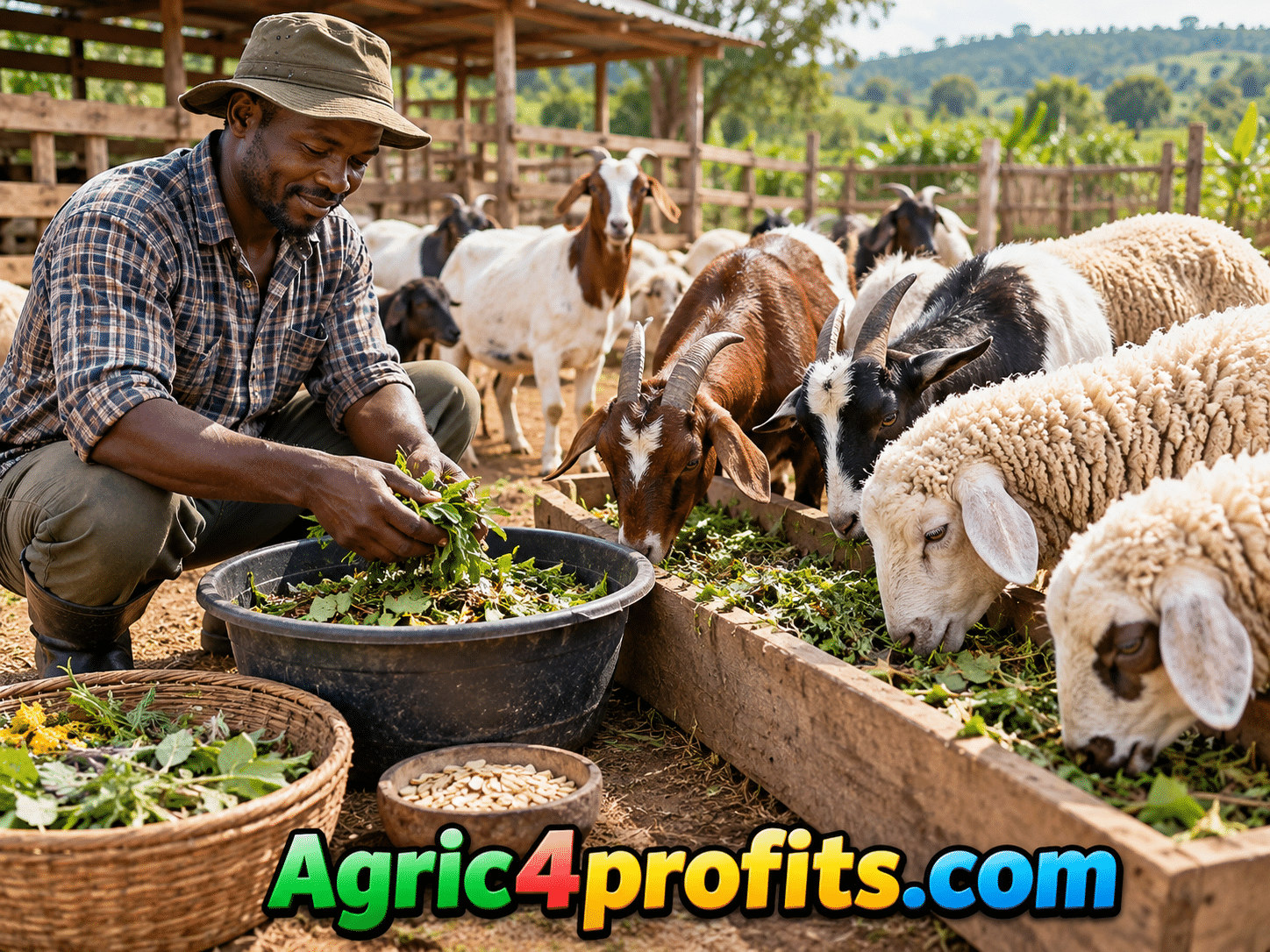
2. Goat Selection Can Serve Ceremonial Markets: In many rural settings, goats are chosen for festivals, sacrifices, and social display, so goat planning should include both appearance and economic return.
When communities value certain breeds for ceremonies, they also shape local demand, price, and investment decisions. That is why economic planning should sit beside cultural preference, not behind it.
3. Sheep Choices Should Match Community Needs: Some sheep are valued for size, coat quality, and calm posture, so sheep planning helps breeders connect cultural demand with practical farm management.
Planning prevents waste. It lets the breeder decide which ram lines should be retained, which ewes should be replaced, and how the final display animal should be prepared for public value.
4. Practical Farming Logic Keeps Selection Honest: A breeder who understands feeding, growth, and health will make better decisions, which is why farm records are useful even outside pig enterprises.
Simple records protect against memory bias. They show which animals were born well, which lines matured strongly, and which choices led to the most reliable cultural display results.
5. Daily Care Supports The Final Display: Clean housing, steady feeding, and regular handling shape how an animal presents itself, and routine management makes those qualities easier to preserve over time.
The same discipline that supports productive birds or livestock also improves display animals, because consistent care reduces stress and keeps the body condition steady enough for public presentation.
Read Also: Different Types of Animal Production Systems
Summary on Animals Mating Selection for Cultural Displays
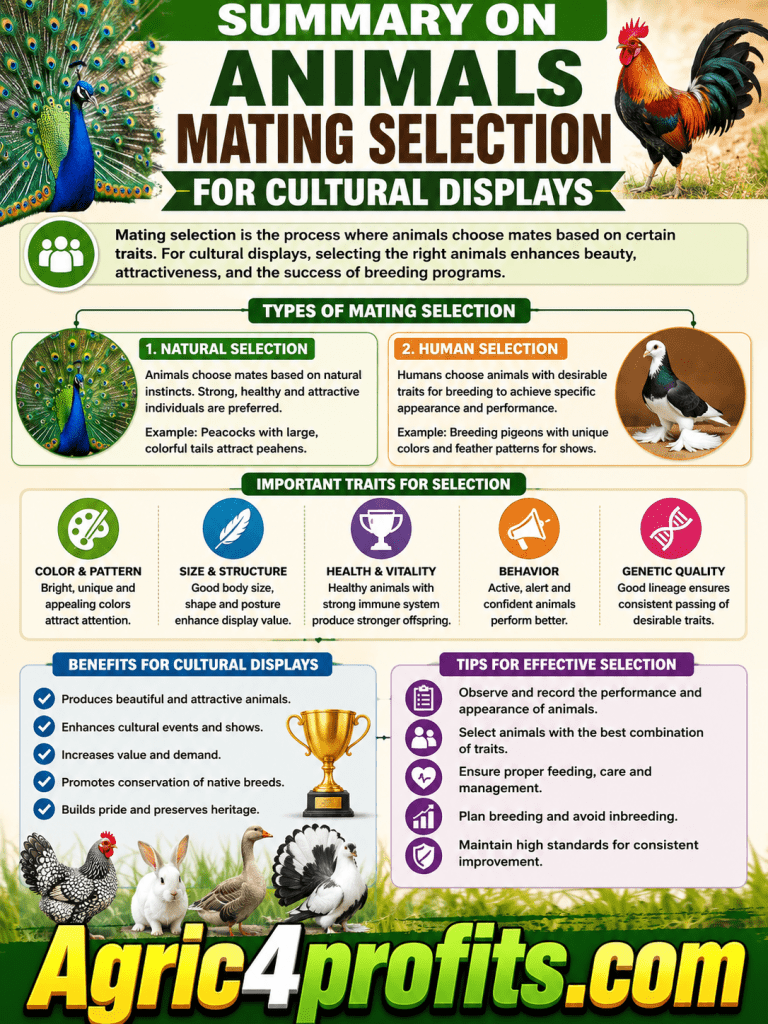
| Cultural Signals In Mating Choice | Visible traits, courtship, and heredity | Communities value animals that look, move, and behave in admired ways. |
| Why Communities Keep Rewarding Certain Traits | Predictability, management, and welfare | Selection becomes stronger when it is supported by care and records. |
| Behavior, Meaning, And Cultural Interpretation | Tradition, performance, and context | Behaviour should be interpreted carefully and never reduced to a single label. |
| Practical Lessons For Breeders And Communities | Observation, planning, and daily care | Good display animals come from patient selection and consistent farm management. |
Frequently Asked Questions About Animals Mating Selection for Cultural Displays Explained
1. What does animals mating selection for cultural displays mean?
It refers to choosing animals for breeding or exhibition based on traits that carry cultural, symbolic, or visual value, such as colour, posture, movement, and ceremonial significance.
2. Why do communities prefer certain animal traits?
Communities often prefer traits that signal strength, beauty, fertility, status, or tradition. Over time, those preferences become part of local identity and guide breeding choices.
3. Is cultural selection the same as scientific breeding?
No. Cultural selection focuses on meaning and appearance as well as function, while scientific breeding emphasizes measurable performance, heredity, and long-term productivity.
4. Can cultural display breeding harm animal welfare?
Yes, if animals are overhandled, underfed, stressed, or forced into unsafe conditions. Good cultural breeding should protect health and comfort at every stage.
5. Which traits matter most in display animals?
Common traits include body symmetry, coat or feather quality, confidence, movement, horn shape, and overall condition. The exact priority depends on the species and cultural setting.
6. Why is heredity important in this topic?
Heredity helps breeders know whether a valued trait can appear reliably in offspring. Without that understanding, cultural selection becomes guesswork instead of planned improvement.
7. How can farmers balance beauty and productivity?
They should select animals that look good and also remain healthy, fertile, and adaptable. Balance keeps the cultural value strong without weakening farm performance.
8. What records should breeders keep?
Breeders should keep notes on parentage, birth date, growth, health, temperament, display quality, and final outcome. Those records make future selection more accurate and more defensible.
Do you have any questions, suggestions, or contributions? If so, please feel free to use the comment box below to share your thoughts. We also encourage you to kindly share this information with others who might benefit from it. Since we can’t reach everyone at once, we truly appreciate your help in spreading the word. Thank you very much for your support and for sharing!
Read Also: Improve Your Soil: Composting Facts to Create Nutrient-Dense Soil






.png)
