

.jpeg)
.png)
Minnesota was once a leader in wheat and oat production. In the late 19th century, nearly 70% of the state’s farmland was planted in wheat, and Minneapolis became a flour-milling powerhouse.
That dominance faded after World War II, as hybrid corn, soybeans and synthetic fertilizers reshaped the agricultural landscape.
By the late 20th century, small grains occupied only a fraction of their historic acreage. Wheat varieties declined by more than half between the mid-1990s and today, and oats became a niche crop largely grown for livestock feed.
But today, farmers are once again exploring how small grains can diversify operations, improve soil health and strengthen rural economies.
Farmers, processors and ag professionals met Aug. 2 in Madison for a workshop, Bringing Small Grains Back to Minnesota hosted by the Land Stewardship Project. The day featured a field tour at Sand Hill Mill and presentations from regional producers and industry experts.
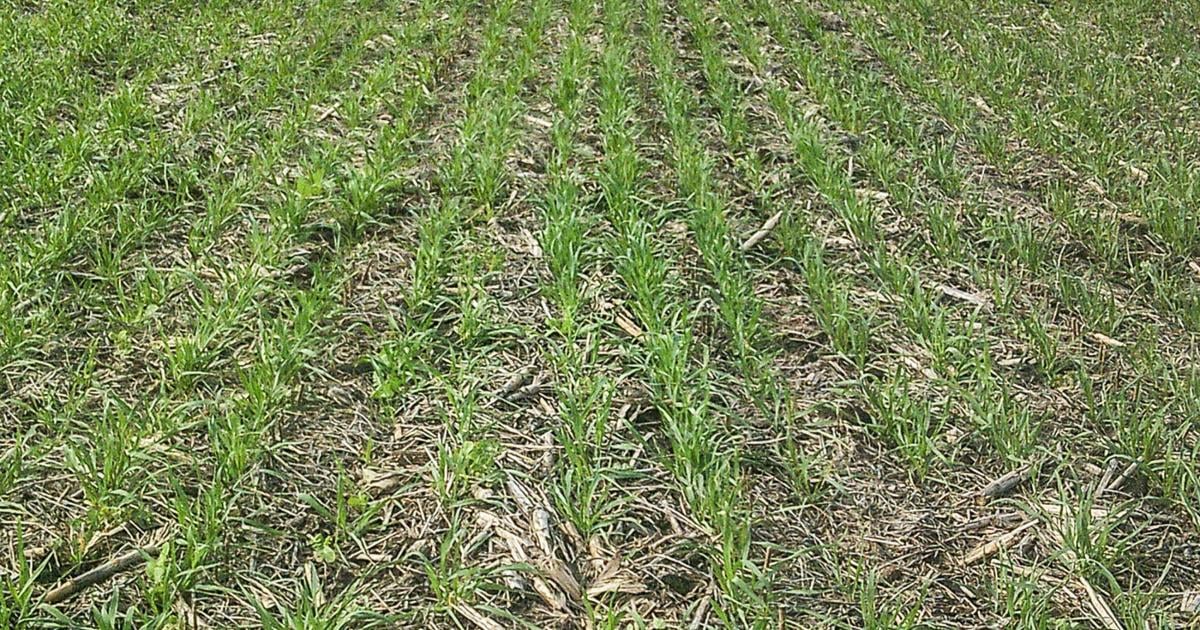
Advocates point to the rotational benefits of small grains like breaking pest and disease cycles, suppressing weeds and reducing fertilizer needs, all while providing a mid-summer harvest window that leaves time to establish cover crops.
Sand Hill Mill, located near the Lac qui Parle River, processes locally grown grains into flours and cereals. The operation emphasizes minimal processing and short supply chains, allowing farmers to keep more value on the farm and consumers to connect directly with the source of their food.
Peter and Brittany Haugen, who operate the mill with their family, have said their goal is to rebuild the local infrastructure that once supported small grains. By processing regionally grown oats, wheat and rye, the mill aims to meet demand for traceable, high-quality grain products while creating new markets for area producers.

Brittany and Peter Haugan at their farm, Sand Hill Mill, located near the Lac qui Parle River.
In northern Iowa, farmer Landon Plagge has been growing oats for about a decade as part of a 100% no-till, three-crop rotation. His family’s century-old operation includes livestock and trucking alongside grain production.
Plagge said adding oats to their rotation has improved soil structure and water quality while spreading labor more evenly throughout the year.
“Oats are harvested in July, which gives us the chance to plant a viable cover crop in our climate,” he said.
That timing, he noted, allows for grazing cattle or experimenting with double crops like buckwheat and soybeans.
He grows oat varieties such as Rushmore, developed in South Dakota, and Reins from Illinois, chosen for their milling quality and test weight. Yields have been good, though this year’s constant rains brought humidity-related harvest delays and lodging in some fields.
Although originally from the northern Iowa area, Plagge and his wife, Anne, are co-founders and majority owners of Green Acres Milling, a farmer-owned oat processing facility being built in Albert Lea, Minnesota, with capacity for 4 million bushels annually.

Landon and Anne Plagge, co-founders and majority owners of Green Acres Milling, stand in a field post-harvest.
Green Acres Milling is expected to be completed in August 2026 and will be able to process 26 types of oats. They will be able to make traceable oat groats, flakes and flour as well a by-product stream of animal feed and bedding.
More than 90% of oats consumed as food in the U.S. are imported from Canada, and Plagge believes local milling could change that.
“With farmers owning the middle of the supply chain, oats can be more profitable than corn or soybeans,” he said.
According to the Land Stewardship Project, small grains can raise subsequent corn and soybean yields, reduce purchased fertilizer, and offer a hedge against volatile markets. They also provide high-quality forage for livestock when paired with cover crops.
For Minnesota farmers facing herbicide resistance, soil degradation and market concentration, small grains are being positioned as both a conservation tool and an economic opportunity.
While it remains to be seen whether the state will return to its “King Wheat” era, events like the Madison workshop show that small grains are regaining a place in the conversation and in some rotations across the Upper Midwest.
Born and raised on a farm in southeastern South Dakota, Katelyn currently resides in Sioux Falls. She enjoys attending SDSU football games (her alma mater), going to farmer’s markets and visiting her parents at their family farm. Reach her at kwinberg@tristateneighbor.com.
Be the first to know
Get local news delivered to your inbox!





.png)
