

.jpeg)
.png)
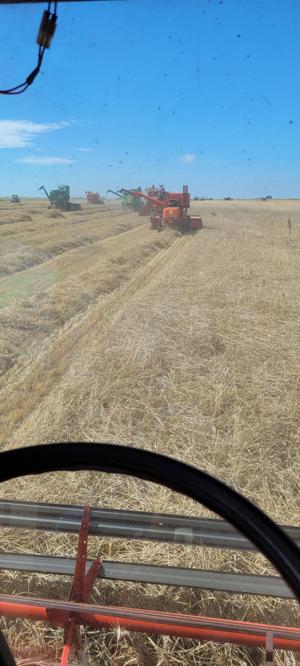
We need to be careful what we say around here because the corn has ears! Kaleb Ellis adds that the soybeans have pods, and the rye is looking for a combine.
There’s an interesting area along the tree line where the drone wasn’t able to fly. It has become an impromptu poor man’s test plot for the beans. Ellis said it was ready for harvest several days before the rest of the crop, and he attributes that to the lack of fungicide on that portion of the field. He noticed that the non-fungicide rye was drier with very brittle stems.
He said the rye that was sprayed is healthier with green stems.
“It’s going to be a neat test strip yield-wise,” he said. “Now you got a spot that had an equal amount of nitrogen, but no fungicides so we can compare a yield.”
He also had the soybeans sprayed with fungicide. They’re at a maturity of R3 with the pods starting to set.
“Now this is where those August rains can start to make the bean crop,” he said. “More rain on the beans mean a better yield. I think it’s because the beans get a little bigger and this is the time when it needs it.”
Along with the fungicide, he had sugar and boron sprayed on the plants to boost the nutrients that are needed by the beans this time of year. He had it sprayed in test strips so he could check the yield at harvest time. The sugar is intended to provide the necessary energy to stimulate microbial life in the soil. The boron should help with pod set and grain development.
Ellis’ dad is skeptical it will work.
“(But) I always tell Dad, it doesn’t matter how old you are, you’re still learning; you will learn something every day, every year,” Kaleb Ellis said.
Right now the beans look really good, but Ellis said he knows that might not result in a good yield.
“You can have a nice, big bushy plant of soybeans but then when you go to combine, they might only run 45 or 50 bushels,” he said. “Usually when you set pods, it’s only maybe two beans in a pod to start, but a lot of these are three, which is good.”
The corn is also showing potential for a good yield.
“I walked into the field randomly and pulled an ear,” he said. “It counted as 41 kernels long and 20 kernels round. I didn’t count all the way to the tip; I left four kernels back. The plant usually consumes the kernels right at the very end when it dries down. That was a 94-day corn.”
On the hay side, the third crop is about halfway finished. Leaf hoppers are a problem that Ellis thinks is affecting the yield on some of the fields, although mostly it’s been doing well. He said there isn’t a lot of dry hay being made because of the continuing challenge of humidity, Canadian wildfire smoke and intermittent rains.
In the pastures, pinkeye has run its course despite a lot of flies and gnats. The calves are putting on pounds of meat. Unfortunately one of their new bulls Ellis put in with his herd broke a leg and needed to be put down. With 100-degree weather that day, they didn’t try to salvage the meat.
My travels the past two weeks took me across part of southern Minnesota. The plan was to visit friends in North Dakota, but I turned around and came home. Traveling alone is no fun. I did see a lot of corn and beans, which all looked very good. I also drove through Houston County, Minnesota, across the Mississippi River from La Crosse, Wisconsin, and the crops there were the same. It would be nice if the prices looked as good as the crops do.

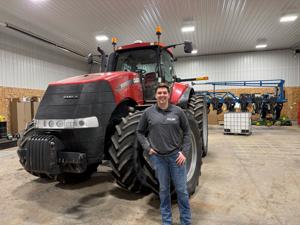
Kaleb Ellis

LeeAnne Bulman
This is an original article written for Agri-View, a Lee Enterprises agricultural publication based in Madison, Wisconsin. Visit AgriView.com for more information.
LeeAnne Bulman writes about agriculture from her farm in western Wisconsin where Kaleb Ellis plants his crops. Email genwim2@gmail.com to reach her.
Be the first to know
Get local news delivered to your inbox!


.png)
