

.jpeg)
.png)
BUTTERNUT, Wis. – Some think that love is a thing to hoard and keep just for themselves. But others know that true love becomes stronger as it’s shared. Those who wish to share love work hard so they can be generous. And through their generosity, their love spreads and endures.
Butternut Lake straddles the line between Wisconsin’s Ashland and Price counties. Known by many as prime musky habitat, the lake is also an oasis of northern beauty. On a summer afternoon the quiet susurrus of waves lapping the shore soothes the soul. Farms once surrounded the lake. Though some are still there, others are divided with new homes of increasing size popping up along the lakeshore. The new homes and growing population indicate a new era.
But even in a new era, important vestiges of the past remain. Some who discover them find life to be far richer.
During a July afternoon, Joe Cervenka put off work in his hay field to discuss an important part of his family.
“Dad milked 10 or 12 cows on our old dairy farm,” he said. “He had some young stock too. Dad sold the cows in about 1988. I bought the cows and milked for a year until I decided I could work and make more money on a Saturday than I made from milking that many cows. I sold the cows. Years later I found a pair of Belgian geldings, colts. I raised them and went on to buy another pair. I tried raising Belgian colts, but had bad luck and lost some.
“I had always admired Suffolks, so back in 2012 I found a pair a breeder had for sale, a pair of 3-year-olds. I went down to southern Wisconsin and bought them. The following spring I found another pair in southern Illinois.
“I leased a stallion from a breeder up in northern Michigan for our first batch of foals. Then I bought a stud colt from another breeder. He got to be over 17 (hands high). My goal was to breed a working-size horse, 16 hands or below. My mares were around 15 hands. So I bought another breeding colt. The North American Suffolk Horse Association has a good website with breeders around the country and in Canada.”
“We’ve had about 48 foals on our farm so far. They are about six or seven months old at weaning. I’ve sold them all over the United States – Idaho, Louisiana, Pennsylvania, Illinois and other states.”
Some might have the idea that raising Suffolk horses is just a business for Cervenka. They could not be more wrong.
“ I love the drafts and a big part of what we do is also the preservation of the Suffolks,” he said. “They’re on the endangered list. There’s roughly 1,200 in North America and 350 in England. It gives us a good feeling knowing we’re continuing on the path of raising of a breed that was started over 250 years ago. I have had a number of folks who have switched from other draft breeds to the chestnuts (Suffolks). I don’t know of any who have switched back.
“Suffolks are easier to harness than taller horses. They’re said to be bred for the furrow. They are the working man’s horse. They are easygoing and fun to be around. The foals are wonderful. These horses grow on you; they have a pleasing temperament. Even if they have never been in a trailer, if someone buys one, I coax the horse up to the trailer door and he will go right in. They try to please.”
Suffolk horses trace back to a foundation stallion foaled in 1768 in Ufford, England, in Suffolk and Norfolk counties. The agricultural area was isolated so farmers there developed breeds of livestock that fit their land. The soil there is a heavy clay; Suffolk horses were developed for power, stamina, healthy longevity and docility. They average 15.2 to 17 hands high. They have a strong work ethic and wish to please. They have heart – an inner determination to push on.
“We have around 200 members in the North American Suffolk Horse Association,” Cervenka said. “Every year we have a gathering. Last year it was in Saskatchewan, Canada, at a member’s farm. It has been all over the continent. This year it will be held in Hartford, Wisconsin, in October.
“I did carpentry work for about 35 years. I was raised on a farm; farming gets in your blood, and it’s hard to get out of it. I enjoy these Suffolk horses. You get these horses in your blood and it’s hard to get out too. We have done okay raising them. I’ve raked hay with them. I’ve given sleigh rides with them. I really enjoy these horses.”
Lakeview Farm is a family operation. Cervenka’s sister lives on the farm and watches over the horses. His partner, Cindy, also helps with the horses. But watching Cervenka work with his Suffolks is enlightening. It’s said that Suffolk horses have heart; they can develop a connection. And Cervenka said the outside of a horse is good for the inside of a human. Seeing mutual respect, even mutual admiration and love between a human and horses they care for also does visitors good.
On a family farm a stone’s throw from Butternut Lake there is a farm family that is part Suffolk. The bond between the rare and special breed of horses from another era and those who know and raise them is best experienced. Cervenka and his family are working hard so they can be generous by sharing their love with people new to Suffolks, and with those who already know them well.
The annual gathering of the North American Suffolk Horse Association will be held Oct. 10-12 in Hartford, Wisconsin. Register by Aug. 25. Visit suffolkpunch.com for more information.
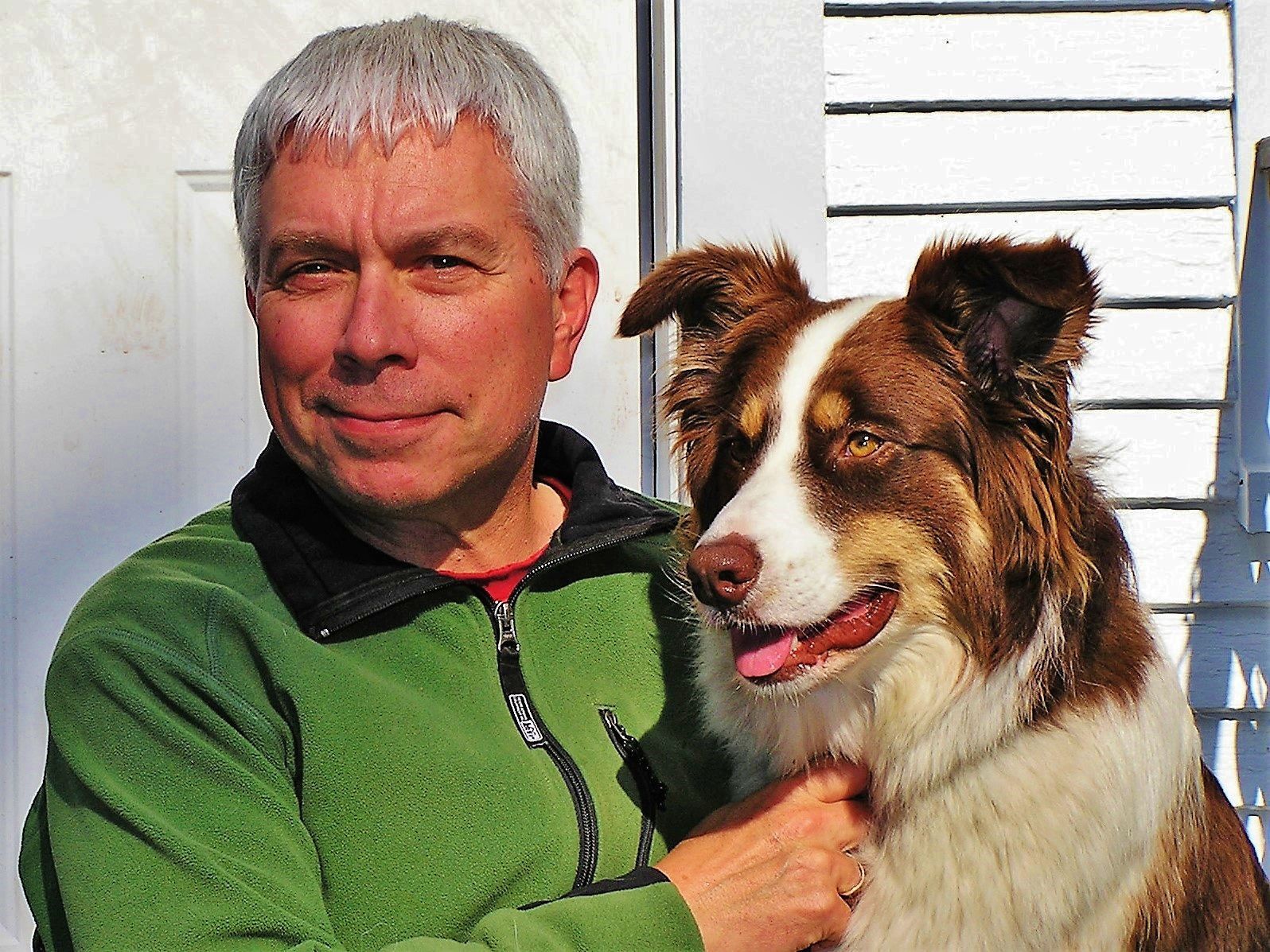
Jason Maloney and Red
This is an original article written for Agri-View, a Lee Enterprises agricultural publication based in Madison, Wisconsin. Visit AgriView.com for more information.
Jason Maloney is an “elderly” farm boy from Marinette County, Wisconsin. He’s a retired educator, a retired soldier and a lifelong Wisconsin resident. He lives on the shore of Lake Superior with his wife, Cindy Dillenschneider, and Red, a sturdy loyal Australian Shepherd.
Be the first to know
Get local news delivered to your inbox!



.png)
