

.jpeg)
.png)
Shetland horses are the minis of the horse world.
Standing less than 46 inches tall and weighing on average 400-450 pounds, they are diminutive but full of character.
The breed originated in the Shetland Islands north of Scotland, in a cold climate. They have a thick, heavy coat, short, sturdy legs, a small head, widely spaced eyes, and a short, muscular neck. Their short, broad back and deep girth, along with a springy stride, make them unmistakable.

The 2024 American Shetland Pony Club Congress Grand Champion Classic Stallion, Over, EWS Memphis Bound, a 2-year-old owned by Dan and Patsy Egeland and shown by Patsy.
Their stoutness also made them useful for pulling carts, hauling loads and general labor. During the Industrial Revolution, they were used as “pit ponies,” working underground hauling coal in mainland Britain. Coal mines in the eastern U.S. also used the Sheltie, as they’re nicknamed, for hauling coal.
Shetlands are “hardly little horses,” said Chesa Henkel.
The Clatonia, Nebraska woman has owned Shetlands since 2005. At the time, she was training quarter horses, but one of her kids was intimidated by big horses. At the State Fair, they saw the Shetlands show.

Dan and Patsy’s niece, Remington, shows a Shetland pony named Wa-Full T.Top’s Silver Blue, owned by Wa-Full Shetlands, at the Nebraska State Fair.
“They looked so stinking cute, and that got me hooked,” she said.
Her kids liked them, too, and by the fall, the family had five.
“They’re like potato chips. You can’t have just one,” she laughed.
Because of their size, Shetlands require less feed than full size horses. And because of that, it’s easy to overfeed them. They have a tendency toward laminitis, so proper nutrition is important. Henkel feeds grain with no starch and low or no sugar content. She’s found that some major brands sell grain with low starch and sugar content.
Near Clarks, Nebraska. Dan and Patsy Egeland have been involved with Shetlands since their youths, he growing up near Boone, Iowa, and she with her parents Paul and Chris Wait, who have owned Shetlands for decades.
When feeding Shetlands, they are often turned out with big horses or cattle, with more feed available than they need, and they’ll eat until they founder.
“A Shetland pony requires about the same amount of food as a mid-sized dog,” Dan Egeland said. “It’s important you watch their diet.”
They don’t quit eating.
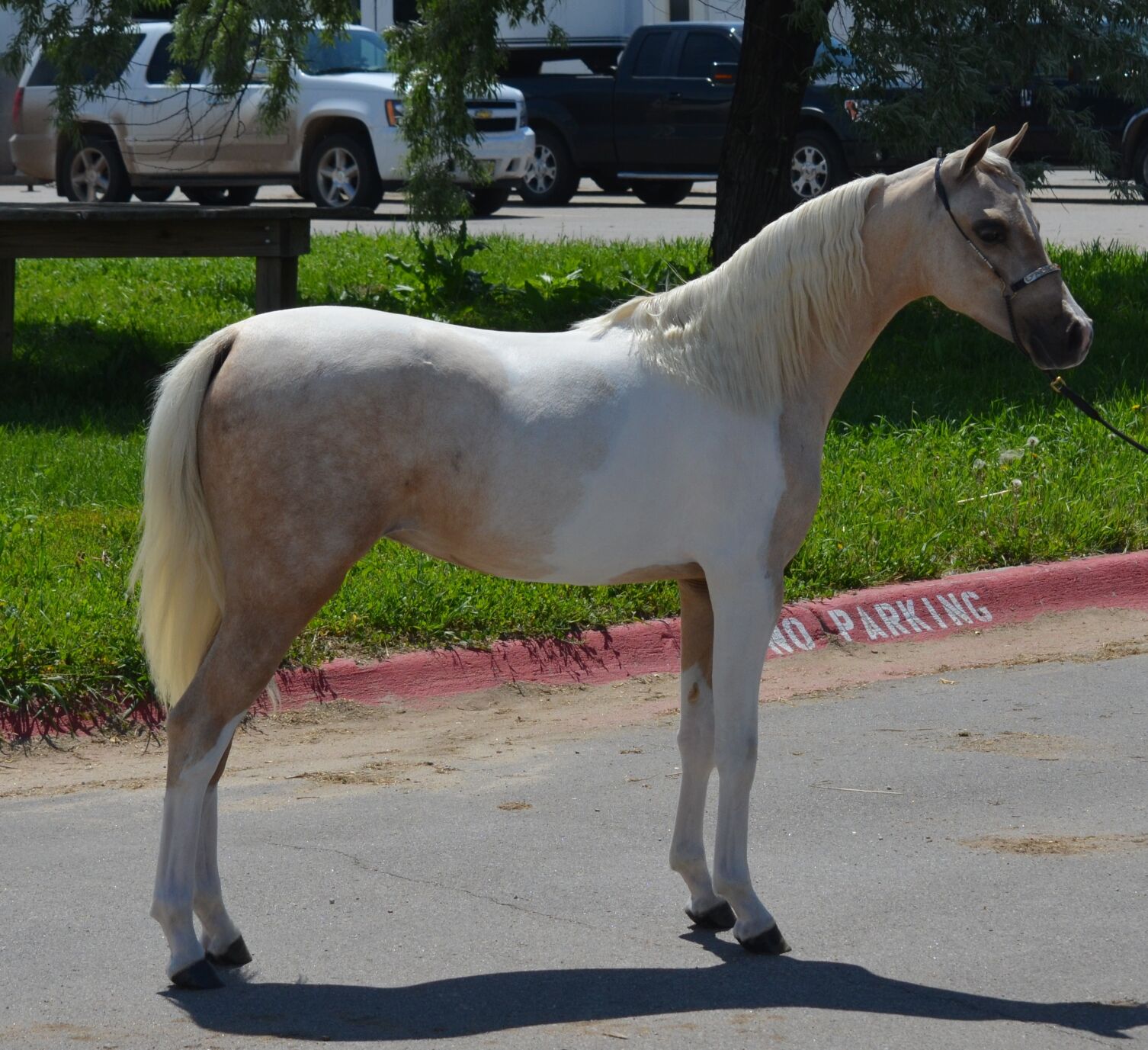
EWS Nebraska Chrome, a 2015 American Shetland Pony Congress Grand Champion Mare, Over, winner.
“You can go out with a five-gallon bucket, and they’ll stand and eat till the bucket is empty,” he said. “The biggest thing (about their feed) is quantity.”
The Egelands have three Shetland stallions and a dozen mares. They sell between six and 10 babies a year, usually as weanlings and sometimes as yearlings.
Patsy shows Shetlands and does an excellent job of training and showing, Egeland said: “My wife can pick out the good ones really well. She knows which ones she wants to show.”
The breed is stereotyped as being renegades and naughty, which isn’t always a fair judgement, Egeland said. They’re very intelligent, he said.
Some of the stereotype comes from people buying a “small horse” and assuming it can be ridden by a child, without training the horse.

One of Dan and Patsy Egeland’s Shetlands, stallion EWS Memphis Bound, a Congress champion. Today’s Shetlands don’t necessarily look like the typical Shetlands; crosses throughout the years have changed the look.
“You wouldn’t put a kid on a 3-year-old quarter horse and leave,” he said, “but people seem to do that with ponies. I think that’s where a lot of the bad rap comes from.”
Shetlands can be a great horse for kids, if it’s the right fit, he said.
Like most horses, they understand the difference between adults and kids and treat them differently.
“If they’ve been mistreated by an adult, and a kid comes along, they’ll behave totally different,” Henkel said.
They also have a good memory.
“If you lose your temper, they don’t forget it, and they will hold a grudge,” she said. “They’re a lot like a cow horse. They are super sensitive and super smart, and so trainable.”
Because of their smarts, training needs to be varied.
“Sometimes you have to be careful,” Egeland said, “because they’ll start to figure it out quickly, and they want to get it done. A lot of variety is important, and so is a lot of exercise. They like to be exercised.”
Shetlands come in any color except Apaloosa.
The look of the animal has changed since the nineteenth century.
“The Shetland ponies we have today don’t look anything like those that came from the islands,” Egeland said. “They’ve been refined, through crosses, which happened over a number of years.”

The stallion EWS Memphis Bound at the 2024 American Shetland Pony Club Congress, where the animal won the Grand Champion Classic Stallion, Over.
The old style Shetlands have the big, stout blocky look, but Henkel prefers the Arabian or classic look, with big eyes and tiny ears. There’s a modern style, too, which looks like mini-saddlebreds.
Henkel’s herd consists of 20 animals, with some of her herd coming from Patsy Egeland’s parents, the Waits. She raised four foals this year and sells them as show animals as part of her Deven Creek Shetland and Performance Horses business.
Shetlands were the first breed to have a breeding registry. In the U.S., the largest breed registry for Shetlands is the American Shetlands Pony Club in Morton, Illinois.

A weanling filly owned by Dan and Patsy Egeland. Shetlands have been used as work animals for years; pound for pound, they can pull more than a draft horse.
Patsy Egeland has shown numerous champions, including classic grand champion stallion in the over, class grand champion mare in the over, classic country pleasure driving champion in the over, all at the American Shetland Pony Congress Show, the nation’s largest Shetland pony show.
Her parents, Paul and Chris Wait with Wa-Full Farms near Fullerton, have raised Shetlands for years. Paul rode Shetlands to school as a kid, and when the couple married in the early 1960s, they got their first registered Shetlands.
Patsy Egeland loves the beauty of the animals, their smarts, and their efficiency.
Dan Egeland finds it rewarding when a customer buys one of their Shetlands and wins shows with the animal.
“It’s fun when you get to see it pay off,” he said.
For him, his wife and both sides of their families, Shetlands are an all-consuming hobby, something they love.
“I always tell people Shetlands are a disease and there’s no cure,” he joked.
This article is part of a monthly feature on horse breeds. Freelance writer Ruth Nicolaus loves the Great Plains and its people. She lives in eastern Nebraska. Reach her at editorial@midwestmessenger.com.
Be the first to know
Get local news delivered to your inbox!

.png)
