

.jpeg)
.png)
In the Atacama, distance, water stress, and worker wellbeing turn fresh food into an infrastructure problem. A mine-site vertical farm could help, but only if it’s designed as a reliable service, not a sustainability showcase. Source: Illustration generated with AI by Guillermo Briones and Niko Simos Imagine the dinner line at a copper mine high in the Chilean Andes. A worker is nearing the end of a 12-hour shift. Outside, the landscape is spectacular and unforgiving: thin air, intense sun, cold nights, dust, and hundreds of kilometers between the camp and much of its fresh-food supply. On the plate, the difference between a salad harvested that morning and one that has spent days moving through a remote supply chain is visible before the first bite. Now imagine the greens came from the building next to the kitchen. That is the opportunity: not a vertical farm as a corporate showpiece, but controlled environment agriculture (CEA) as part of the camp’s operating system. Designed well, an on-site farm could improve freshness and menu consistency, reduce exposure to logistics disruptions, create a more traceable food-safety system, and give mining companies a practical test bed for resource-conscious production in one of the world’s most demanding environments. The idea is compelling. It’s also easy to oversell. Lettuce will not solve fatigue, high-altitude exposure, or workforce health. A vertical farm will not automatically reduce carbon emissions. And a technically impressive grow room can still fail if its crops don’t match the kitchen’s menu, its operator lacks support, or its service contract rewards output rather than accepted, eaten produce. Chile is the world’s leading copper producer and holds the largest national copper reserve base. Many of its major operations sit in the Atacama and the high Andes, where conventional agriculture is constrained and remote logistics are routine. Mining companies in the region already manage complex systems for power, water, transport, accommodation, and food service. Some are commissioning desalination, expanding water reuse, and adding renewable generation to reduce dependence on scarce continental water and carbon-intensive energy. In other words, the enabling capabilities are already present: infrastructure, long planning horizons, concentrated demand, operational discipline, and a customer that understands service-level agreements. The Atacama also sharpens the design question. NASA has used the desert as a Mars-analog environment because of its extreme aridity. A farm placed here cannot rely on a forgiving climate or a quick trip to a local supplier when a pump fails. It must be engineered for resource constraints from the beginning. The tempting way to begin is with a technology. The better starting point is the plate. A mining caterer can map weekly demand by ingredient, daypart, recipe, and quality specification. Which products arrive inconsistently? Which are rejected most often? Which lose quality fastest in transit or storage? Which generate the most packaging and trim waste? Which could be harvested into a dish within hours? That analysis will usually favor a focused first crop portfolio rather than a catalog of everything technically possible: Leafy greens: short production cycles and highly sensitive to freshness, but the farm must grow the varieties the kitchen will actually serve. The farm should not try to replace the entire produce supply chain. It should own the categories where proximity creates the most value. Worker wellbeing gives the concept strategic relevance, but it demands careful language. A recent mixed-methods study of Chilean copper miners describes a workforce exposed to long commutes, demanding labor, 12-hour rotating shifts, and cycles between lower-altitude homes and high-altitude sites. The research argues that health is shaped not only by individual choices but also by modifiable organizational and environmental conditions, including the conditions that influence nutrition and physical activity. An on-site farm can improve one part of that food environment: the availability, sensory quality, and consistency of fresh produce. It may make the healthier choice more appealing and easier for the caterer to deliver. That is meaningful. But it is not the same as proving that a serving of greens increases alertness, prevents accidents, or treats the effects of hypoxia. Those outcomes should be tested, not advertised. A mine-site farm is not an urban grow room with a different address. Dust, altitude, water chemistry, power quality, maintenance access, and staff rotation must shape the system architecture. The first design decision may not even be “vertical farm or greenhouse.” Agritecture’s location-first approach applies here: compare an indoor vertical system, an insulated greenhouse, and a hybrid on lifecycle cost, site climate, crop plan, labor, water, and available energy. A sealed indoor farm offers strong environmental and dust control; a greenhouse can use sunlight and may lower lighting demand. The right answer depends on the specific site. Our five-part series on vertical farms vs. greenhouses and why location matters is a useful primer on making that first system decision. Circularity should be introduced with the same discipline. Recovered condensate and treated process water may be valuable inputs, but each reuse loop needs defined quality standards and controls. Biodigesters can turn food waste into useful products, yet untreated or inconsistently treated digestate should not be routed into a hydroponic nutrient loop in the name of circularity. Close loops only when the biology, economics, and risk controls are proven. CEA can reduce exposure to some field-production hazards, but a controlled environment is not automatically a safe environment. Water, seeds, substrates, tools, people, condensation, and post-harvest handling can all introduce or spread contamination. At a remote camp, a foodborne incident could affect a concentrated workforce and disrupt operations. The farm therefore needs to sit inside the site’s food-safety management system, not beside it. The most promising structure resembles the logic of a power purchase agreement (ppa) more than a one-time equipment sale. The mine or its catering partner buys an agreed service, safe produce, to specification, at defined volumes and availability. The farm provider remains responsible for agronomy, monitoring, consumables, preventive maintenance, training, and performance improvement. This growing-as-a-service model lowers the risk that a sophisticated farm becomes stranded equipment after the champion leaves or the first operator rotates off site. It also aligns incentives: the provider earns by sustaining useful output, while the customer gains predictable pricing and a single accountable party. A credible first project should be deliberately small: large enough to supply recurring menu items, but limited enough to learn without embedding a costly assumption. Its purpose is not to prove that vertical farming works in general. It is to determine whether a specific system, at a specific mine, can deliver a specific service better than the alternative. And the baseline must be measured before the first seed is planted, otherwise the project may produce attractive dashboards without answering whether anything improved. A practical pilot scorecard: Value question Example metric Is the farm reliable? Harvest-plan attainment; farm availability; alarm response time Does the kitchen accept the output? Kilograms accepted vs. offered; specification rejects; menu substitution rate Does proximity improve quality? Time from harvest to service; shelf life; trim and spoilage rate Do workers value it? Selection rate; plate waste; repeat preference; satisfaction feedback Is resource use defensible? kWh and liters per kg; consumables and packaging per serving Is it safe? Water and sanitation verification; deviations; traceability and mock-recall performance Does it create economic value? Total landed cost per accepted kg or serving vs. the baseline A 2024 life-cycle assessment of an on-site modular farm in Sweden found that lettuce and basil could have greenhouse-gas impacts comparable to or lower than conventional supply. It also found that electricity was the dominant contributor for most scenarios, and explicitly warned that its results could not simply be transferred to other regions. That caveat is central in Chile. The climate benefit of an indoor farm will depend on the mine’s actual electricity supply, the system’s energy intensity, the conventional product being displaced, transport and refrigeration, infrastructure lifetime, crop utilization, and waste. A renewable-heavy microgrid can strengthen the case; inefficient equipment, low utilization, or carbon-intensive backup generation can weaken it. Water accounting requires equal care: recirculating hydroponics can reduce irrigation demand, but a mine-site assessment should include treatment losses, cleaning, cooling, humidification and dehumidification, and the source and opportunity cost of water. The result should be a transparent site model, not a generic “uses 95% less water” claim. The broader opportunity extends beyond copper and beyond Chile. Remote mines, energy projects, research stations, island resorts, defense installations, and disaster-response hubs all face versions of the same problem: concentrated demand in places where fresh food is expensive, fragile, or inconsistent to supply. Chile’s copper sector is a powerful place to develop the model because it combines scale with real constraints. A successful pilot would not only produce greens. It would create an operating playbook for resource-constrained CEA: how to size from demand, engineer for isolation, integrate with catering, contract for availability, and verify health, environmental, and economic value without overclaiming. The most interesting question is no longer whether plants can grow in the Atacama, we know they can grow inside a controlled environment. The question is whether a farm can perform like infrastructure, safely, reliably, and usefully, shift after shift. That is a frontier worth testing. Pressure-test the concept before committing capital: our farm feasibility approach and hands-on urban and CEA workshops are built for exactly this. 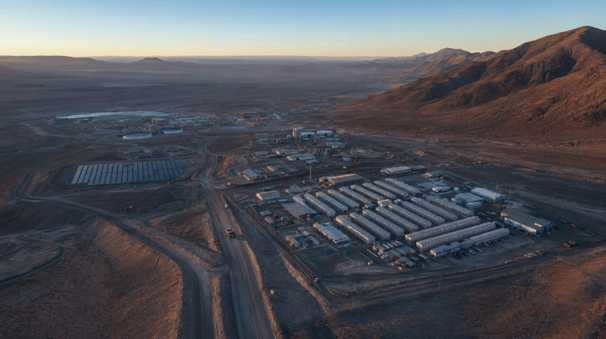
Why Chilean Copper Camps Are a Serious CEA Use Case
Start With the Worker’s Meal, Not the Farm
Nutrition Matters, But Credibility Matters More
Design It Like Remote-Site Infrastructure
Food Safety Is the Operating License
The Business Model: Pay for Service, Not Equipment
Measure the Pilot Before Scaling the Promise
Carbon and Water Claims Need Site-Specific Accounting
From Chilean Pilot to a New CEA Category
Interested in exploring a mine-site CEA pilot?



.png)
