

.jpeg)
.png)
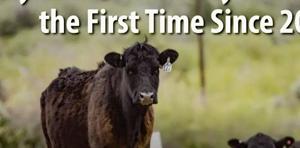
SCOTLAND – Virtual-fencing technology is starting to appear on some livestock farms around the world, as more farmers sync in to its real-time benefits. When using the technology, developed by Monil in Norway, a farmer creates a virtual boundary on the area that the cattle should graze in.
As the cattle are fitted with collars, they are easy to track. Should one venture too close to the virtual boundary, the collar gives off an audio signal that prompts the animal to turn around.
A two-year Monitor Farm Scotland project is following four farmers who have 25 collars each, in order to assess how user-friendly and animal-friendly, the system really is. So far the farmers have reported positive experiences using the technology, despite some initial skepticism about how it would work in a commercial situation.
The four farms involved are based in Argyllshire, South Ayrshire, Stirlingshire and Strathspey, Scotland. All are using the virtual fencing to manage grazing on the uplands and hills.
The virtual fence is set using an app, which monitors the fence, individual animal location and movement, plus any escapees. Fences can be moved and any breakouts managed remotely, with notifications sent when cattle don’t move for a certain period.
John and David Andrew from Rowanston Farm in South Ayrshire are one of the monitor farms. They use the system to manage 25 in-calf Luing-cross and Simmental heifers due to calve on the hill this autumn. The Andrews farm a total of 1,770 acres with 150 suckler cows and replacements, 200 store cattle for fattening bought in each year, plus a flock of 1,000 breeding ewes.
The father and son team predominantly uses the virtual-fencing system to improve pasture use, but the main advantage will come during the calving season. The cows calve from late August until early October. The normal plan is to keep them in a defined area on the hill and track their movements closely. By using the technology this season, they can monitor the data to spot changes in behavior that might signal a calving event or potential issue.
David Andrew said, “We spend around three hours a day during calving season checking the cows. If we can save time and know earlier when something’s wrong, that’s a huge win for us and the animals.”
The ability to monitor cows individually and detect deviations from herd movement patterns gives them insight they’ve never had before.
John Andrew said, “If we can catch signs of calving early, like one cow lagging behind or straying from the group, we can respond faster. That kind of info could save a calf or a cow.”
With sensors on the collar located on the cow’s neck, Monil’s technology can extract a host of data about the animal – including activity that is normally associated with calving.
Monil engineer Solveig Mohr said, “At the beginning of 2025, we released a classification model to describe the activity of the animals. It continuously runs on all our devices and analyzes data from the accelerometer sensor on the collar to determine whether the animals are resting, grazing, walking, or running.
“Initially, we will provide alerts for abnormal activity. This could be if the animals are moving significantly less than usual.”
The hills where the heifers graze has grown wild in recent years, becoming more difficult to access and less useful for livestock. With good planning and virtual fencing, the Andrews aim to reclaim it gradually – improving grazing conditions for cattle as well as for sheep and wildlife.
If the system produces good results this season, the Andrews plan to expand to 50 collars for their spring-calving cows next season, they said. Their long-term goals are to keep cows on the hill, reduce grazing pressure near the farm during calving and make the most of every acre.
John Andrew said, “We’ve got good ground that’s underused and a hill that’s harder to manage. This helps us do both better. This is a conservation tool, too. We’re not just fencing; we’re managing resources.”
Christine Cuthbertson, Monitor Farm Scotland regional adviser who is running the virtual-fencing project, said, “This is a really exciting project, and may transform the business of keeping cows in Scotland’s hills and uplands.
“We will be assessing the cost-benefit over the next two years and will also be reporting the positives and challenges our four Monitor Farms find with the technology.”

Chris McCullough
This is an original article written for Agri-View, a Lee Enterprises agricultural publication based in Madison, Wisconsin. Visit AgriView.com for more information.
With 20 years experience behind him, award-winning agricultural journalist Chris McCullough is always on the hunt for his next story. He grew up on the family dairy farm in the heart of Northern Ireland and is based on the country’s east coast. He travels around the world to bring readers international news.
The business news you need
Get the latest local business news delivered FREE to your inbox weekly.

.png)
