
 5 months ago
137

.jpeg)
.png)
Press play to listen to this article
Voice
If you grow Sorghum in Namibia and you want to know exactly what you are making from your farm, you are in the right place. The free Agric4Profits Farm Profit Calculator is right here on this page. No registration. No download. Just your real numbers.
After your last harvest, after you sold your bags, after you settled your workers and took care of every expense, did you sit down and calculate what you actually made from your Sorghum farm in Namibia?
Most smallholder Sorghum farmers in rural Namibia hardly sit down to calculate their real profit. Not because they are careless. But because farming is demanding work that leaves little time for paperwork, and because accessible tools built specifically for African smallholder farmers have been hard to come by.
That is exactly what this free Farm Profit Calculator is for. It does not matter how you farm, what inputs you use, or how big your land is. Enter your own real figures and see your own real result in Namibia in a few minutes.
Sorghum Farming in Namibia — More Than Just a Farm
Sorghum farming in Namibia is not simply a means of earning an income; it sustains families, nurtures communities, and fosters tradition. For many families, sorghum is a staple food, rich in nutrients and versatility. From porridge to local flatbreads, this humble grain finds its way into daily life, ensuring that the table is always filled. As the seasons turn, sorghum becomes a part of the rhythm of life, tying farmers to the land and to each other through shared harvests and meals.
Yet, sorghum's value goes far beyond sustenance. Many smallholder farmers are beginning to recognize its potential in the marketplace, and how processing it can open new streams of income. Sorghum can be transformed into flour for baked goods, syrup for beverages, and even as a key ingredient in animal feeds. This adaptability not only increases the farmer's income but also contributes to food security and local economies.
🌿 Go Organic on Your Farm: Instead of harmful chemical pesticides and fertilisers, try our organic farming products — including neem oil spray, bio-pesticides, natural plant treatments, organic seeds and seedlings, suckers, and many more organic products that are safe for your health, your family, your soil and your harvest. Shop Now →
Nutritionally, sorghum plays a vital role in improving the health of families in Namibia. It is gluten-free and packed with essential vitamins and minerals, making it a nutritious alternative to wheat for those with dietary restrictions. A successful sorghum harvest means more than just profits; it means healthier children, stronger families, and vibrant communities that are nourished from within.
Economically, sorghum is gaining recognition as a critical crop for the Namibian agricultural landscape. With local and international demand steadily increasing, farmers who invest time and care into sorghum cultivation are tapping into a market that values quality and sustainability. This growth presents tremendous opportunities for those who understand the impact of their farming practices and their strategic market positioning.
The market chain for sorghum in Namibia is rich with possibilities, moving from the farmer to local markets, processors, and beyond. Understanding this chain helps farmers determine when and how to sell their harvest for the best prices. Some choose to sell directly at local markets while others may collaborate with cooperatives. Each pathway offers unique advantages and can substantially influence profit margins.
Seasonal patterns in sorghum farming are significant. Farmers often plant at the onset of rains and can adapt based on rainfall and temperature fluctuations. This adaptability is crucial for ensuring a successful harvest season. The farmer attuned to these seasonal rhythms gains a competitive edge, maximizing the potential of every seed sown and fostering resilience in their agricultural practices.
🔧 Free Farm Tool Available: Use our free Agric4Profits Farm Tools to calculate your farm profits, formulate feeds, identify pests and diseases on both your crops and animal farms, plan your planting and harvesting season, including many more farm tasks to get free expert advice and recommendations — completely free, no registration required. Access Free Tools →
However, it is essential to acknowledge the challenges faced by sorghum farmers in Namibia. Irregular weather patterns, pests, and market fluctuations can impact yields and pricing. These challenges remind us of the importance of planning, diligent record-keeping, and leveraging tools that inform critical decisions. It is through understanding these dynamics that farmers can navigate the complexities of market demands and agricultural practices successfully.
The Real Costs of Sorghum Farming in Namibia
Every Sorghum farming season begins with costs before a single income arrives. This is the reality of farming and it is not something to be afraid of. But it is something every farmer needs to understand clearly so that when the harvest comes, you know exactly how much you need to cover before you start making profit.
Here is what a typical Sorghum farming season in Namibia involves in terms of spending. Every cost depends on your own situation, your land and your methods.
| 1 | Seed for planting | Saved seeds can substantially reduce costs while ensuring local adaptation. Purchasing seeds can be more expensive but provides access to improved traits. |
| 2 | Land preparation | Methods vary from manual tillage to machine use, affecting time and labor costs. Traditional methods require more physical effort but can be very effective. |
| 3 | Soil fertility management | Utilizing organic compost and natural amendments supports soil health. Regular care ensures fertility, benefiting yields and crop resilience. |
| 4 | Weed control strategies | Effective weeding, whether manual or through tools, is critical early in the season. Costs depend on labor availability and the scale of the operation. |
| 5 | Pest management techniques | Natural methods can minimize costs and promote biodiversity. The real costs arise from neglecting pest management which leads to losses. |
| 6 | Labor for planting and care | Labor costs can vary based on the method of hiring, whether family, friends, or paid workers. Planning labor needs ahead is crucial. |
| 7 | Transportation to market | Depending on distance, transportation can become a significant cost. Proximity to markets can help mitigate these expenses significantly. |
| 8 | Post-harvest processing | Proper handling, drying, and storage are vital to maintaining grain quality. Post-harvest losses can drastically cut into overall profits if not managed well. |
Every cost depends on your own specific situation. The Farm Profit Calculator works equally well for every type of farmer regardless of their methods or farm size. You enter what you actually spent and you get your own real result.
What the Farm Profit Calculator Does for Your Sorghum Farm
The Agric4Profits Farm Profit Calculator is a free tool built specifically for African farmers. You put in your numbers and it gives you your result immediately. No waiting. No interpretation needed. Just clear honest numbers about your own farm.
💬 Have a Farming Question? Join thousands of farmers across Africa on the Agric4Profits Community — ask questions, share experiences and connect with agricultural experts. It is completely free. Ask Your Question Now →
Here is what the tool shows you:
- Your total revenue from all the sorghum you sell in a season calculated from your selling price and harvest quantity
- Your total production cost for the season including every expense you entered from seed to transport
- Your net profit after all costs have been subtracted from all income
- Your return on investment as a percentage showing exactly how much you made for every unit of currency you invested
- Your annual profit if you farm more than one season per year showing your complete yearly income picture
- Your cost per bag or kilogram of sorghum produced so you know the true cost of each unit before negotiating any selling price
- Your break-even point which is the exact number of bags or kilograms you must sell before making a single unit of profit from the season
Knowing your break-even point empowers you in negotiations, ensuring you cover your costs while pursuing profit.
How to Use the Farm Profit Calculator for Your Sorghum Farm
You do not need to register. You do not need to download anything. It works right here on your phone or computer.
Step 1: Select your farm type
Find the dropdown that says Farm Type and select Crop. Sorghum is categorized as a crop, so this is where your journey begins. The calculator will show you relevant fields for crop farming.
Step 2: Select your country
Select Namibia from the country list. The calculator will automatically adjust to your local context, ensuring your figures reflect your farming reality and environment.
Step 3: Enter your total production cost
Have a thorough understanding of every expense you anticipate, from seed purchases to labor and transport. The more precise you are, the more accurate your profit result will be.
Step 4: Enter your selling price per unit
Identify the current price you are receiving for your sorghum. Input the selling price per bag or per kilogram to set the stage for accurate calculations.
Step 5: Enter your expected harvest quantity
Be as realistic as possible regarding how much sorghum you expect to harvest. Entering honest estimates will help you attain useful profit insights.
Step 6: Enter your post-harvest loss percentage
Consider what portion of your harvest typically does not make it to market due to losses. Input that percentage, using your experiences to guide the figure.
📖 Want to Go Deeper on This Topic?
Our expert agricultural ebooks cover poultry, fish farming, different crops production, snail farming, organic farming, mushrooms, sheep, cattle, flowers, pig farming, goat farming, agribusiness, etc. in practical step-by-step detail — written by agricultural professionals for African farmers.
Step 7: Enter your farming seasons per year
Indicate how many times you plant sorghum annually. This detail helps the calculator provide a comprehensive overview of your potential yearly income from your farming efforts.
Step 8: Click Calculate and read your result carefully
By clicking the Calculate button, you'll see an instant breakdown of your profits, costs, and more. Take your time to digest each figure; it all informs your farming future.
Use the Farm Profit Calculator Right Here — It Is Free
The Agric4Profits Farm Profit Calculator is below. Enter your real Sorghum farming figures and see your result right now on this page.
⚙ Agric4Profits Farm Profit Calculator
What the Tool Will Show You
At typical market prices a well managed Sorghum farm can generate significant profit depending on your location, your season and your management. Enter your current total costs and your current local selling price into the calculator above to see your exact net profit, your return on investment as a percentage, and the precise number of units you need to sell before making any profit at all.
Using this calculator for the first time reveals the surprising clarity of your farm’s financial landscape.
Practical Tips for Sorghum Farmers in Namibia
1. Save your best sorghum seeds: By selecting and conserving your strongest plants at harvest, you ensure that the best traits of your land carry through to the next planting season. This ancient knowledge nurtures both your crops and your community traditions.
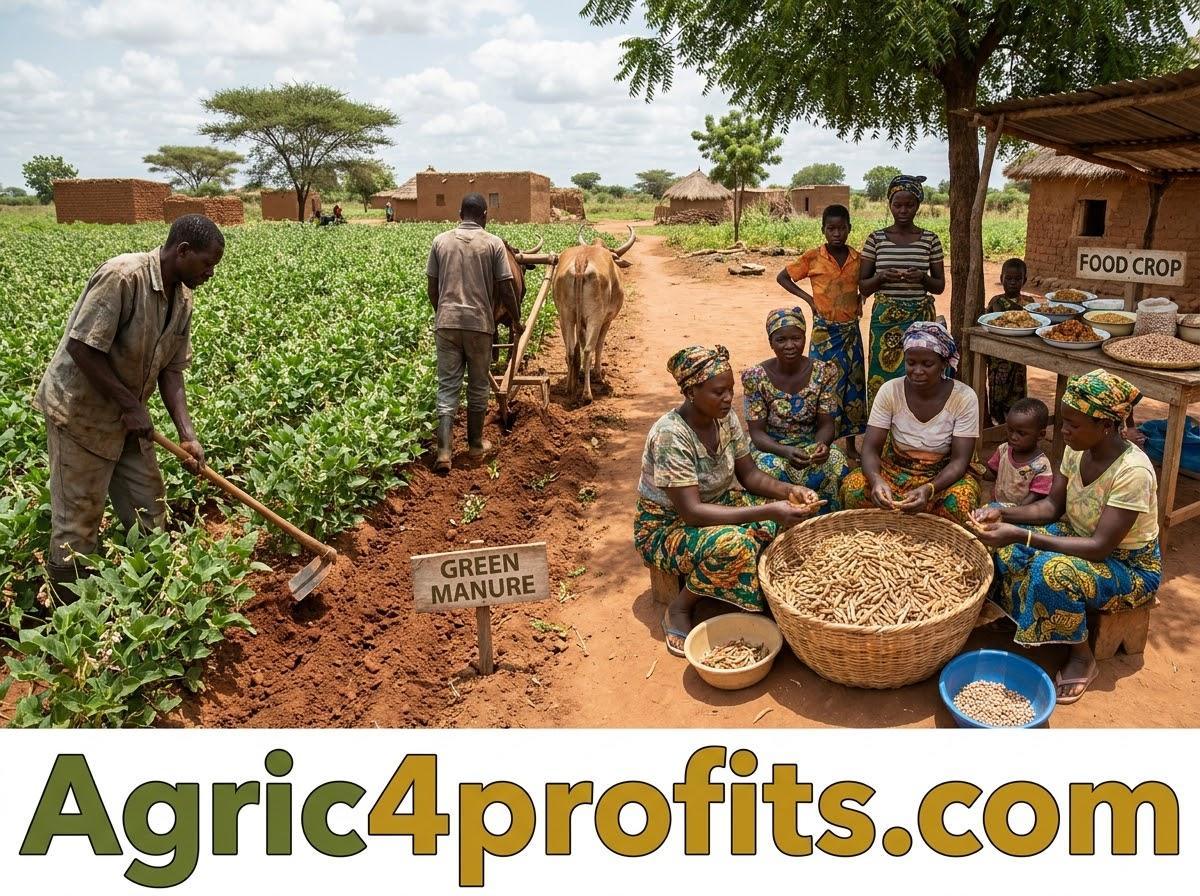
2. Prioritize soil health: Sorghum thrives best in well-maintained soil. Integrating organic matter such as green manure or compost into your land can enrich its nutrient profile, supporting robust growth without reliance on synthetic inputs.
3. Be attuned to seasonal patterns: Observe your local climate trends closely. Planting in harmony with the natural rhythms of rain will maximize your sorghum's potential. This understanding is key to reaping bountiful harvests.
4. Manage weeds effectively: The first few weeks after planting are critical for sorghum establishment. Early and thorough weeding can prevent competition that stunts growth, ensuring that every seed planted has the opportunity to flourish.
5. Protect your harvest zealously: After harvesting, handle your sorghum with care to minimize losses. Proper drying, quality storage solutions, and a clear selling strategy will maximize your profits and preserve your hard work.
6. Use your break-even knowledge: Understand the minimum quantity of sorghum you need to sell to cover costs. This knowledge empowers your negotiations, enabling you to confidently refuse low offers that don't support your sustainability.
7. Learn from seasonal comparisons: At the end of each season, review the results from your calculator to assess what strategies worked. This reflection helps refine your practices for improved yields and profits over time.
8. Analyze your costs per unit: Knowing your production cost per bag allows you to set informed selling prices. This insight helps you avoid losses and ensures that your hard work translates into fair compensation.
9. Compare investment returns wisely: Use the return on investment figures as a metric for evaluating your farming choices. This approach helps you decide whether to continue with a crop or explore other profitable opportunities.
10. Plan ahead for success: Beyond analyzing past seasons, use the calculator to simulate various scenarios for the next harvest. This knowledge will prepare you to tackle challenges before they arise, ensuring a more profitable future.
Frequently Asked Questions on Farm Profit Calculator for Sorghum Farming in Namibia
1. How much land do I need for sorghum farming in Namibia?
Sorghum can be effectively cultivated on farms of various sizes, from small family plots to larger commercial scales. The key to success lies not just in the size of the land but in diligent management practices and local adaptation.
2. What is the best time to sell sorghum in Namibia?
Sorghum prices may dip immediately after harvest due to high supply but typically rise as the market tightens in subsequent months. Farmers who can store their grain and strategically sell it post-harvest can often realize better profits.
3. How can processed sorghum create added income?
Sorghum can be processed into a variety of products including flour, beverages, and animal feed. Exploring these opportunities can significantly increase your income and add value to your production efforts.
4. What are effective strategies to reduce post-harvest losses?
To minimize losses, ensure that your sorghum is adequately dried before storage and use airtight containers to prevent pest infestations. A solid post-harvest handling plan should be in place before harvest begins.
5. Is sorghum farming profitable for small-scale farmers?
Yes, many small-scale farmers find sorghum to be a profitable venture when they carefully manage their costs and effectively market their harvests. Profitability is achievable with sound practices and careful financial tracking.
6. Do I need to invest significantly in inputs for sorghum farming?
No, sorghum can be successfully farmed using organic methods, saved seeds, and sustainable practices. Profit can be realized from local adaptation more than relying on expensive fertilizers or inputs.
7. Is this Farm Profit Calculator free to use?
Absolutely. The calculator is entirely free, with no hidden fees or registration required. It has been designed to support farmers by providing essential financial insights without barriers.
8. Can I use this calculator if my sorghum farm is small?
Certainly! The calculator is adaptable to all farm sizes and provides equally valuable insights whether you are farming on a small scale or managing a larger operation.
9. What does return on investment signify for my sorghum farm?
Your return on investment indicates the profit generated for every unit of currency spent on your sorghum farming endeavors. This helps gauge the effectiveness and sustainability of your farming practices.
10. What is a break-even point and how does it help?
Your break-even point tells you the minimum quantity of sorghum you must sell to cover costs. This knowledge empowers you in negotiations with buyers, helping you avoid sales below your necessary thresholds.
Knowing your profit from your Sorghum farm is powerful. But profit from one season is just the beginning. The farmers who truly grow their farms over time are the ones who move from knowing their numbers to building a complete plan around those numbers. A plan that covers not just this season but the next three years.
Building that plan does not require a university education or an expensive consultant. It requires a structured approach that takes you through every important question one step at a time. The Agric4Profits FarmSmart Business Planner was built to answer every one of those questions for any farmer across Africa, in any of the 54 African countries, in a way that any farmer can follow and any bank or investor can read.
Once you know your profit from Sorghum farming, the next step is building a complete farm business plan. The Agric4Profits FarmSmart Business Planner guides you through your full farm plan in six steps, from budget and recommendation to cost breakdown, revenue projection and market strategy. Steps 1 to 5 are completely free. Your complete bankable business plan is available with a Pro membership.
Other Free Farming Tools Available on Agric4Profits
Agric4Profits offers 23 free professional farming tools covering every aspect of African agriculture. Here are all the other tools available to you completely free.
- Feed Formulation Calculator: Formulate the most cost-effective feed for your livestock and fish using locally available ingredients.
- Animal Production Calculator: Track and analyse your animal production performance against African farming benchmarks.
- Crop Production Calculator: Calculate your full crop production costs, yield estimates and profit per hectare.
- Farm Finance Calculator: Plan your farm cash flow, loan repayments and complete financial projections before you invest.
- Planting and Harvest Calendar: Find the best planting window and expected harvest dates for any crop in any African country.
- Pest and Disease Identifier: Identify what is attacking your crops or animals and get organic treatment recommendations immediately.
- Processing Storage and Value Addition Analyzer: Find out whether processing your harvest increases your profit and by exactly how much.
- Market Price Tracker: Compare prices at different markets and find the most profitable destination for your harvest.
- Soil and Fertility Guide: Diagnose your soil deficiencies and get organic amendment recommendations for your specific crops.
- Processing Yield Calculator: Calculate your exact processing yield and true cost per kilogram for any farm produce.
- Storage and Loss Calculator: Find out how much you are losing in storage and how much you would save by improving your storage method.
- Market Access and Transport Tool: Calculate your true net profit after transport costs and find the most profitable market to sell at.
- Farm Land Measurement and Unit Converter: Convert any land measurement unit used across Africa instantly into every other unit.
- Livestock Vaccination and Treatment Scheduler: Generate a complete vaccination and treatment calendar for your livestock with every date and dosage.
- Livestock Weight Estimator: Estimate the live weight, carcass weight and selling value of your livestock before going to market.
- Crop Spacing and Seed Rate Calculator: Calculate exactly how many seeds or seedlings you need for your farm size and preferred spacing.
- Irrigation and Water Management Calculator: Calculate your daily water requirement and full irrigation schedule for any crop and farm size.
- Fish Pond Design Calculator: Design your fish pond and calculate your full production plan, expected harvest and profit projection.
- Composting and Organic Input Calculator: Build your optimised compost recipe from materials available on your own farm and calculate the application rate.
- Farm Record Keeping Template Generator: Generate a complete customised record keeping system for your specific farm type and categories.
- Women in Agriculture Free Consultancy: Get a personalised farming action plan and expert guidance completely free for women farmers across Africa.
- FarmSmart Business Planner: Build your complete farm business plan in six steps covering budget, costs, revenue, market strategy and your bankable plan.

.png)
