
 6 days ago
48

.jpeg)
.png)
Press play to listen to this article
Voice
How much land you need for fish farming depends on your growth plan, budget, pond type, water source, and target harvest. A pilot unit can later expand into a commercial layout, especially after feasibility planning.
Starting with two ponds is practical because it makes grading, harvesting, and stock rotation easier. It also lets you learn routine management before investing in more ponds and additional infrastructure, and it fits starter guidance.
A useful planning rule is to begin with your production target, then work backward to pond area, stocking density, and water demand. That approach prevents overspending and supports better future expansion.
For example, if your plan uses a density of 10 fish per square meter, 1,000 fish will need about 100 square meters of pond space, so tilapia scaling should follow that estimate.
That figure is only a starting point, because species, feeding strategy, aeration, and management style all affect final land requirements. A farmer choosing a feasibility plan can match ambition with available resources.
In most small commercial setups, the land should also allow for drainage channels, storage space, and movement around the ponds. Those practical features make daily work easier and reduce production stress.
🌿 Go Organic on Your Farm: Instead of harmful chemical pesticides and fertilisers, try our organic farming products — including neem oil spray, bio-pesticides, natural plant treatments, organic seeds and seedlings, suckers, and many more organic products that are safe for your health, your family, your soil and your harvest. Shop Now →
Well-planned farms usually leave room for future expansion, because the first cycle often reveals the best pond size, preferred species, and labor demands. Expansion becomes easier when the original layout anticipates growth.
The goal is not to buy the largest land possible, but to buy land that can support good water control, easy access, and realistic production. That balance protects both output and cash flow.
1. Site Selection
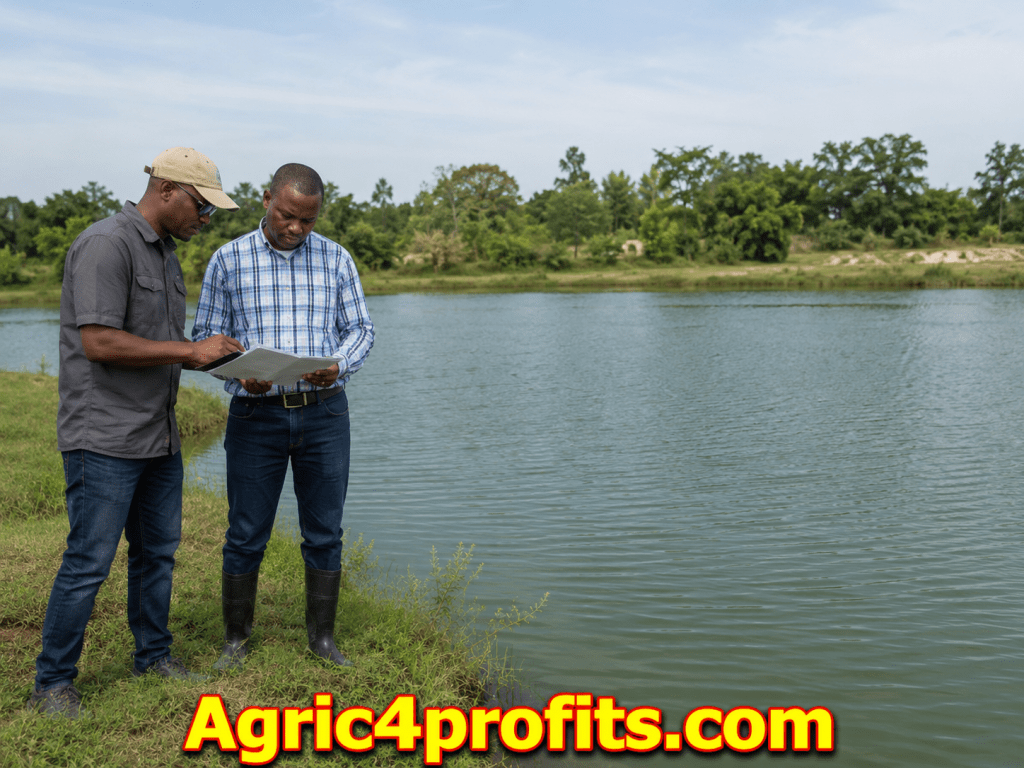
The site you choose largely decides whether the farm will be profitable or frustrating. A good location reduces construction cost, improves water management, and gives the farmer control over daily operations, especially during construction decisions.
Before construction begins, the soil should be checked for water retention, fertility, and permeability. These qualities influence fertilization results, pond stability, and the amount of work required during routine management, much like any pond-management guide.
🔧 Free Farm Tool Available: Use our free Agric4Profits Farm Tools to calculate your farm profits, formulate feeds, identify pests and diseases on both your crops and animal farms, plan your planting and harvesting season, including many more farm tasks to get free expert advice and recommendations — completely free, no registration required. Access Free Tools →
The selected land should provide enough water throughout the year for filling, topping up, cleaning, and occasional emergency use. Consistent water access is one of the strongest signs of a workable fish-farm site.
Topography matters because different landscapes demand different pond designs. Swampy ground may need stronger bunds and more soil, while higher ground may suit self-draining ponds that simplify water release, as seen in earthen pond layout.
Accessibility is equally important, since the farm must allow easy movement of feed, seed, fertilizer, and harvested fish. A site close to roads and markets lowers transport stress and supports the broader site checklist.
Pollution should be avoided at every step, because industrial effluents, domestic waste, and runoff from areas can damage fish health. A clean environment supports better survival and harvests, which is central to water quality management.
Legal security also matters, because land disputes, community resistance, or unclear ownership can interrupt operations. Farmers should confirm that fish farming is accepted locally before committing money to any infrastructure.
💬 Have a Farming Question? Join thousands of farmers across Africa on the Agric4Profits Community — ask questions, share experiences and connect with agricultural experts. It is completely free. Ask Your Question Now →
Good site selection combines ecology, biology, and economics, not just land availability. A farmer who studies those factors early can reduce costly mistakes and build a foundation for production, as reinforced by organic pond care.
Read Also: The Possible Market Outlet for Table Fishes
2. Ecological Factors
In site selection for a pond, the ecological factors to be considered include soil, water, topography and climate.
Soil
The soil quality influences the pond productivity and water quality and determines the dyke construction. The properties of soil texture and soil permeability are determined to decide the suitability of a site.
Pond bottom should have the ability to hold water. Loamy, clay loamy and silt clay soil types are most suitable for pond construction. A good quality gravel should not exceed 10 percent. Thus the rocky, sandy, gravel and limestone soil types are to be avoided.
Evaluation of soil suitability
Soil suitability can be evaluated by three methods.
i. Squeeze method: Take wet soil in your palm and squeeze it firmly. If it keeps its shape after your hand opens, it has enough binding strength for pond construction.
ii. Groundwater test: Dig a pit about one meter deep and cover it with leaves overnight. If water rises into the pit by morning, the site may support a pond, although drainage may take longer.
iii. Water permeability test: Fill the pit with water, cover it, and check it the next morning. If the water disappears again, seepage is high and the bottom may need lining or heavy clay.
📖 Want to Go Deeper on This Topic?
Our expert agricultural ebooks cover poultry, fish farming, different crops production, snail farming, organic farming, mushrooms, sheep, cattle, flowers, pig farming, goat farming, agribusiness, etc. in practical step-by-step detail — written by agricultural professionals for African farmers.
Water
For a successful fish farming business, an adequate amount of water is required to build the fish farm because water depth needs to be adjusted at regular intervals.
Natural water bodies such as reservoir, river, and lakes have stable water quality parameters (Water temperature, dissolved oxygen, pH, alkalinity and water hardness) when compared to borewell and well water.
The fish farming site should be away from the flood area. Water should not be acidic or alkaline and if found to be so, suitable correction is to be done by applying lime or organic manure respectively.
Topography
Type of fish farming pond construction is determined by the land topography. Normally, flood prone areas and poor rainfall areas need to be avoided.
Areas such as industrial zones, fields with underground oil pipelines, irregular land area, fields with high electricity poles and radio masts and highly rooted vegetation area are also not recommended for pond construction.
3. Biological Factors
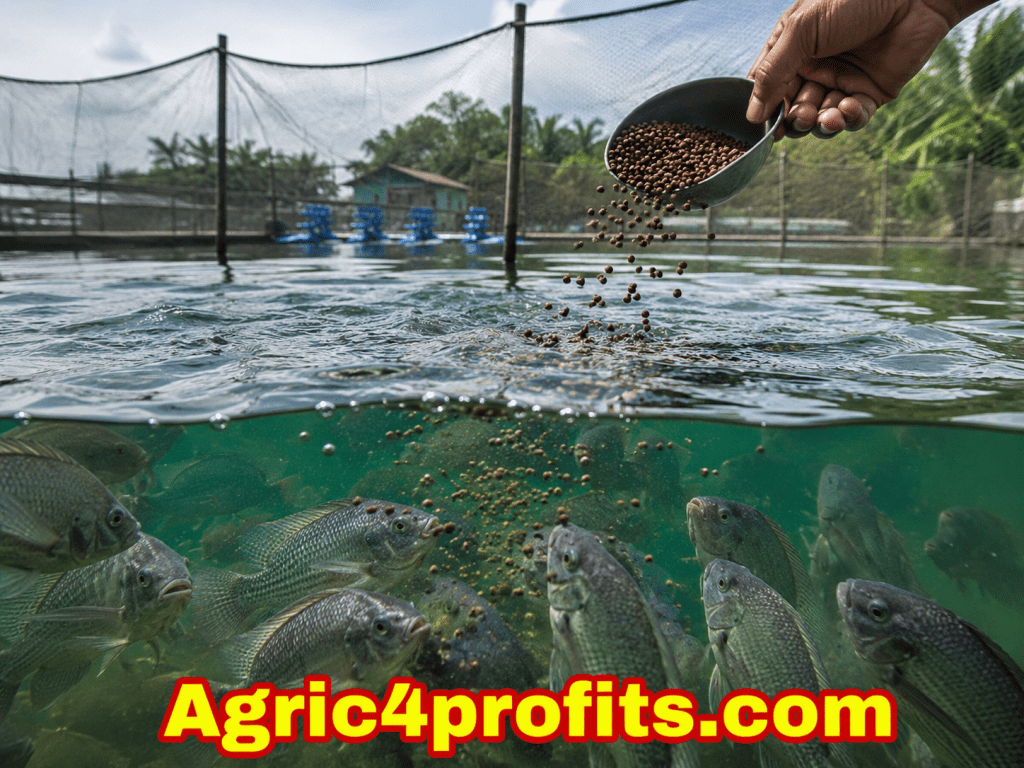
Biological factors describe the living resources that will occupy the pond and determine how the system is managed. Species choice, seed quality, stocking stage, and culture method all affect the land a farmer should prepare.
Different fish species demand different pond sizes, water conditions, and feeding plans. Choosing the right species early helps match the farm with market demand and capacity, especially through feed formulation.
Seed source also matters because fingerlings from a dependable hatchery usually start with better uniformity, health, and growth potential. Poor seed can waste land, feed, and time before the farmer sees any useful return.
Culture type shapes the space requirement too, because monoculture, polyculture, and mixed systems all need different arrangements. A farmer who understands catfish life cycle can reduce crowding and improve harvest balance.
Farmers who specialize in catfish often need strong biosecurity, regular grading, and consistent feeding routines. Those working with feeding routines must plan enough space to handle water exchange, sorting, and recovery activities.
Tilapia farms may need different spacing and population management because the fish are active, adaptable, and capable of reproducing quickly. A farmer reviewing stocking strategy can control growth stages more effectively.
Species behavior should always guide pond design, since bottom feeders, surface feeders, and column feeders use water space differently. That difference affects aeration, feed distribution, and how the farm is divided into working units.
Biology therefore works together with land size, because the best site supports the chosen species from stocking through harvest. A good biological plan protects production and investment, a goal reflected in production best practices.
4. Social and Economic Factors
Social and economic factors determine whether the farm can function smoothly after the physical site is chosen. Even a technically good pond can fail if the community, market, or support services are not favorable.
The farmer should understand local traditions, beliefs, and expectations around aquaculture before development begins. Respecting the social environment helps reduce resistance and makes cooperation with neighbors and workers much easier.
Market access matters because fish must move quickly from pond to buyer, processor, or retailer. Strong transport links and nearby demand help reduce losses and improve profit margins after harvest.
Supporting services are equally important, especially electricity, storage, labor, and access to medical care. When those services are nearby, the farm can respond faster to emergencies and manage operations more efficiently.
Land with unclear ownership or legal disputes should be avoided, because a good project can collapse under avoidable conflict. A farmer who checks titles and local agreements early protects the long-term viability of the business.
Labor availability also shapes the size of the farm, because more ponds require more hands for feeding, monitoring, cleaning, and harvesting. A farmer exploring farm preparation can avoid overextending the team.
Transport and logistics influence how far inputs and outputs travel every day, which affects cost and freshness. Careful consideration of concrete pond choice supports smoother movement of feed, fingerlings, and fish.
Taken together, social and economic conditions help define the most practical land size, pond number, and management style. Good decisions balance site needs with people, markets, and infrastructure, as shown by earthen pond lining.
5. Pond Construction
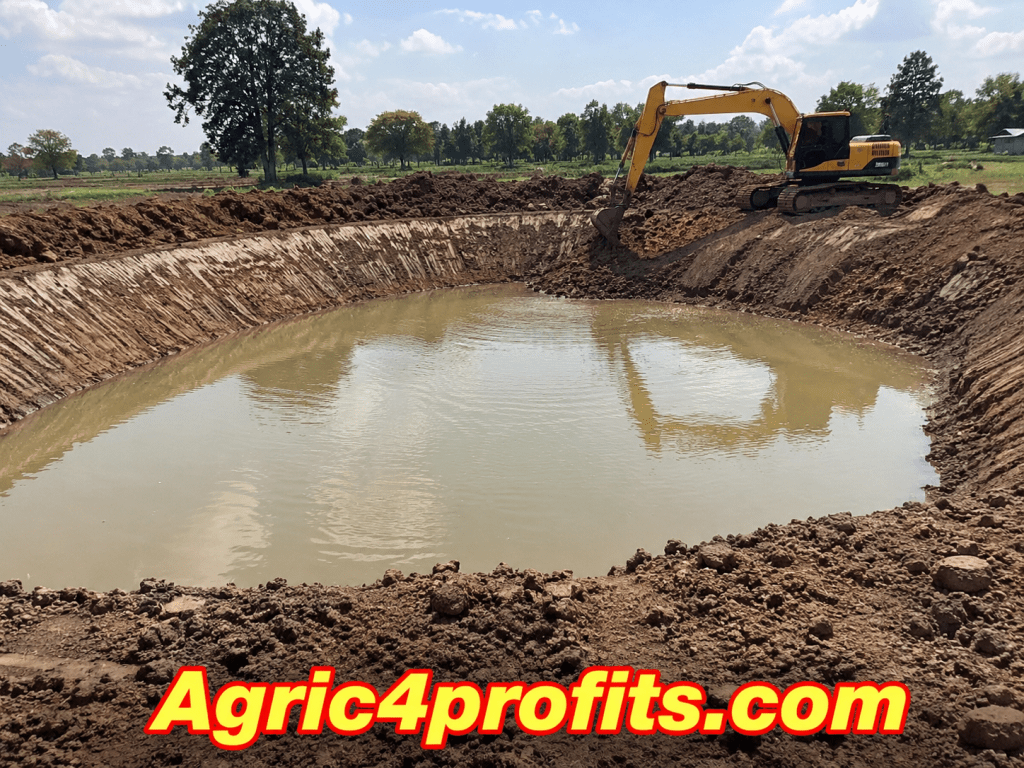
Good pond construction starts with a clear layout, because layout determines how water enters, moves, and leaves the system. Poor design creates unnecessary pumping, weak drainage, and difficult harvests later on.
The excavated soil should be reused to form strong dykes, and the pond bottom should slope gently toward the outlet. That slope improves draining, simplifies cleaning, and prepares the pond for the next cycle.
Construction work is usually easier and cheaper when it is scheduled for the dry season. Building during summer or another dry period gives the farmer better access to machines, workers, and shaping equipment.
Before digging begins, the farmer should confirm boundary lines, pond depth, inlet position, outlet position, and walkways. Careful planning makes farm setup overall more efficient and helps reduce costly redesigns.
Concrete systems demand firm structure, accurate measurements, and proper reinforcement, while earthen systems depend on soil quality and shaping skill. A farmer comparing concrete pond choice with earthen design should match construction to budget.
Where seepage is a problem, pond bottoms may be protected with heavy clay or lining materials. That approach supports water retention and improves results when the soil is very porous.
Drains, spillways, and access paths should also be included in the design, because they control water movement and make regular farm work faster. These details improve safety during feeding, harvesting, and maintenance.
Once construction is complete, the farmer should inspect the pond carefully before stocking. A final check prevents leaks, weak bunds, and uneven water levels that could reduce output during the first production cycle.
Summary on How many plots of land do I need to start fish farming?
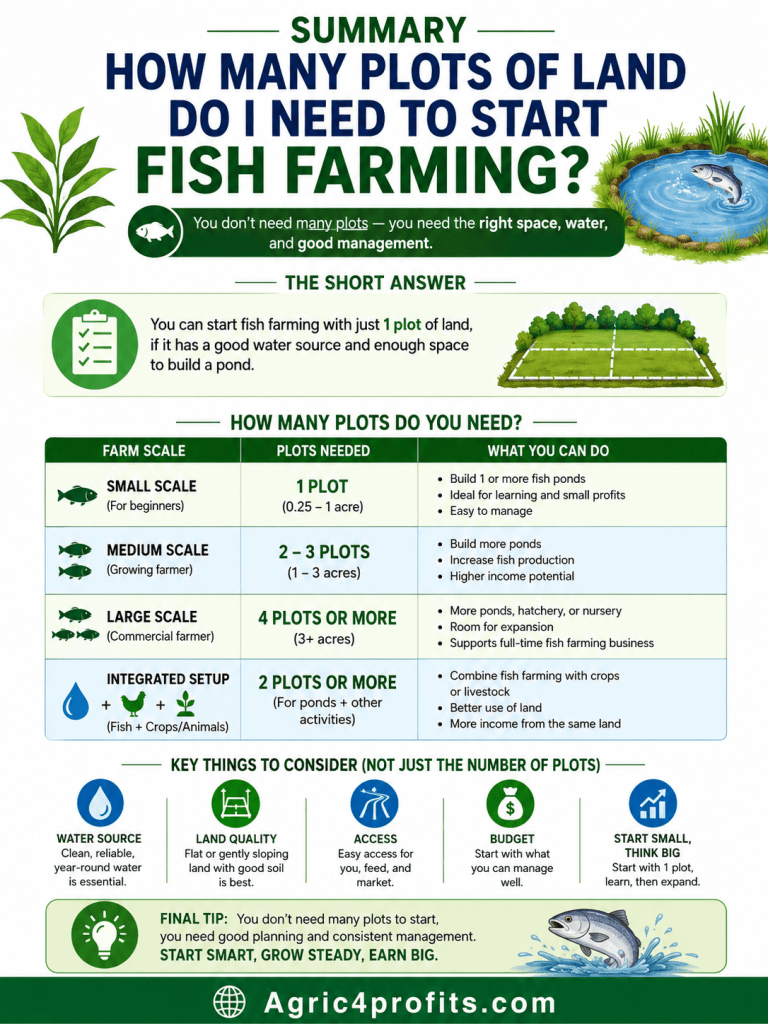
| Land need | Size depends on scale, species, budget, and water access. | Begin with a realistic target and room for expansion. |
| Site selection | Good soil, water, access, and clean surroundings are essential. | Choose a site that reduces construction and transport stress. |
| Ecology | Soil, water, topography, and climate shape pond success. | Test the land before excavation and lining decisions. |
| Biology | Species choice and seed quality affect space needs. | Match land size to the fish you plan to raise. |
| Construction | Layout, drainage, slope, and inspection determine performance. | Build carefully and verify the pond before stocking. |
Frequently Asked Questions About How many plots of land do I need to start fish farming?
1. How much land should a beginner reserve when planning a small fish farm that may later expand into several ponds, drainage spaces, storage areas, and safer movement paths for workers?
There is no universal minimum, because pond type, species, and water access all matter. A small starter farm can begin with two ponds and enough space for drainage, movement, storage, and future expansion.
2. Which stocking density is most useful when a farmer wants to estimate pond area before buying land, digging a pond, or deciding how many fish to raise on a modest budget?
Stocking density depends on species and management. A working guide is 10 fish per square meter, but aeration, feeding, pond depth, and water exchange may require lower or higher stocking rates.
3. Why does soil type matter so much when a farmer is choosing land for earthen pond construction, water retention, and long-term fish production on a profitable commercial farm that should last for years?
Soil determines whether the pond will hold water, resist seepage, and support strong dykes. Clay-rich soils usually perform better than sandy or rocky land in earthen pond construction and long-term use.
4. Can sloping or swampy land still be used for fish farming if the pond layout is adjusted carefully and the drainage plan is designed for the terrain from the start?
Yes, but the design must suit the slope. Higher ground may favor self-draining ponds, while lower or swampy areas may need stronger bunds, more excavation, and extra shaping before stocking.
5. What kind of water source should a farm prefer when it needs dependable filling water, regular topping up, and safe production throughout the year, including dry periods, emergencies, and harvest preparation?
Reliable water sources are best, especially rivers, reservoirs, and lakes with stable quality. Boreholes and wells can also work if water quantity, temperature, pH, safety, and seasonal flow are carefully checked.
6. Should a new fish farmer begin with many ponds at once, or is a smaller starting layout usually better for learning and controlling production risk during the first cycle on the farm?
No. Starting small is safer because it reduces risk and makes management easier. Two ponds are often enough for learning grading, stocking, draining, feeding, record keeping, and harvest routines before expansion.
7. Why do accessibility, market access, and transport routes matter when deciding whether a plot of land is suitable for fish farming operations that depend on timely input and sales movement?
Accessibility lowers transport cost and makes it easier to bring in feed, seed, fertilizer, labor, and equipment. It also helps fish move quickly to market after harvest, which protects freshness.
8. What construction details should be checked before stocking fish so the farmer can avoid leaks, weak bunds, poor drainage, and early production losses during the first harvesting cycle on the farm?
Successful construction depends on good layout, correct slope, strong dykes, proper drainage, and careful inspection before stocking. Dry-season construction is usually easier, cheaper, and less disruptive to future operations overall.
Do you have any questions, suggestions, or contributions? If so, please feel free to use the comment box below to share your thoughts. We also encourage you to kindly share this information with others who might benefit from it. Since we can’t reach everyone at once, we truly appreciate your help in spreading the word. Thank you very much for your support and for sharing!




.png)
