
 5 months ago
236
5 months ago
236

.jpeg)
.png)
Ecology is often referred to as the study of distribution and abundance. One of the first things a field ecologist will want to know about an animal or plant species is: How dense is the population?
The units of density are number of individuals, colonies, or other groupings per unit area or volume, and this measure forms the foundation of ecological assessment in aquatic environments.
Another important question is: How are the organisms dispersed — the pattern of distribution in space — within the habitat? This spatial arrangement reveals critical information about feeding, reproduction, and survival.
In most cases, it is impossible to count every individual or plot their exact location on a map. Such a complete inventory would be a census, and it is generally impractical because of the time, effort, and money involved.
So it would be useful if there were some reliable way to obtain an accurate representation of the spatial characteristics of a population without mapping every single organism in the study area.
By sampling the population, we can achieve this goal. However, the sampling must be conducted properly if we want our representation to be valid and scientifically credible.
To ensure an adequate representation of the population, certain guidelines must be carefully followed. These guidelines form the basis of sound ecological field methodology and are universally applied across scientific disciplines.
Fisheries ecology, as a science, bridges population biology, hydrology, and resource management. It helps us understand how freshwater and marine ecosystems function and how their biological communities are structured over time.
The discipline informs critical decisions about conservation, sustainable harvesting, and the management of aquatic resources. Without sound ecological sampling, these decisions would be made without reliable data.
In this article, we explore the core principles of fisheries ecology — from population sampling to zooplankton collection methods — and discuss the tools and techniques used by researchers and field ecologists worldwide.
1. General Sampling Procedure in Fisheries Ecology

To obtain an unbiased estimate of the population, sampling should be done at random. More specifically, sampling should be conducted so that every individual has an equal probability of being selected.
This principle of equal probability is fundamental to statistical validity. Without it, any conclusions drawn from the sample data may be skewed and unreliable, undermining the purpose of the study.
There are several ways of ensuring this criterion is met, or at least closely approximated. Random numbers are series of numbers in which the probability of selecting any digit from 0 to 9 is equal at any sampling point.
If random numbers can be assigned to organisms or to specific locations within the habitat, they can then be used to objectively select the sample from the overall population.
One simple way to generate a random number series is to write the numerals 0 through 9 on slips of paper, mix them in a container, draw one slip, record the number, replace the slip, remix, and draw again repeatedly.
A faster and less cumbersome method is to use a random number table. These tables are widely published and provide a pre-generated series of random numbers suitable for field sampling applications.
You can use numbers from such tables to select sampling positions, including paces along a trail, GIS coordinates, or any numbered feature within the habitat — such as termite holes in a wall.
Most scientific calculators and spreadsheet applications also have built-in random number generating functions. These are particularly convenient for large-scale ecological studies with extensive sampling grids.
Systematic sampling is another approach, in which samples are taken at regular intervals across a habitat. While not strictly random, it can provide good coverage of spatial variation across large study areas.
Stratified random sampling divides the habitat into distinct zones or strata and applies random sampling within each zone. This technique improves accuracy when populations are unevenly distributed across the study site.
2. Procedure for Sampling Zooplankton
Three common methods for sampling zooplankton are net, trap, and tube. Nets are used most frequently, yet they have serious limitations regarding quantitative data — especially in nutrient-rich and algae-dense waters.
Nets are conical devices made of fine nylon mesh pulled through the water either vertically or horizontally for a known distance. Animals are captured in a collection vial or mesh-walled bucket attached to the base of the net.
The captured organisms are then rinsed into a labeled storage bottle for transport and later counting under a microscope. This step is critical for preserving sample integrity and avoiding contamination between collections.
The estimated water volume sampled by a net is calculated as the length of tow multiplied by the mouth diameter of the net. However, nets may not filter this entire estimated volume due to clogging or back-pressure during sampling.
Read Also: Treatment of Ciliated Protozoan Infections in Fishes
The main advantage of using a net is that samples from large volumes of lake water can be collected quickly and efficiently. This makes nets ideal for broad population surveys where speed is prioritized over precision.
Nets can be obtained with various mesh sizes depending on whether the researcher wants to collect only the largest zooplankton or the entire size range present in the water column during sampling.
The most common trap sampler is the Schindler-Patalas trap, named after the two scientists who invented it. This is a clear plastic box lowered to a desired depth and then quickly sealed by pulling upward on the lowering line.
The trap closes both its upper and lower doors simultaneously when the line is pulled. This traps zooplankton precisely within the enclosed volume of water at that specific depth in the water column.
When lifted into the boat, water exits through a small mesh net attached to the lower wall of the box. Zooplankton are then collected inside a sampling bucket at the end of this internal mesh net.
This device provides high certainty regarding the actual volume of water sampled. However, in deep water columns, many samples may be needed to collect animals from all depths between surface and bottom sediments.
Read Also: The External Anatomy of Cartilaginous Fish
The third method uses a tube made of PVC or Tygon material. The tube is lowered into the water column, and when the bottom reaches the target depth, a line is pulled to seal the bottom with a rubber stopper.
The tube is raised into the boat, and the collected water is poured through a net to capture the zooplankton. This provides reliable volume data but may miss large, fast-moving, or low-density organisms.
Nets, traps, and tubes are used collectively in the Zooplankton Ecology course, and students participate in a critical comparative analysis of these three standard sampling techniques to understand the trade-offs involved.
3. Counting and Biomass Estimation
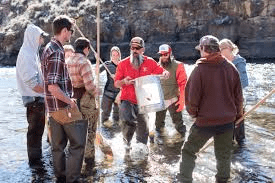
Simple counts of zooplankton can be performed under a light microscope. For large organisms such as Daphnia, which occur at relatively low densities of 1 to 100 individuals per liter, the entire sample may be scanned at low magnification.
All observed individuals are counted during this low-magnification scan. This total count approach works well when organisms are large enough to be reliably distinguished and their density is low enough to count efficiently.
For small zooplankton such as rotifers and copepod nauplii — which occur at high densities exceeding 1,000 individuals per liter — it is standard practice to count a known percentage of the sample volume.
This sub-sampling is done at high magnification. The resulting count is then multiplied by the ratio of total volume to counted volume to estimate the total number of animals present in the full sample.
Once you know the number of animals of each species in a sample, lake density is estimated as total count divided by the volume of water filtered by the net or collected by the trap or tube sampler.
Quantitative analysis of plankton generally involves recording the taxa observed and the number of algal units for each taxon in a known area of the counting chamber used during microscopy.
Since the volume of sample added to the chamber and the total chamber area are both recorded, the concentration of each individual taxon can then be calculated with precision for the original water body.
Accurate biomass estimation requires not just counting individuals but also measuring their size. Length-weight regression equations are often used to convert counts and body lengths into dry mass or carbon equivalents.
Biomass data is essential for constructing energy budgets and understanding how material and energy flow through the aquatic food web. Without these estimates, the trophic role of zooplankton cannot be fully quantified.
The integration of counting and biomass methods allows ecologists to build a complete picture of zooplankton community structure, productivity, and contribution to the overall functioning of aquatic ecosystems.
4. Counting Procedure
The microscopic count of zooplankton should be carried out systematically, starting with a low-magnification scan such as ×40 or ×100, which provides a whole-chamber overview to identify and enumerate large taxa quickly.
This is followed by transect counts at an intermediate magnification such as ×250. These transect counts help enumerate intermediate-sized taxa that are too small for the low-magnification count but too large for high-power field views.
Finally, a high-magnification count at ×400 or greater is performed using selected fields of view across the chamber. This final step picks up small taxa such as flagellates, small rotifers, and minute copepod nauplii.
The aim is to count approximately 100 fields of view, which typically yields around 400 counted units. This number assumes the recommended sample concentration has been maintained throughout the preparation process.
For qualitative and quantitative evaluation, replicate plankton samples of 50 liters each are collected from various spots around a chosen river or lake using a bucket. These are then filtered through bolting silk plankton net of 50 μm mesh.
The filtrate should be transferred to clean, labeled bottles and preserved immediately in a 1:100 dilution of Lugol’s solution. This iodine-based preservative fixes the cells and slightly stains them, making identification easier under the microscope.
Qualitative and quantitative analysis of both phytoplankton and zooplankton should be conducted using the drop count method as outlined in APHA (1995). Consistent methodology across samples ensures valid comparisons between sites.
Identification of plankton is often made by following standard taxonomic keys such as Ward and Whipple (1959) and Prescott (1962). These references remain widely used in freshwater ecology for accurate species-level identification.
Maintaining accurate identification records is critical because taxonomic composition reflects water quality conditions. Changes in dominant species often signal eutrophication, pollution, or other environmental stressors in the water body.
Results from plankton counts are typically expressed as number of individuals per liter or per cubic meter. Standardized units allow meaningful comparisons across different studies, seasons, and geographic locations worldwide.
5. Wetland Soil Conditions and Anaerobic Dynamics

The inundation or saturation of wetland soils by water leads to the formation of anaerobic conditions, as oxygen is consumed by microorganisms faster than it can be replaced by diffusion from the atmosphere above.
The rate of oxygen loss in flooded soils can vary considerably depending on factors such as temperature, organic matter content, and rates of microbial respiration at the time of flooding.
In most wetlands, small oxidized layers of soil may persist on the surface or around the roots of vascular plants. Roots release oxygen into the surrounding soil through a process called radial oxygen loss, maintaining localized aerobic zones.
Generally, anaerobic — or chemically reduced — conditions prevail in waterlogged soils. These conditions lead to the accumulation of reduced chemical compounds, including ferrous iron, manganese, sulfide, and methane gas.
Anaerobic soil conditions significantly influence nutrient cycling in wetlands. Under reduced conditions, nitrogen is converted to gaseous forms through denitrification, reducing the amount of bioavailable nitrogen in the system.
Phosphorus behavior also changes under anaerobic conditions. In flooded soils, phosphorus bound to iron oxides can be released into the water column, sometimes leading to elevated phosphorus levels and algal blooms downstream.
Wetland hydrology plays a key role in the production of greenhouse gases such as methane and nitrous oxide. Anaerobic decomposition of organic matter in flooded soils generates methane, making wetlands significant contributors to the global carbon cycle.
Despite their complexity, wetland soils support extraordinary biodiversity. Specialized organisms such as methanogens, sulfate-reducing bacteria, and anaerobic fungi thrive in reduced environments that would be hostile to most aerobic life forms.
Ecologists studying fisheries must understand wetland soil dynamics because adjacent wetlands often serve as nurseries for juvenile fish. The quality of wetland habitat directly influences the health and abundance of fish populations in connected water bodies.
Monitoring wetland soil conditions is therefore an integral part of comprehensive fisheries ecology. Changes in soil redox potential can serve as early warning indicators of broader ecosystem disturbance, pollution, or hydrological modification.
6. Freshwater Ecosystems and Fisheries Resource Dynamics

Freshwater fisheries ecology defines what we have globally in terms of aquatic biodiversity, what we risk losing to environmental degradation, and what we can still protect given the right conservation tools and policies.
To estimate potential fish production from freshwater systems, the dynamics of rivers, lakes, and estuaries must be thoroughly understood. These ecosystems are far more complex than their surface appearance suggests.
These dynamics are highly diverse — as are the earth’s freshwater fisheries resources — spanning boreal to tropical regions. Each biome presents unique ecological conditions that shape both species composition and production potential.
Geographic diversity influences how fisheries are both utilized and abused. In regions with limited protein resources, overharvesting of fish stocks is common. Sustainable management requires locally adapted strategies based on ecological data.
Lakes are classified by their trophic status — from oligotrophic (nutrient-poor) to eutrophic (nutrient-rich). This classification directly affects plankton productivity, dissolved oxygen levels, and ultimately the fish communities the lake can support.
Rivers, unlike lakes, are lotic systems characterized by unidirectional water flow. The river continuum concept describes how biological communities change predictably along the river’s gradient from headwaters to lowland floodplains.
Estuaries are transitional zones between fresh and salt water. They serve as critical nursery habitats for many commercially important marine species, making their ecological health directly tied to coastal fishery productivity.
Inland fisheries contribute substantially to global food security, particularly in sub-Saharan Africa and Southeast Asia. For millions of people, freshwater fish represent the primary source of animal protein in their daily diet.
Climate change is increasingly altering freshwater ecosystem dynamics. Rising water temperatures, altered precipitation patterns, and increased drought frequency are disrupting the ecological processes that support healthy fish populations and their prey.
Effective management of freshwater fisheries requires integrating data from multiple disciplines — including hydrology, limnology, fisheries biology, and socioeconomics — to develop strategies that are both ecologically sound and practically implementable.
7. Zooplankton as Indicators of Ecosystem Health

Zooplankton are microscopic animals that drift in water and occupy a critical position in the aquatic food web. They consume phytoplankton and are in turn consumed by juvenile fish, making them essential energy transfer agents.
Because zooplankton are sensitive to environmental change, their community composition and abundance are widely used as biological indicators of water quality. Changes in species diversity often reflect shifts in nutrient loading or pollution.
The major groups of freshwater zooplankton include rotifers, cladocerans (such as Daphnia), and copepods. Each group has distinct tolerance ranges for temperature, pH, dissolved oxygen, and nutrient concentrations in the water column.
Cladocerans such as Daphnia are particularly useful as environmental indicators. Their population structure — including body size and reproductive rate — responds rapidly and measurably to changes in food availability and predation pressure.
In eutrophic lakes where algal blooms are frequent, the dominance of small-bodied rotifers over larger cladocerans is commonly observed. This shift reflects changes in food quality as well as increased fish predation pressure on larger, more visible zooplankton.
Zooplankton diversity indices — such as the Shannon-Wiener index — are routinely calculated to assess the ecological state of a water body. Higher diversity typically indicates a healthier, more balanced aquatic ecosystem.
Seasonal variation in zooplankton communities is well documented. Spring typically sees a bloom of large cladocerans following phytoplankton growth, while summer stratification and fish predation shift the community toward smaller-bodied taxa.
Long-term zooplankton monitoring programs have proven invaluable in detecting the ecological consequences of acidification, eutrophication, and invasive species introductions. Filter-feeding fish like bighead carp can dramatically reduce zooplankton abundance when introduced into new water bodies.
Zooplankton also play a central role in the biological pump — the process by which carbon fixed by phytoplankton is transferred to deeper water layers through grazing and fecal pellet sinking, sequestering carbon from the atmosphere.
Their rapid response to environmental disturbance, combined with ease of collection and identification, makes zooplankton one of the most cost-effective and informative groups to monitor in freshwater ecological assessments worldwide.
8. Fish Population Dynamics and Ecological Interactions

Fish populations are governed by four fundamental demographic processes: birth, death, immigration, and emigration. Understanding these processes allows ecologists to model population trends and forecast responses to environmental change or harvesting.
Recruitment refers to the addition of young fish to the harvestable population. It is one of the most variable and least predictable aspects of fish population dynamics, strongly influenced by larval survival and food availability.
The relationship between parent stock size and subsequent recruitment is described by stock-recruitment curves. These curves help fisheries managers determine sustainable harvest levels that maintain productive spawning populations over time.
Age structure within a fish population provides important information about historical recruitment success and mortality rates. Otolith analysis — the study of fish ear bones — allows precise age determination for individual fish.
Trophic interactions between fish and their prey form the structural backbone of aquatic food webs. Predatory fish regulate the abundance of prey fish, which in turn affects zooplankton, phytoplankton, and nutrient cycling throughout the ecosystem.
Biomanipulation is a management technique that exploits these trophic cascades. By removing planktivorous fish or stocking piscivores, managers can trigger top-down changes that reduce algal blooms and improve water clarity.
Competition between fish species for food, space, and breeding habitat shapes community composition. Introduced species can competitively exclude native fish through superior resource use, predation on larvae, or physical displacement from key habitats.
Habitat use by fish is influenced by both physical factors — such as water temperature, substrate type, and current velocity — and biotic factors such as predation risk and food availability throughout the annual cycle.
Migratory fish species face particular challenges as they move between habitats over their life cycle. Barriers such as dams, weirs, and road crossings can fragment populations, reducing genetic diversity and reproductive success.
Understanding fish population dynamics is essential not only for commercial fisheries management but also for conservation of biodiversity in freshwater systems. Healthy fish populations are both an ecological indicator and an economic resource.
9. Conservation and Sustainable Management of Fisheries Resources

Sustainable fisheries management aims to maintain fish populations at levels that support both ecological function and long-term human use. This requires balancing harvest pressure against the biological capacity of the population to replenish itself.
The concept of maximum sustainable yield (MSY) represents the largest harvest that can theoretically be removed from a fish stock on a continuing basis. In practice, achieving MSY requires frequent stock assessments and adaptive management responses.
Ecosystem-based fisheries management expands the focus beyond single species to encompass the entire ecological community. This holistic approach considers predator-prey dynamics, habitat integrity, and human socioeconomic factors simultaneously.
Marine protected areas (MPAs) and freshwater reserves serve as refugia for fish populations. By excluding or limiting fishing pressure within designated zones, these areas allow populations to recover and spill over into adjacent fished areas.
Habitat restoration is a critical component of long-term fisheries sustainability. Efforts to restore riparian vegetation, remove fish passage barriers, and rehabilitate spawning gravels can significantly increase the productivity of fish populations.
Water quality improvement is equally essential. Reducing nutrient runoff from agricultural lands, treating wastewater, and controlling industrial discharge all contribute to healthier aquatic ecosystems with greater capacity to support fish and their zooplankton prey.
Community-based fisheries management has shown promising results in many developing countries. When local fishing communities are involved in monitoring, rule-setting, and enforcement, compliance improves and fish populations recover more effectively.
Aquaculture increasingly complements wild capture fisheries by supplying fish for human consumption without additional pressure on wild stocks. However, poorly managed aquaculture can itself cause environmental damage through pollution and disease transmission.
Climate change is emerging as one of the most significant threats to fisheries sustainability. Warming water temperatures, altered hydrology, and increased storm intensity are disrupting fish spawning cycles, food web structure, and species distributions globally.
The future of fisheries ecology lies in integrating real-time monitoring technology, satellite remote sensing, and predictive modeling into management frameworks. Data-driven management decisions will be essential for sustaining aquatic biodiversity and food security in a changing world.
10. Applications of Fisheries Ecology in Aquaculture
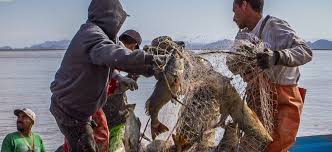
Fisheries ecology provides the foundational knowledge that underpins modern aquaculture practice. Understanding how wild fish populations behave in their natural habitats informs the design of productive and sustainable aquaculture systems.
Site selection for aquaculture facilities draws heavily on ecological principles. Water temperature, dissolved oxygen, pH, current patterns, and proximity to nutrient sources all influence the productivity and health of cultured fish populations.
Feeding strategies in aquaculture are increasingly refined using knowledge from prey availability and feeding behavior in wild systems. Understanding fish nutritional ecology helps minimize waste, reduce costs, and prevent water quality deterioration from excess feed inputs.
Stocking density decisions in pond culture systems must account for the ecological carrying capacity of the water body. Exceeding this capacity leads to competition for food and oxygen, increased disease susceptibility, and reduced growth performance.
Polyculture systems — in which multiple species are farmed together — are inspired by ecological concepts of resource partitioning. By combining planktivorous, herbivorous, and detritivorous fish, farmers can utilize multiple trophic levels and improve overall system efficiency.
Disease management in aquaculture benefits from ecological epidemiology. Understanding how pathogens spread through wild populations, the role of environmental stress in disease susceptibility, and the dynamics of host-parasite interactions guides prevention strategies.
The use of zooplankton as live feed for larvae is a direct application of fisheries ecology. Zooplankton such as rotifers and Artemia are cultured specifically to feed larval fish, which require live prey of appropriate size during early development.
Genetic improvement programs in aquaculture draw on ecological genetics to select for fast growth, disease resistance, and environmental adaptability. Domesticated strains must, however, be managed carefully to prevent genetic contamination of wild populations through escapes.
Integrated aquaculture-agriculture systems use ecological principles to cycle nutrients between fish ponds and terrestrial crops. Fish waste provides fertilizer for plants, while plant material and agricultural by-products serve as fish feed, creating closed-loop production systems.
The convergence of fisheries ecology and aquaculture innovation holds great promise for global food security. As wild fisheries face increasing pressure, ecologically informed aquaculture offers a viable pathway to meet growing protein demand sustainably.
Summary on Introduction to Fisheries Ecology

| Introduction | Ecology and Population Study | Ecology studies distribution and abundance; sampling is essential because full censuses are impractical |
| 1 | General Sampling Procedure | Random or stratified random sampling ensures unbiased, statistically valid population estimates |
| 2 | Zooplankton Sampling Methods | Net, trap (Schindler-Patalas), and tube methods each offer trade-offs between volume certainty and practicality |
| 3 | Counting and Biomass Estimation | Large taxa counted in whole-sample scans; small taxa sub-sampled at high magnification then scaled up |
| 4 | Counting Procedure | Multi-magnification counts (×40/×100, ×250, ×400+) ensure all size classes are accurately enumerated |
| 5 | Wetland Soil and Anaerobic Dynamics | Flooded soils become anaerobic, altering nutrient cycling, gas production, and habitat quality for fish |
| 6 | Freshwater Ecosystem Dynamics | Lakes, rivers, and estuaries differ fundamentally; understanding each is vital for effective fisheries management |
| 7 | Zooplankton as Indicators | Zooplankton community composition reflects water quality and ecological health; used widely as bioindicators |
| 8 | Fish Population Dynamics | Birth, death, immigration, and emigration govern populations; trophic interactions shape community structure |
| 9 | Conservation and Sustainability | Ecosystem-based management, MPAs, habitat restoration, and aquaculture complement each other for long-term sustainability |
| 10 | Aquaculture Applications | Ecological knowledge improves stocking density, feeding, disease management, polyculture, and genetic selection |
Frequently Asked Questions About Introduction to Fisheries Ecology
1. What is fisheries ecology?
Fisheries ecology is the scientific study of fish populations and their interactions with the aquatic environment, including prey organisms, predators, habitat conditions, and human harvesting activities, to guide sustainable resource management.
2. Why is random sampling important in ecological studies?
Random sampling ensures that every individual in a population has an equal chance of being selected, eliminating bias and producing statistically valid estimates of population size, density, and distribution within a given habitat.
3. What are the three main methods used for sampling zooplankton?
The three main methods are the net, trap, and tube. Nets are fast but imprecise in volume; the Schindler-Patalas trap offers high volume certainty; tubes also provide accurate volume data but may miss large or fast-moving organisms.
4. What is the Schindler-Patalas trap used for?
The Schindler-Patalas trap is a clear plastic box lowered to a specific depth in a lake and sealed by pulling upward on its line. It collects a precise volume of water and the zooplankton within it, providing accurate depth-specific samples.
5. How is zooplankton density calculated from a water sample?
Zooplankton density is calculated by dividing the total count of animals of each species in the sample by the volume of water filtered or collected by the sampling device, expressed as individuals per liter or per cubic meter.
6. Why are zooplankton considered good bioindicators of water quality?
Zooplankton are sensitive to environmental stressors such as pollution, eutrophication, temperature change, and acidification. Their community composition, abundance, and size structure change rapidly and predictably in response to these disturbances, making them reliable ecological monitors.
7. What is the difference between phytoplankton and zooplankton?
Phytoplankton are photosynthetic microorganisms — the primary producers at the base of the aquatic food web. Zooplankton are animal plankton that feed on phytoplankton and bacteria, occupying the second trophic level as primary consumers.
8. What role do wetland soils play in fisheries ecology?
Wetland soils become anaerobic when flooded, altering nutrient cycling and releasing phosphorus, methane, and other compounds. These processes influence water quality in adjacent rivers and lakes, affecting fish habitat quality, feeding conditions, and overall aquatic productivity.
9. What is ecosystem-based fisheries management?
Ecosystem-based fisheries management considers the entire ecological community — including habitat, predators, prey, and human users — rather than focusing on a single target species. This approach promotes more resilient and ecologically balanced fisheries over the long term.
10. How does climate change affect freshwater fisheries ecology?
Climate change alters water temperature, precipitation patterns, and hydrological regimes, disrupting fish spawning cycles, shifting species distributions, and changing food web dynamics. These changes threaten the long-term sustainability of both wild-capture fisheries and aquaculture operations globally.
Do you have any questions, suggestions, or contributions? If so, please feel free to use the comment box below to share your thoughts. We also encourage you to kindly share this information with others who might benefit from it. Since we can’t reach everyone at once, we truly appreciate your help in spreading the word. Thank you very much for your support and for sharing!





.png)
