




---
= Historical Background
The African goose is believed to have descended from the **wild Swan Goose (Anser cygnoides)**, just like the Chinese goose. The exact origin of the breed is debated. Some historians argue that it was developed in **China and later refined in Europe**, while others believe it was created in **Africa**, which explains its name.
What is certain is that the African goose has been selectively bred for centuries, resulting in a much larger and heavier bird than its Chinese counterpart. It was exported to Europe and North America in the 18th and 19th centuries, where it quickly gained popularity due to its unique appearance and excellent utility.
---
= Physical Characteristics
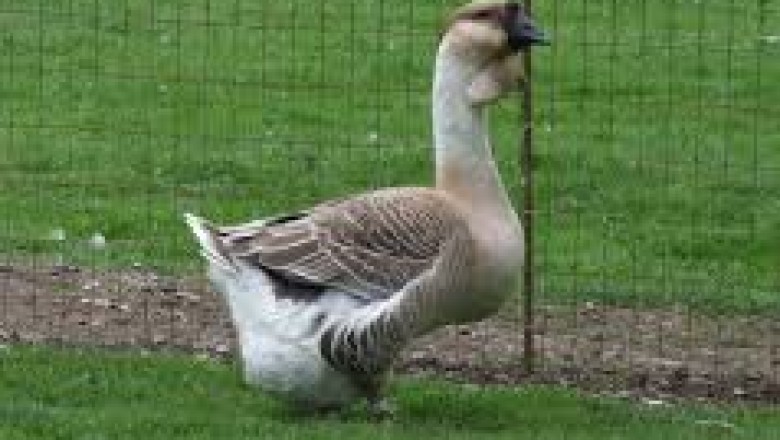
The African goose is one of the most striking and easily recognizable goose breeds, thanks to its size and distinctive features:
* **Size**: African geese are massive, with ganders (males) weighing **10–12 kg (22–26 lbs)** and females weighing **8–10 kg (18–22 lbs)**. Some individuals can grow even larger.
* **Plumage**: They typically come in two color varieties:
* **Brown African** – Gray-brown feathers with a black stripe down the neck.
* **White African** – Pure white plumage with orange bill and legs.
* **Knob**: A large, dark basal knob on top of the bill, even more prominent than in Chinese geese.
* **Dewlap**: A distinctive dewlap (loose skin under the beak), which sets them apart from Chinese geese.
* **Body Shape**: Deep, broad, and muscular body, making them excellent for meat production.
* **Neck**: Shorter and thicker than the Chinese goose, giving them a more robust look.
* **Eyes**: Dark brown eyes that appear calm and expressive.
Overall, the African goose is built like a giant compared to the slimmer and more elegant Chinese goose.
---
= Temperament and Behavior
Despite their large size and intimidating appearance, African geese are generally known for their **calm and docile nature**.
* **Gentle**: They are often described as one of the more easygoing goose breeds.
* **Social**: They enjoy living in flocks and bond well with their group.
* **Protective**: Ganders can become defensive during breeding season, but they are less aggressive than some other large breeds.
* **Alert**: They can act as natural guard animals, honking loudly when they sense intruders.
* **Active Grazers**: African geese love to forage and spend most of their time on grasslands.
Because of their size, they tend to move slower than smaller geese but remain active and hardworking grazers.
---
= Egg Production
African geese are not as prolific in egg-laying as Chinese geese, but they still provide a moderate number of eggs compared to heavier breeds.
* **Egg Production**: Females lay **20–40 eggs per year** on average.
* **Egg Characteristics**: Large, white eggs weighing **150–200 grams**.
* **Laying Season**: Egg production is seasonal, typically from late winter through early summer.
Though not suitable for commercial egg farming, their eggs are nutritious and valued in home production.
---
= Meat Production
The African goose is primarily valued as a **meat breed**, thanks to its large body size and high-quality carcass.
* **Growth Rate**: They grow relatively quickly and can reach market weight in a few months.
* **Carcass Quality**: Their meat is tender, flavorful, and lean compared to duck meat.
* **Market Weight**: At 12–16 weeks, goslings can reach **4–6 kg (9–13 lbs)**, making them ready for processing.
* **Feather Color Impact**: The white African variety is preferred for meat production because the carcass has a cleaner appearance after plucking.
Because of their size and meat yield, African geese are considered one of the most efficient goose breeds for small-scale meat farming.
---
= Other Uses
The African goose is versatile and offers multiple benefits beyond meat and eggs:
* **Feathers and Down**: Their feathers and down are prized for bedding and insulation.
* **Weed Control**: They are excellent grazers and can help manage grass and weeds in orchards and vineyards.
* **Ornamental Value**: Their majestic appearance makes them popular in exhibitions, parks, and ornamental farms.
* **Guard Animals**: Loud and alert, they act as natural “watchdogs” for farms.
---
= Advantages of Raising African Geese
There are several reasons why African geese are a preferred choice among farmers and hobbyists:
1. **Large Size** – One of the biggest goose breeds, making them excellent for meat.
2. **Dual-Purpose Value** – Provide both meat and a moderate number of eggs.
3. **Calm Temperament** – Generally docile and easier to handle than some other breeds.
4. **Foraging Ability** – Reduce feed costs by grazing extensively.
5. **Ornamental Appeal** – Striking appearance enhances their popularity in shows and farm displays.
6. **Hardiness** – Adapt well to various climates and environments.
---
= Challenges of Raising African Geese
Despite their benefits, African geese do present some challenges:
* **Space Requirements**: Their large size requires more space for grazing and housing.
* **Moderate Egg Production**: They are not as productive as Chinese geese in terms of eggs.
* **Feed Needs**: Growing goslings require quality feed in addition to grazing for optimal growth.
* **Aggression During Breeding Season**: Ganders can become territorial and protective.
* **Noise**: They can be loud, especially when startled.
* **Dewlap Maintenance**: The dewlap can be prone to injury if not managed properly.
---
= Care and Management
Proper care is essential to maximize the potential of African geese:
1. **Housing**: Provide strong, secure housing to protect them from predators.
2. **Pasture**: Ensure access to large grazing areas with plenty of grass.
3. **Diet**: Supplement grazing with grains and greens, especially during laying season.
4. **Water**: While they don’t require large ponds, they need access to fresh water for drinking and bathing.
5. **Health Care**: Routine parasite control and good hygiene practices help prevent disease.
6. **Breeding Management**: Incubation or careful nesting supervision may improve hatch rates.
---
= Conclusion
The **African goose** stands out as one of the most impressive domestic goose breeds. With its large size, distinctive knob and dewlap, and calm demeanor, it has become a favorite for both meat production and ornamental purposes. While it may not lay as many eggs as Chinese geese, its excellent meat yield, gentle temperament, and striking appearance more than make up for it.
For small farmers, homesteaders, or hobbyists seeking a breed that combines utility with beauty, the African goose is an excellent choice. Whether raised for food, feathers, or as farm companions, these gentle giants continue to play an important role in the poultry world.











Comments
0 comment