




= Origins and Breeding
1. **Ross 308**
* Developed by **Aviagen**, one of the world’s leading poultry genetics companies.
* The strain is the result of decades of selective breeding aimed at producing a chicken that grows fast, converts feed efficiently, and produces high breast meat yield.
* Widely used in Europe, Asia, and Africa.
2. **Cobb 500**
* Developed by **Cobb-Vantress**, a US-based global poultry genetics company.
* Known for its uniform growth, broad adaptability to various climates, and cost-effective performance.
* Popular in the Americas, Middle East, and Asia.
Both strains represent the pinnacle of **genetic selection and scientific breeding**, where traits like growth rate, carcass quality, feed efficiency, and disease resistance are continuously improved.
---
= Physical Characteristics
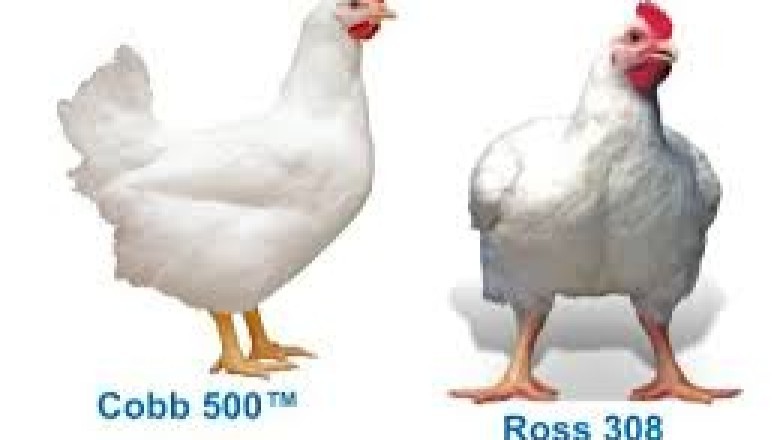
While both Ross 308 and Cobb 500 are white-feathered broiler chickens with similar appearances, subtle differences exist:
* **Ross 308**
* Slightly bulkier body frame with a tendency toward higher breast muscle yield.
* Rapid weight gain, especially in the first 35–42 days.
* Uniform appearance, making them easy to manage in large flocks.
* **Cobb 500**
* Compact and efficient body type.
* Highly uniform growth across flocks.
* Strong legs and robust frame, making them resilient in different housing systems.
---
= Growth and Performance
Both strains are designed for **fast growth and early market readiness**. Their performance makes them the most profitable choices for commercial poultry farmers.
* **Ross 308 Performance**
* Market weight of **2.2–2.5 kg** reached in **35–40 days**.
* Feed Conversion Ratio (FCR): around **1.55–1.65**.
* High breast meat yield, favored by markets that demand fillets and processed chicken.
* **Cobb 500 Performance**
* Market weight of **2.0–2.3 kg** in **33–38 days**.
* FCR: approximately **1.50–1.60**, slightly more efficient than Ross 308 in feed conversion.
* Balanced carcass composition, with good meat distribution across the bird.
Both strains thrive under intensive commercial systems, but they can also adapt to smallholder and semi-intensive systems when managed properly.
---
= Feed Conversion and Nutrition
Feed is the **largest cost factor** in broiler production, often accounting for **60–70% of total expenses**. Both Ross 308 and Cobb 500 are engineered to maximize feed efficiency.
* They require **starter, grower, and finisher diets** formulated with the right balance of protein, energy, vitamins, and minerals.
* **Ross 308** generally performs best with slightly higher protein diets to maximize breast meat yield.
* **Cobb 500** is more adaptable to lower-cost feed formulations without compromising growth, making it suitable for regions with limited access to premium feed ingredients.
Efficient feed conversion means farmers can achieve higher profits while using fewer resources, contributing to the sustainability of poultry farming.
---
= Meat Quality
The ultimate goal of broiler farming is to produce high-quality meat that meets consumer preferences.
* **Ross 308**
* Higher proportion of breast meat, ideal for markets demanding boneless fillets and processed products.
* Tender texture and consistent quality.
* **Cobb 500**
* Balanced carcass with slightly more thigh and leg meat, preferred in markets where whole birds and bone-in cuts are popular.
* Excellent meat texture and flavor.
---
= Adaptability to Different Climates
Both strains are bred for global adaptability, but there are differences in performance across environments:
* **Ross 308**
* Performs exceptionally well in controlled environments with modern housing and ventilation.
* Sensitive to poor management conditions but rewards well when given optimal care.
* **Cobb 500**
* More robust and tolerant to heat stress, making it suitable for tropical and subtropical climates.
* Performs well under a range of housing conditions, from highly intensive to semi-intensive systems.
---
= Economic Importance
The poultry industry is one of the fastest-growing protein sectors globally, and Ross 308 and Cobb 500 are at its core.
* **Affordable Protein:** They provide low-cost, high-quality meat, helping to combat protein shortages worldwide.
* **Farmer Income:** Short rearing cycles (just over a month) mean farmers can produce multiple flocks per year, ensuring continuous income.
* **Job Creation:** Broiler farming supports millions of jobs across feed production, veterinary services, processing plants, and retail.
* **Global Trade:** Both strains dominate international poultry production, making them essential in global food security.
---
= Challenges in Broiler Production
While Ross 308 and Cobb 500 offer impressive performance, challenges remain in their management:
* **Health Issues:** Rapid growth can sometimes lead to leg problems, ascites, and sudden death syndrome if not carefully managed.
* **Biosecurity:** Large flocks are vulnerable to diseases like Newcastle disease, avian influenza, and coccidiosis.
* **Welfare Concerns:** Critics point to welfare issues associated with fast-growing broilers, calling for slower-growing alternatives.
* **Feed Costs:** Rising global grain prices directly impact the profitability of broiler production.
* **Heat Stress:** In tropical climates, managing ventilation and cooling is essential to maintain productivity.
---
= Best Management Practices
To maximize performance, farmers must adopt proper management techniques:
1. **Brooding Management:** Maintaining correct temperature, humidity, and ventilation in the first weeks.
2. **Balanced Nutrition:** Feeding strain-specific diets optimized for each growth stage.
3. **Biosecurity Measures:** Preventing disease outbreaks through vaccination, sanitation, and restricted farm access.
4. **Welfare Practices:** Ensuring sufficient space, clean bedding, and access to fresh water.
5. **Regular Monitoring:** Checking growth rates, feed intake, and health status to make timely interventions.
---
= Future Prospects
The demand for poultry meat is expected to grow significantly, particularly in developing countries where it is a primary source of animal protein. For Ross 308 and Cobb 500, the future is promising:
* **Genetic Advancements:** Ongoing breeding programs will continue to improve feed efficiency, growth rates, and disease resistance.
* **Sustainability Focus:** Breeding companies are working on reducing the environmental footprint of broiler production.
* **Consumer Preferences:** While some markets demand slower-growing chickens, Ross and Cobb strains will continue to dominate due to affordability and efficiency.
* **Export Growth:** Poultry meat exports from countries like Brazil, the US, and Thailand will rely heavily on these strains.
---
= Conclusion
The **Ross 308 and Cobb 500 broiler strains** represent the cornerstone of modern poultry farming, combining rapid growth, efficient feed conversion, and high meat quality. While they share many similarities, Ross 308 excels in breast meat yield, while Cobb 500 stands out for feed efficiency and robustness in diverse climates.
Together, these strains not only sustain the poultry industry but also contribute significantly to **global food security**, providing affordable and nutritious protein to millions of people. With proper management and continuous genetic improvement, they will remain the leading choices in broiler farming for decades to come.
--











Comments
0 comment