




= Historical Background
The Embden goose originates from **Germany**, specifically from the region around the town of **Ems (Emden)** in Lower Saxony. Historical records suggest that the breed has been around since at least the **13th century**, making it one of the oldest domesticated goose breeds still popular today. Its development was influenced by selective breeding of local white geese, which were prized for their size and excellent meat quality.
By the **19th century**, the Embden goose had spread across Europe and into England, where it became highly valued. Later, the breed was introduced to the **United States**, where it quickly gained popularity among farmers seeking large, fast-growing geese. Over the centuries, the Embden has become the benchmark for commercial goose meat production in many countries.
---
= Physical Characteristics
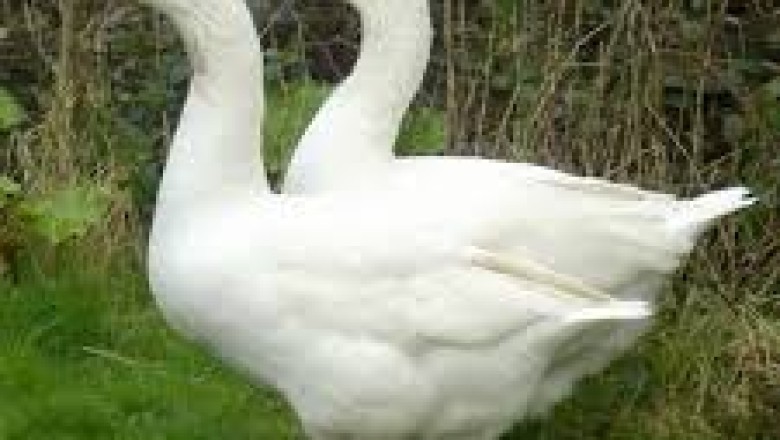
The Embden goose is easily recognizable for its **large size and pure white plumage**, which sets it apart from many other goose breeds. Some of its defining traits include:
* **Size**: Embden geese are among the largest domesticated goose breeds. Adult ganders (males) can weigh **12–14 kg (26–31 lbs)**, while females typically weigh **9–11 kg (20–24 lbs)**.
* **Plumage**: They are entirely white, with no markings or patches, giving them a clean and elegant appearance.
* **Bill and Legs**: Their bills and legs are a bright **orange**, contrasting beautifully with their white feathers.
* **Neck**: They have long, strong necks, which enhance their graceful look.
* **Body Shape**: The Embden’s body is broad, deep, and muscular, making them excellent for meat production.
* **Eyes**: They have striking **blue eyes**, a characteristic feature of the breed.
Overall, the Embden goose is both practical and ornamental, making it appealing to both farmers and exhibition breeders.
---
= Temperament and Behavior
Embden geese are generally considered to have a **calm temperament**, though ganders can be territorial during breeding season. Some behavioral traits include:
* **Protective**: They make good watchdogs for farms, alerting owners to intruders with their loud honks.
* **Social**: Like most geese, Embdens are flock-oriented and do best when kept in groups.
* **Grazing Habits**: They are excellent foragers, spending much of their day grazing on grass and weeds, which helps reduce feed costs.
* **Parenting**: While they are attentive parents, Embden females are not as reliable at brooding as some other goose breeds. Farmers often use incubators or allow other broody breeds to hatch the eggs.
---
= Egg Production
Although Embden geese are not primarily kept for their eggs, they are moderate layers compared to some other breeds.
* **Annual Egg Production**: On average, an Embden goose lays **30–40 eggs per year**.
* **Egg Characteristics**: The eggs are large, white, and weigh about **150–200 grams each**.
* **Seasonality**: Egg-laying typically occurs in spring, and most females lay for about **two to three months**.
While their egg production is limited, the size and nutritional value of goose eggs make them a delicacy in some regions.
---
= Meat Production
The main reason Embden geese are so highly valued is their **meat production**.
* **Growth Rate**: Embdens grow quickly and reach market weight faster than many other breeds.
* **Carcass Quality**: Their meat is leaner than duck meat, with a rich flavor highly sought after in European cuisine.
* **Dressing Percentage**: The high meat-to-bone ratio makes them particularly profitable for farmers.
* **Market Weight**: At 10–12 weeks, young Embden geese can already weigh **4–6 kg**, making them ready for processing.
Because of these traits, Embden geese dominate the commercial goose meat industry in many countries.
---
= Other Uses
Beyond meat, Embden geese provide several other benefits:
* **Feathers and Down**: Their white feathers are highly prized for pillows, quilts, and insulation. Goose down, in particular, is one of the best natural insulators.
* **Ornamental Value**: Their striking appearance makes them a popular choice for exhibitions and farm displays.
* **Weed Control**: They are excellent natural grazers and can be used to control grass and weeds in orchards and vineyards.
---
= Advantages of Raising Embden Geese
Farmers and breeders often choose Embden geese for the following reasons:
1. **Fast Growth** – They mature quickly, making them highly efficient meat birds.
2. **High Meat Yield** – Their large size provides excellent carcass weight.
3. **Low Feed Costs** – As natural grazers, they reduce the need for concentrated feeds.
4. **Hardiness** – Embdens are resilient and adapt well to different climates.
5. **Dual-Purpose Value** – Besides meat, they provide feathers, down, and moderate egg production.
6. **Attractive Appearance** – Their striking white plumage adds beauty to farms and shows.
---
= Challenges in Raising Embden Geese
Despite their many advantages, Embden geese also present certain challenges:
* **Space Requirements**: Because of their large size, they require ample grazing land and water access.
* **Aggression in Breeding Season**: Ganders can be territorial and aggressive, requiring careful management.
* **Broodiness Issues**: Females are not always reliable mothers, so artificial incubation may be necessary.
* **Feed Needs for Growth**: While they are good grazers, young goslings require high-quality starter feed for optimal growth.
* **Noise**: Like many geese, they can be noisy, which may not suit urban or suburban settings.
---
= Care and Management
To raise healthy and productive Embden geese, farmers should follow some basic management practices:
1. **Housing**: Provide shelter to protect them from predators and harsh weather.
2. **Grazing Land**: Ensure access to pasture for natural foraging.
3. **Nutrition**: Supply starter feed for goslings, transitioning to grains and greens as they mature.
4. **Water Access**: Geese thrive with access to ponds or streams but can also adapt to dry conditions with adequate drinking water.
5. **Health Care**: Regular parasite control and vaccination where necessary help maintain flock health.
6. **Breeding Management**: If meat production is the focus, artificial incubation can improve hatch rates.
---
= Conclusion
The **Embden goose** is a breed that combines beauty, practicality, and history. Its large size, rapid growth, and excellent meat yield make it a favorite among commercial farmers, while its striking white plumage and graceful presence win the admiration of poultry enthusiasts worldwide. Though they require space, management, and some patience, the benefits of raising Embden geese far outweigh the challenges.
Whether kept for commercial farming, small-scale homesteading, or ornamental purposes, the Embden continues to hold its place as one of the most important and respected goose breeds. For anyone interested in sustainable poultry farming or simply appreciating the heritage of domestic waterfowl, the Embden goose is a truly remarkable choice.
--












Comments
0 comment