




Here’s a **1000-word article on Pietrain pigs (pork production, characteristics, history, and uses):**
---
# Everything About Pigs (Pork): Pietrain
= Introduction
Pigs have played a central role in agriculture and food systems for centuries, valued for their efficiency in converting feed into high-quality meat. Across the world, pig breeds have been developed to suit different production systems—some bred for rapid growth, others for reproductive performance, and still others for exceptional pork quality. Among these diverse breeds, the **Pietrain pig** stands out as a specialized meat breed, renowned for its heavily muscled body and lean pork production.
This article provides an in-depth look at the Pietrain breed, covering its history, physical traits, temperament, production characteristics, advantages, challenges, and its role in modern pork production.
---
= Origins and History
The **Pietrain pig** originates from the village of Pietrain in Belgium, where it was first recognized in the 1950s. The breed was developed through selective breeding, likely involving local Belgian pigs crossed with English Large White and Berkshire pigs.
What made the Pietrain famous was its **extreme muscularity** and lean meat production, which was highly valued at the time when global pork markets began to shift toward consumer demand for leaner cuts. Because of this, the Pietrain quickly spread across Europe and later to other parts of the world.
Today, the breed is not commonly used as a purebred for pork production but plays an important role in **crossbreeding programs**, especially to improve carcass quality and leanness in other commercial pig lines.
---
= Physical Characteristics
Pietrain pigs have very distinct physical features that set them apart from other breeds:
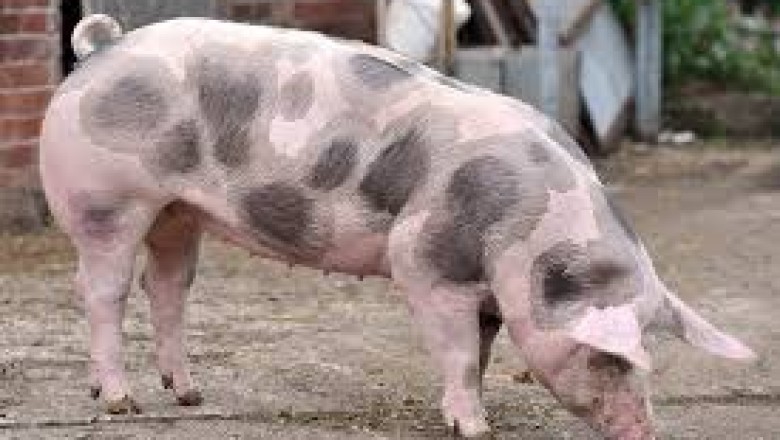
* **Color and Markings:** White base coat with irregular black or gray spots across the body. Some pigs also show a characteristic pale ring around the darker spots.
* **Build:** Compact, broad, and heavily muscled, particularly in the shoulders, back, and hams. This makes them stand out as one of the most muscular pig breeds.
* **Ears:** Erect and medium-sized, giving them a more alert appearance.
* **Weight:** Mature boars typically weigh around 250–270 kg, while sows range from 220–240 kg. They are smaller in overall size compared to breeds like the Yorkshire but have much greater muscle density.
These traits make the Pietrain easy to recognize and a highly valued genetic contributor to pork production systems.
---
= Temperament and Behavior
Pietrain pigs are generally known to be:
* **Active and alert:** They are more energetic than many other commercial breeds.
* **Sensitive to stress:** Unlike docile breeds such as the Berkshire, Pietrains can be more nervous and require calm handling.
* **Moderate in maternal ability:** Sows are not as prolific as Landrace or Yorkshire sows, and litter sizes tend to be smaller.
Their temperament, combined with certain health sensitivities, requires more attentive management compared to hardier pig breeds.
---
= Meat Quality and Carcass Traits
The Pietrain is most celebrated for its **exceptional carcass quality**, characterized by:
* **Extreme muscularity:** The breed produces a very high proportion of lean meat, especially in high-value cuts like hams and loins.
* **Low fat content:** Pietrain pork is extremely lean, with minimal backfat.
* **High yield:** Carcasses yield a high percentage of saleable meat, making them attractive to processors.
However, there are trade-offs:
* **Reduced marbling:** Pietrain pork lacks intramuscular fat, which makes it less juicy and flavorful compared to Berkshire or Duroc pork.
* **PSE Meat (Pale, Soft, Exudative):** Due to their stress sensitivity, Pietrains are prone to producing poor-quality meat if not handled carefully before slaughter.
Because of these characteristics, Pietrain pigs are not commonly raised for direct consumer markets but are instead valued in crossbreeding to balance meat quality and efficiency.
---
= Growth and Production
Pietrain pigs have very specific production traits that distinguish them from other breeds:
1. **Growth Rate:**
* Slower compared to fast-growing breeds such as Duroc or Yorkshire.
* This makes them less efficient in terms of feed-to-gain ratio.
2. **Reproductive Performance:**
* Sows are less fertile, producing smaller litters of around 7–9 piglets.
* Maternal instincts and milk production are average, limiting their usefulness as breeding sows.
3. **Feed Conversion:**
* Not highly efficient, as much of the feed goes into muscle rather than fat deposition.
* However, their carcass quality compensates in certain market contexts.
For these reasons, Pietrains are rarely used as a standalone breed in large-scale production systems.
---
= Health and Stress Sensitivity
A key challenge with Pietrain pigs is their **susceptibility to Porcine Stress Syndrome (PSS)**. This genetic condition, linked to a mutation in the halothane gene, makes Pietrains prone to stress-induced problems such as:
* Sudden death under stress (e.g., heat, transport, handling).
* Production of PSE meat if slaughtered after stressful conditions.
Modern breeding programs have worked to reduce this sensitivity by introducing Pietrain genetics into crossbreeding programs while selecting against stress susceptibility. Nevertheless, farmers must manage Pietrains carefully, ensuring:
* Low-stress handling.
* Adequate ventilation and cooling.
* Avoidance of overcrowding and rough transportation.
---
= Farming and Management
Farmers who raise Pietrain pigs or use them in crossbreeding need to adopt careful management practices:
1. **Housing:**
* Pigs should be housed in cool, well-ventilated facilities, as they are particularly sensitive to heat stress.
* Comfortable flooring and ample space are important to reduce stress.
2. **Feeding:**
* Diets should focus on balanced protein and energy to maximize lean meat production.
* Some farmers supplement with specialized feeds to reduce stress effects and improve muscle development.
3. **Crossbreeding Programs:**
* Pietrain boars are widely used to sire market pigs, especially when crossed with sows from breeds like Yorkshire, Landrace, or Duroc.
* Crossbred pigs benefit from the Pietrain’s muscling while retaining the fertility and growth advantages of other breeds.
---
= Economic Value
Pietrain pigs contribute significantly to the pork industry, but mostly through **genetic improvement** rather than direct pork production:
* **Premium Carcass Quality:** Meat packers and processors benefit from higher yields of lean pork.
* **Crossbreeding Role:** Pietrain boars are crucial in commercial breeding programs, especially in Europe, for producing terminal sires (boars whose offspring are raised only for meat).
* **Market Demand for Lean Pork:** In regions where consumers demand lean cuts, Pietrain crosses are particularly valuable.
However, the disadvantages—slower growth, stress susceptibility, and reduced meat flavor—limit their use in niche or gourmet markets.
---
= Role in Modern Pork Industry
In today’s pork industry, the Pietrain pig’s role is primarily as a **genetic contributor in terminal crossbreeding systems**. Farmers rarely raise pure Pietrain herds due to the breed’s limitations, but their influence is seen worldwide through hybrid pigs that carry Pietrain genes for muscularity and carcass yield.
For example:
* Crosses between Pietrain and Duroc balance lean meat with improved marbling.
* Crosses with Landrace or Yorkshire sows improve litter sizes and growth rates.
This ability to enhance pork production efficiency makes the Pietrain indispensable in modern breeding strategies.
---
= Conclusion
The **Pietrain pig** is a specialized breed that has shaped the modern pork industry by delivering exceptional carcass traits. Recognizable for its spotted coat and extreme muscularity, the Pietrain excels at producing lean pork with high yields.
While it has limitations—slower growth, smaller litters, and stress sensitivity—its value lies in **crossbreeding programs**, where it contributes its strengths while other breeds compensate for its weaknesses.
In essence, the Pietrain pig is not just a breed but a vital genetic resource that has helped meet consumer demand for leaner pork and continues to play a pivotal role in commercial pork production worldwide.
---









Comments
0 comment