



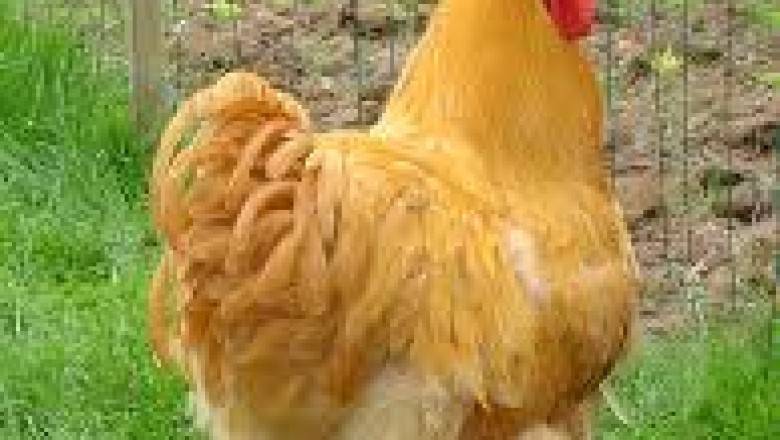

=# Origins and History
The Orpington breed was developed in **Orpington, Kent, England**, by William Cook in the late 1800s. Cook aimed to create a chicken that combined three main traits:
1. Good egg production
2. Substantial body weight for meat
3. Calm and docile temperament
He achieved this by crossbreeding several breeds, including **Black Minorcas, Langshans, and Plymouth Rocks**, to produce a bird that was both practical and attractive.
The breed quickly gained international popularity due to its versatility. Today, Orpingtons are available in multiple colors, including **Black, Blue, Buff, White, and Lavender**, with Buff Orpingtons being one of the most widely recognized.
---
=# Physical Characteristics
Orpingtons are large, heavy birds, making them excellent for meat production while still laying a good number of eggs. Key traits include:
* **Weight:** Hens weigh around 3–4 kg (6.5–9 lbs), while roosters can weigh 4–4.5 kg (9–10 lbs) or more.
* **Body Shape:** Deep, broad bodies with a full breast, short legs, and a soft, rounded appearance.
* **Plumage:** Soft, dense feathers that provide insulation in colder climates.
* **Comb:** Single comb with well-defined points, medium in size.
* **Temperament:** Calm, friendly, and tolerant of handling, making them ideal for families and mixed flocks.
Their large size and feather density make them hardy in cold weather, while their docility ensures they coexist peacefully with other birds.
---
=# Egg Production
As a dual-purpose breed, Orpingtons are reliable layers, though not as prolific as specialized hybrids. On average:
* **Hens lay 180–280 medium to large brown eggs per year** depending on care and conditions.
* **Egg size:** Medium to large, with uniform, strong shells.
Buff Orpingtons are particularly known for consistent laying patterns, and hens often continue to produce eggs through the winter months when other breeds may reduce output. While they are not high-volume commercial layers, their egg production is considered more than sufficient for small farms and backyard flocks.
---
=# Meat Quality
Orpingtons are valued for their meat as well as eggs, making them a true dual-purpose breed. Their flesh is tender, flavorful, and well-marbled, particularly in larger birds. Roosters and hens both provide good meat yield, though roosters are typically preferred for meat production due to larger size.
Because of their large frame and calm temperament, Orpingtons are easier to handle during processing compared to more flighty breeds.
---
=# Feed Efficiency and Management
Orpingtons are not as feed-efficient as specialized hybrid layers, but they are robust and hardy. Key management practices include:
1. **Chick Stage (0–6 weeks):** Use a high-protein starter feed to encourage strong growth. Chicks should be kept warm and protected.
2. **Grower Stage (6–16 weeks):** Transition to a balanced grower feed to support skeletal development and moderate growth.
3. **Layer Stage (18+ weeks):** Provide a layer feed rich in calcium to maintain eggshell quality. Free-range Orpingtons benefit from supplemental oyster shell.
4. **Housing:** Orpingtons tolerate confinement but thrive with adequate space and access to free-range areas for foraging.
Orpingtons are generally hardy and disease-resistant, making them suitable for various climates and low-maintenance setups.
---
=# Temperament and Suitability
One of the Orpington’s most celebrated traits is its **friendly and calm personality**. They are:
* Gentle and affectionate, often forming bonds with humans
* Calm around children and pets
* Tolerant of other chickens, ideal for mixed flocks
They are sometimes broody, meaning hens may stop laying temporarily to incubate eggs naturally. For small farms or backyard keepers who wish to hatch chicks, this can be an advantage. However, in purely egg-focused operations, broodiness may reduce overall production slightly.
---
=# Egg Quality and Shell Attributes
Orpington eggs are medium to large, with strong brown shells and a rich yolk color. Their consistent egg quality makes them a reliable choice for small-scale producers, families, and hobbyists. The breed’s ability to continue laying through colder months adds to its value as a dual-purpose bird.
---
=# Adaptability to Production Systems
Orpingtons are extremely versatile and can perform well in:
* Backyard flocks for eggs, meat, or both
* Free-range systems where foraging is encouraged
* Small farms seeking dual-purpose birds for sustainable poultry management
They tolerate cold weather better than many breeds due to their dense plumage and substantial body size. However, their heavy frame can make them less suited to very hot climates without shade and access to water.
---
=# Longevity and Lifecycle
Orpingtons are long-lived compared to many commercial hybrids. Hens can continue laying for **3–5 years**, with peak production occurring in the first 2–3 years. Their larger body size also means they provide a reasonable meat yield even as laying declines.
With proper care, an Orpington flock can remain productive for several years, reducing the need for frequent replacement and offering a sustainable long-term solution for small farms.
---
=# Strengths and Considerations
**Strengths:**
* Dual-purpose breed: good for both eggs and meat
* Calm and friendly temperament
* Hardy and adaptable to different climates
* Reliable brown egg layers
* Attractive appearance and suitable for shows
* Occasionally broody, useful for natural hatching
**Considerations:**
* Lower egg production compared to commercial hybrid layers
* Slower growth and heavier feed requirements than specialized meat breeds
* Can be susceptible to heat stress without proper shade or ventilation
* Broodiness may interrupt egg production for short periods
---
=# Backyard Keeper Insights
Orpingtons are often praised by backyard keepers for their combination of friendliness, beauty, and productivity. Hens can become very tame and enjoy interaction with their owners, while roosters tend to be calm and protective.
The breed’s hardiness and ability to forage make them ideal for free-range setups, while their egg-laying and meat qualities make them highly practical. Their gentle nature also makes them a favorite for families with children, and their attractive appearance adds visual appeal to any backyard flock.
---
=# Conclusion
The **Orpington** is a classic dual-purpose chicken breed that balances egg production, meat quality, and temperament. With its calm personality, large size, and reliability, the Orpington is well-suited for small-scale farms, backyard flocks, and hobbyists seeking a versatile and beautiful breed.
While not as prolific as modern hybrid layers, Orpingtons offer the added value of meat, broodiness for hatching chicks, and long-term productivity. They are hardy, adaptable, and attractive birds that remain popular over a century after their development.









Comments
0 comment