




---
= Origins and History
The Toulouse goose takes its name from the city of **Toulouse in southwestern France**, where it was selectively bred during the 18th and 19th centuries. Farmers in the region developed it for two main purposes:
1. **Meat and Liver Production** – It became famous as the traditional breed used for producing **foie gras**, the delicacy made from fattened goose liver.
2. **Utility Bird** – Its large size, down feathers, and hardy constitution made it a versatile farm goose.
By the 1800s, Toulouse geese had spread across Europe, and later to Britain and North America, where they became popular as both utility and ornamental birds. Today, there are several recognized varieties, including the **production Toulouse** (lighter and bred for farming) and the **exhibition Toulouse** (larger, heavier, and often kept for ornamental display).
---
= Physical Characteristics
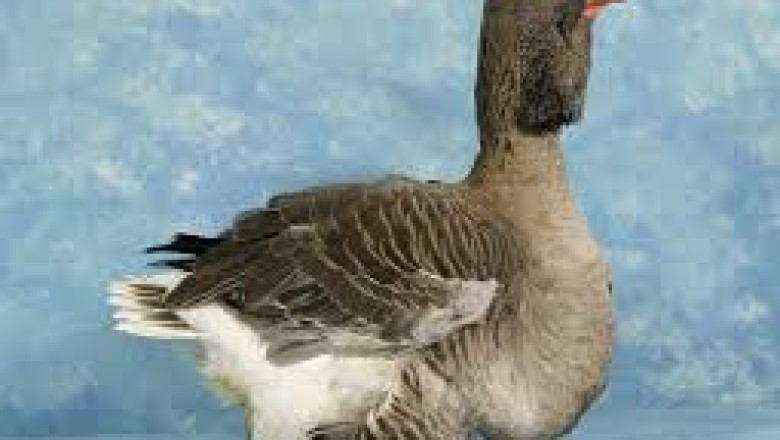
The Toulouse goose is one of the largest and most striking domestic geese.
* **Size and Weight:** Exhibition strains can reach **9–11 kg (20–25 lbs)** for ganders and **7–9 kg (15–20 lbs)** for geese, while utility strains are lighter at 6–8 kg.
* **Plumage:** Soft, ash-gray feathers with lighter underbellies. Some varieties have a white dewlap under the beak.
* **Body Shape:** Broad, deep body with a low carriage. Exhibition types may have a keel (fold of skin along the breast) and prominent dewlaps, while production types are sleeker.
* **Head and Bill:** Orange bills and bright orange legs, with a relatively short neck compared to breeds like the Embden.
* **Lifespan:** With good care, they can live 10–15 years.
Their sheer size and dignified appearance make them favorites in shows and ornamental collections.
---
= Meat and Foie Gras Production
The Toulouse goose is most famous for its role in **meat and foie gras production**.
* **Meat:** Known for tender, flavorful, and richly marbled meat. Compared to leaner breeds, Toulouse geese produce juicier roasts, making them highly desirable in gourmet cooking.
* **Foie Gras:** Historically, Toulouse geese were the main breed used in France for foie gras production. Their ability to store fat in the liver when provided with a rich diet made them ideal for this delicacy.
* **Carcass Quality:** Large frame with generous breast and leg portions. Exhibition types, though heavier, are less practical for commercial meat production than utility strains.
While foie gras remains controversial in some regions, the Toulouse goose’s contribution to traditional French cuisine is undeniable.
---
= Egg-Laying and Broodiness
Unlike specialized laying ducks or chickens, geese are seasonal layers, and the Toulouse is no exception.
* **Egg Production:** 20–40 eggs per year.
* **Egg Size:** Very large, typically 170–200 grams each.
* **Egg Color:** White, with thick, hard shells.
* **Broodiness:** Toulouse geese are not known for being particularly broody. However, when they do sit, they can be devoted mothers, though fertility can sometimes be low in very heavy strains.
Because of their limited egg production, the Toulouse is primarily kept for meat and ornamental purposes.
---
= Temperament and Behavior
The Toulouse goose is widely appreciated for its calm and gentle personality.
* **Temperament:** Quiet and docile compared to more aggressive goose breeds. They are generally friendly and less noisy, making them suitable for small farms and suburban homesteads.
* **Foraging:** While they graze well on grass, they are not as active or efficient foragers as lighter goose breeds.
* **Social Nature:** Highly social, preferring to live in pairs or flocks. They form strong bonds with mates.
* **Guarding Ability:** Although not aggressive, their size and loud honk when alarmed can still serve as a deterrent to intruders.
Their calmness makes them popular in ornamental collections and among farmers seeking low-maintenance geese.
---
= Housing and Care
Toulouse geese are hardy birds but need proper housing and care to thrive.
* **Shelter:** Provide a dry, draft-free house with 6–8 square feet per bird indoors.
* **Outdoor Space:** Require ample grazing land, ideally a pasture, as grass forms a large part of their diet.
* **Water Access:** While not strictly needing a pond, they benefit from access to water deep enough for dipping heads and cleaning feathers.
* **Feeding:** Grass-based diet supplemented with grains during winter or breeding season. For foie gras or meat production, special fattening diets are used.
* **Health:** Generally hardy but may suffer from leg strain or fertility issues if bred too heavy in exhibition strains.
Because of their size, they need more space than smaller geese to avoid obesity and health problems.
---
= Ornamental and Exhibition Use
Beyond farming, Toulouse geese are admired as **ornamental birds** for their stately presence.
* **Exhibition Strains:** Selectively bred to maximize size and appearance, with pronounced dewlaps and keels. These are favorites in poultry shows.
* **Ornamental Role:** Commonly kept on estates, parks, and ornamental lakes where their beauty and calm nature are appreciated.
* **Heritage Breed:** In many places, they are preserved as part of farming history and cultural heritage.
Their graceful looks and gentle temperament make them ideal for those wanting attractive waterfowl in addition to utility.
---
= Advantages of Toulouse Geese
* Large size and excellent meat quality.
* Historic role in foie gras production.
* Docile and quiet temperament compared to many geese.
* Hardy and long-lived with proper care.
* Attractive, making them valuable ornamental birds.
---
= Challenges of Raising Toulouse Geese
* Low egg production compared to lighter goose breeds.
* Some strains too heavy for efficient breeding.
* Require substantial space and grazing area.
* Fertility can be reduced in very large exhibition birds.
* Not the most active foragers, so may need more supplemental feed.
---
= Role in Sustainable Farming
Toulouse geese can be integrated into sustainable farming systems in several ways:
1. **Meat and Down:** Provide high-quality food and feather products.
2. **Weeding and Grazing:** Useful for controlling grass in orchards and fields, though less efficient than lighter geese.
3. **Ornamental Value:** Add cultural and aesthetic value to farms and estates.
4. **Genetic Preservation:** As a historic breed, they play a role in agricultural biodiversity.
For smallholders looking for utility and beauty in one bird, the Toulouse goose offers an excellent balance.
---
= Conclusion
The **Toulouse goose** stands as a symbol of French agricultural heritage, combining **utility, beauty, and history**. Known for its impressive size, calm temperament, and rich meat, it has played an essential role in cuisine, particularly in the production of foie gras. Beyond its utility, it remains a favorite ornamental breed, admired in parks, estates, and poultry shows.
Though it may not be the most prolific egg-layer or efficient forager, the Toulouse goose excels in providing high-quality meat, a majestic presence, and a link to centuries of farming tradition. For anyone seeking a goose that combines dignity, productivity, and ornamental appeal, the Toulouse remains one of the most iconic and valuable breeds in the world.
---











Comments
0 comment