




= Origins and History of the Berkshire Pig
The Berkshire pig originates from the county of Berkshire in England, where it was first bred over 300 years ago. In its earliest days, the breed was developed for aristocratic tables, as English nobles demanded a flavorful and tender pork. The pigs were initially larger and coarser, but through selective breeding, farmers refined their characteristics, improving both their appearance and meat quality.
By the 19th century, Berkshires had become popular across the globe. They were exported to countries such as the United States, Japan, and Australia. Japan, in particular, has a long-standing reputation for producing **“Kurobuta pork”** from purebred Berkshire pigs. Today, Kurobuta pork is considered one of the finest pork products in the world, often compared to Wagyu beef in terms of marbling and tenderness.
The Berkshire breed is now recognized as one of the oldest recorded pig breeds and is valued both for its historical importance and its ongoing contributions to premium pork markets.
---
= Physical Characteristics
The Berkshire pig has distinct physical traits that make it easily recognizable:
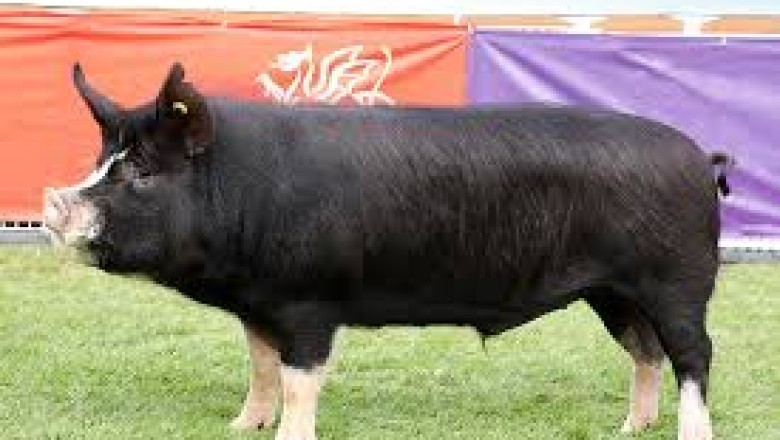
* **Color and Markings:** Typically black in color with six distinct white points—on the face, legs, and tail. This unique patterning makes the breed stand out from other pigs.
* **Face and Ears:** Berkshires have a slightly dished face with a short snout, contributing to their endearing appearance. Their ears are erect or slightly forward-leaning.
* **Size and Build:** Berkshires are medium to large pigs, with well-developed hams and shoulders. They are known for their muscular build and balanced body structure.
* **Weight:** Mature sows usually weigh between 270–300 kg, while boars can reach 320–350 kg depending on diet and management.
This combination of size, shape, and markings gives Berkshires an attractive appearance, making them popular among both farmers and breeders.
---
= Temperament and Behavior
One of the appealing aspects of Berkshire pigs is their temperament. They are generally:
* **Docile and friendly:** Berkshires are easy to manage, making them suitable for small farms, family-run operations, and hobby farmers.
* **Intelligent and adaptable:** Like most pig breeds, they are quick learners and can adapt well to different environments.
* **Good mothers:** Berkshire sows are known for their strong maternal instincts, producing litters of 8–10 piglets on average and raising them with care.
These traits make Berkshires both a practical and enjoyable breed to raise, especially for farmers who value animals that are easy to handle.
---
= Meat Quality
Perhaps the most important and celebrated characteristic of the Berkshire pig is its **exceptional meat quality**. Berkshire pork has gained a global reputation for being:
* **Highly marbled:** Much like premium beef, Berkshire pork contains fine streaks of fat within the muscle. This marbling enhances tenderness and flavor.
* **Tender and juicy:** The intramuscular fat ensures that the pork remains moist when cooked, producing a melt-in-your-mouth experience.
* **Distinct flavor:** Berkshire pork is often described as richer, sweeter, and more flavorful than standard pork.
This premium quality is why Berkshire pork, particularly the Japanese Kurobuta variety, is served in high-end restaurants and sought after by gourmet chefs worldwide.
---
= Growth and Production
While Berkshires excel in meat quality, they are not the fastest-growing breed. Farmers raising Berkshires should understand:
* **Growth Rate:** Slower compared to commercial breeds like the Yorkshire or Landrace.
* **Feed Conversion:** Slightly less efficient, meaning they may require more feed per kilogram of weight gain.
* **Carcass Yield:** Produces a slightly smaller carcass, but with higher proportions of high-value cuts.
Because of these traits, Berkshires are not always the first choice for intensive, high-volume pork production. Instead, they are best suited for niche markets where quality is prioritized over quantity.
---
= Farming and Management
Raising Berkshire pigs requires standard pig husbandry practices, but some considerations make them unique:
1. **Housing and Environment:**
* Berkshires thrive in outdoor or free-range systems, where their active and hardy nature can be fully expressed.
* They also adapt well to indoor systems but should be given ample space for movement.
2. **Feeding:**
* They require a balanced diet rich in energy, protein, and minerals to support healthy growth and marbling.
* Farmers often supplement feed with grains, legumes, and forage to enhance pork quality.
3. **Health:**
* Berkshires are relatively hardy and resistant to some common pig diseases.
* Regular veterinary care, vaccinations, and biosecurity measures remain essential.
4. **Breeding Programs:**
* Many farmers focus on maintaining purebred lines for premium pork markets.
* Crossbreeding with other pigs is also possible to combine Berkshire quality with faster growth traits.
---
= Economic Value
While Berkshires may not dominate the global pork industry in terms of volume, they command **premium prices** in niche markets. Farmers benefit from:
* **Higher pork prices:** Gourmet chefs and specialty markets are willing to pay significantly more for Berkshire pork compared to conventional pork.
* **Export opportunities:** Particularly to Japan and other Asian countries where Kurobuta pork is in high demand.
* **Breed preservation value:** As a heritage breed, Berkshires are also supported by niche farming communities and consumers who prioritize sustainability and biodiversity.
Thus, while Berkshires may not suit every farmer, they offer strong economic potential for those targeting premium meat markets.
---
= Role in Modern Pork Industry
Today, Berkshire pigs are primarily raised for **specialty and high-end markets**. Their slower growth and higher feed costs are offset by their unique flavor and texture, which differentiate them from standard pork. Farmers who raise Berkshires often do so as part of sustainable, free-range, or organic farming systems, where animal welfare and product quality are emphasized.
In Japan, Kurobuta pork remains a cultural delicacy, while in the U.S. and Europe, Berkshire pork has found its way into gourmet kitchens, farmer’s markets, and specialty stores.
---
= Conclusion
The **Berkshire pig** is much more than just another breed of swine—it is a living legacy of centuries of selective breeding for flavor, tenderness, and premium meat quality. With its striking black-and-white appearance, friendly temperament, and exceptional pork, the Berkshire continues to win hearts among farmers, chefs, and consumers.
While it may not compete with commercial breeds in terms of growth efficiency, its true strength lies in its **ability to deliver world-class pork** that sets it apart from the rest. For farmers targeting niche, high-value markets, the Berkshire is a breed worth investing in.
Ultimately, the Berkshire pig demonstrates the balance between tradition and modern farming, showing that quality, heritage, and flavor can still hold a valuable place in today’s pork industry.
---










Comments
0 comment