



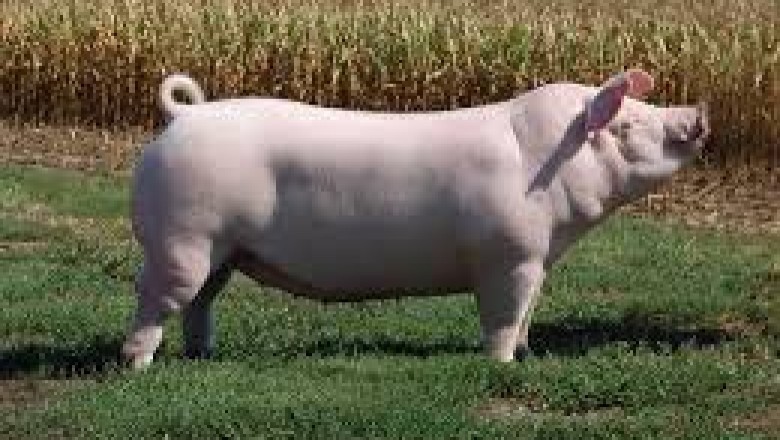

= Origins and History
The Chester White pig originated in **Chester County, Pennsylvania, USA**, in the early 1800s. Farmers in the region developed the breed by crossing local white pigs with imported **Large White (Yorkshire)** and possibly **Lincolnshire pigs** from England. The goal was to create a pig that was hardy, adaptable, and prolific—qualities that early American farmers needed to succeed.
The breed quickly gained recognition for its strong maternal traits and ability to thrive under various conditions. By the mid-1800s, Chester Whites were already being used to improve other pig breeds in the U.S. The **American Chester White Swine Record Association**, established in 1884, helped standardize and promote the breed.
Today, Chester Whites are widely used in commercial pork production, particularly as part of crossbreeding systems. Their genetics continue to strengthen the maternal side of many hybrid pig operations.
---
= Physical Characteristics
Chester White pigs are easy to identify due to their distinctive appearance:
* **Color:** Solid white skin and hair, with occasional small freckles on the skin.
* **Ears:** Medium to large, floppy, and drooping over the face.
* **Body Shape:** Long, deep-bodied, and muscular, with well-developed hams and shoulders.
* **Size and Weight:** Mature boars typically weigh 270–360 kg, while sows range from 230–320 kg.
Their sturdy frame and muscular build make them a dual-purpose pig—suited for both mothering and meat production.
---
= Temperament and Behavior
The Chester White is well known for its manageable temperament. Farmers often describe them as:
* **Docile and calm:** Easy to handle compared to more energetic breeds like Pietrain.
* **Durable and hardy:** They tolerate various climates and housing systems, including both indoor confinement and outdoor pasture.
* **Excellent mothers:** Chester White sows are especially prized for their maternal instincts, producing large litters and nurturing piglets effectively.
This calm and hardy nature makes Chester Whites a preferred choice for farmers who value low-maintenance animals.
---
= Meat Quality and Carcass Traits
While the Chester White is more renowned for its maternal ability than for its pork, it still produces good-quality carcasses with the following characteristics:
* **Lean meat:** Provides a good yield of lean cuts, though not as muscular as Pietrain or as marbled as Duroc.
* **Balanced carcass:** Offers a mix of leanness and tenderness, suitable for commercial markets.
* **Versatility:** Meat can be processed into a wide range of pork products, including fresh cuts, bacon, sausages, and hams.
For premium meat quality, Chester Whites are often crossed with breeds like Duroc or Berkshire, which enhance flavor and marbling.
---
= Growth and Production Traits
The Chester White is considered a **maternal breed**, meaning its greatest strength lies in reproduction and piglet-rearing rather than rapid growth. Key production traits include:
* **Litter size:** Sows consistently produce large litters, averaging 9–12 piglets.
* **Mothering ability:** Known for excellent nursing and protective behavior, ensuring high piglet survival rates.
* **Longevity:** Chester White sows can remain productive for multiple farrowings, reducing replacement costs for farmers.
* **Growth rate:** While not as fast-growing as Duroc pigs, Chester Whites achieve steady growth and reach market weight efficiently when crossed with other breeds.
Because of these traits, Chester Whites are highly valued in crossbreeding programs, where they serve as the **maternal foundation** of hybrid hog production.
---
= Health and Hardiness
Chester Whites are considered a durable and resilient breed, but they do have some challenges:
* **Sunburn sensitivity:** Due to their white skin, they are prone to sunburn when raised outdoors without adequate shade.
* **General hardiness:** Otherwise, they adapt well to various climates and housing systems.
* **Disease resistance:** Average compared to other breeds; standard vaccinations and biosecurity measures are important.
Overall, with proper management, Chester Whites are hardy and long-lived pigs.
---
= Farming and Management
When raising Chester White pigs, farmers should focus on:
1. **Housing:**
* Shade or indoor housing is essential to prevent sunburn in outdoor systems.
* Comfortable, clean, and well-ventilated pens support their health and productivity.
2. **Feeding:**
* A balanced diet of grains, protein sources (like soybean meal), vitamins, and minerals ensures optimal growth and reproduction.
* Sows require special nutritional management during gestation and lactation to support piglet development and milk production.
3. **Breeding Programs:**
* Chester Whites are often crossed with breeds like Duroc, Pietrain, or Hampshire to produce pigs that combine strong maternal traits with excellent meat quality.
* Many commercial pork operations rely on Chester White genetics in hybrid sows.
---
= Economic Value
Chester White pigs contribute to the pork industry in several ways:
* **Maternal lines:** Their greatest value lies in producing prolific and reliable sows for commercial crossbreeding systems.
* **Consistent pork supply:** Large litters and strong maternal instincts ensure steady production of market hogs.
* **Crossbreeding benefits:** Farmers benefit from hybrid vigor (heterosis) when Chester Whites are crossed with other breeds, resulting in healthier, faster-growing piglets.
Although they are not typically raised as a specialty meat breed, their role in sustaining large-scale pork production systems makes them economically significant.
---
= Role in Modern Pork Industry
Today, the Chester White is primarily used in **commercial crossbreeding programs**. Alongside Yorkshire and Landrace, it is one of the three main maternal breeds in the U.S. pork industry. Chester White sows serve as the foundation of many hybrid lines that supply pork worldwide.
Purebred Chester Whites are less common than in the past, but their genetics remain essential for maintaining reproductive efficiency in modern hog production. By combining their maternal strengths with the growth and meat quality traits of terminal sires like Duroc or Pietrain, farmers achieve pigs that balance productivity, efficiency, and pork quality.
---
= Conclusion
The **Chester White pig** may not always capture the spotlight like the Duroc or Berkshire, but its importance in global pork production cannot be overstated. With its origins in Chester County, Pennsylvania, the breed has built a reputation for durability, calm temperament, and—above all—exceptional mothering ability.
While not raised primarily for premium pork markets, Chester Whites underpin the modern pork industry by providing reliable sows that ensure large litters, healthy piglets, and efficient production. Through crossbreeding, they continue to shape the global pork supply, quietly supporting the success of commercial farming operations worldwide.
In short, the Chester White represents the backbone of sustainable pig production—hardy, dependable, and indispensable.
-










Comments
0 comment