



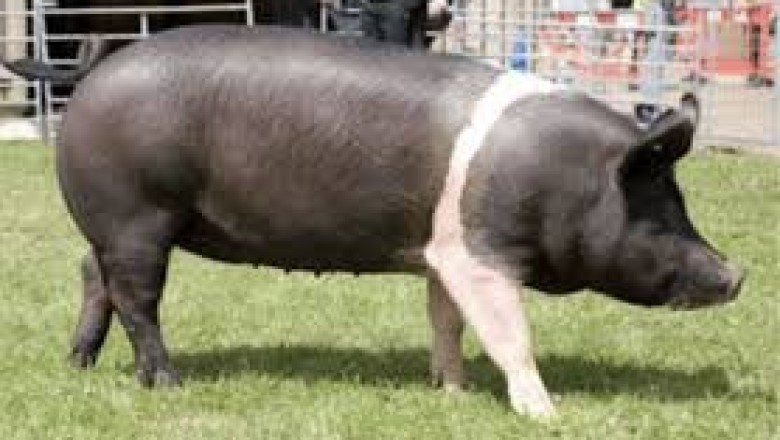

= History of the Hampshire Pig
The Hampshire pig has its origins in **southern England**, particularly the county of Hampshire. Black pigs with white belts were kept there as early as the 18th century. In the early 1800s, these pigs were exported to the United States, where they became firmly established and selectively bred to improve productivity.
By the mid-19th century, the breed was standardized and became one of the oldest recognized American pig breeds. Over time, the Hampshire spread globally, especially across Europe, Asia, and Africa, where it was valued for its adaptability and superior carcass traits.
Today, it remains one of the **four cornerstone breeds** of modern pork production (alongside Yorkshire, Landrace, and Duroc).
---
= Physical Characteristics
The Hampshire pig is easily identified thanks to its striking appearance and muscular body:
* **Color**: Black body with a distinctive white belt encircling the shoulders and covering the front legs.
* **Size**: Medium to large; boars weigh around 300–400 kg, and sows 250–350 kg.
* **Body Shape**: Muscular, deep-bodied, with a strong and slightly arched back.
* **Ears**: Upright and erect, giving them an alert look.
* **Legs**: Strong and straight, built to support rapid growth and large muscle mass.
This powerful frame contributes to their ability to produce high-yield carcasses.
---
= Temperament and Adaptability
Hampshire pigs are known for their **docile but active nature**, making them relatively easy to handle. They are adaptable to a variety of environments and farming systems, thriving both in intensive indoor systems and outdoor production.
One of their notable strengths is **hardiness**—Hampshires are resilient in different climates and less prone to some health issues compared to more delicate breeds. This makes them an excellent choice for farmers in diverse regions.
---
= Growth and Production Traits
Hampshire pigs are highly efficient and productive, making them ideal for commercial pork farming.
* **Growth Rate**: They grow quickly and can reach market weight (90–120 kg) in 5–6 months.
* **Feed Efficiency**: Hampshires are excellent feed converters, producing more muscle per kilogram of feed consumed.
* **Carcass Traits**: Known for their lean carcasses with high percentages of muscle, especially in the loin and ham regions.
* **Meat Quality**: Leaner than Duroc pork, with less intramuscular fat, but still tender and flavorful.
These traits make Hampshire pork highly desirable in markets that prioritize **lean, high-yield meat**.
---
= Breeding and Reproduction
Hampshire sows are decent breeders, though they are not as prolific as Yorkshire or Landrace.
* **Litter Size**: Average of **8–10 piglets** per litter.
* **Mothering Ability**: Good maternal instincts, with adequate milk production for litters.
* **Fertility**: Reliable breeders, but not typically used as maternal lines due to smaller litters compared to Landrace or Yorkshire.
Their breeding strengths are overshadowed by their carcass traits, which is why Hampshire pigs are primarily used as **terminal sires** in crossbreeding programs.
---
= Role in Crossbreeding Programs
Hampshire pigs are crucial in hybrid pig production, where crossbreeding maximizes **hybrid vigor (heterosis)**.
* **Terminal Sire Breed**: Hampshire boars are used to sire pigs destined for market, ensuring offspring with lean carcasses and excellent muscle yield.
* **Crossing with Landrace or Yorkshire**: Produces market hogs that combine good maternal traits with Hampshire’s growth and carcass quality.
* **Three-way Crosses**: In commercial operations, Hampshire genetics are often combined with Yorkshire and Duroc to optimize growth, feed efficiency, and pork quality.
This role has made Hampshire pigs indispensable in modern pork production.
---
= Feeding and Nutrition
Hampshire pigs, like other commercial breeds, require a **balanced diet** to perform optimally:
* **Energy**: Maize, barley, and wheat to fuel rapid growth.
* **Protein**: Soybean meal, fishmeal, or alternative protein sources for muscle development.
* **Minerals and Vitamins**: To support bone strength, reproduction, and immune function.
* **Water**: Abundant clean water, as rapid growers have high intake needs.
Because they are naturally efficient feed converters, Hampshires can produce lean carcasses without excessive fat even when fed generously.
---
= Health and Hardiness
Hampshire pigs are widely regarded as one of the **healthiest and hardiest pig breeds**.
* **Disease Resistance**: Higher natural resilience compared to more specialized breeds.
* **Low Mortality**: Piglets generally have good survival rates, thanks to the sow’s mothering abilities and the breed’s robustness.
* **Adaptability**: Perform well in diverse climates and farming systems.
This combination of hardiness and adaptability reduces veterinary costs and increases profitability for farmers.
---
= Economic Importance
The Hampshire breed is of immense value to the global pork industry:
* **Carcass Quality**: Their lean, muscular carcasses are highly valued in markets where low-fat pork is in demand.
* **Crossbreeding**: A cornerstone terminal sire breed, essential for producing efficient, fast-growing, and lean market pigs.
* **Profitability**: Their feed efficiency and carcass yield maximize farmer returns.
* **Global Reach**: Used extensively in North America, Europe, Asia, and Africa, particularly in hybrid pig systems.
Their economic contribution lies mainly in improving meat production efficiency and quality.
---
= Challenges in Raising Hampshire Pigs
While Hampshire pigs are excellent meat producers, they do come with challenges:
* **Lower Litter Size**: Produce fewer piglets than Yorkshire or Landrace sows.
* **Leaner Meat**: Some markets prefer more marbling (as in Duroc pork), so Hampshire meat may be considered too lean.
* **Nutritional Needs**: Require carefully balanced diets to maximize growth without structural issues.
* **Not Ideal Maternal Line**: Though they are good mothers, their smaller litters and milk yield mean they are less suited for breeding sows compared to other breeds.
Despite these limitations, Hampshires remain highly profitable when used in crossbreeding systems.
---
= Hampshire Pork in the Global Market
Hampshire pork is valued primarily for its **leanness and high carcass yield**. The breed produces:
* **Lean fresh cuts** such as pork chops, loins, and hams.
* **Processed pork** like bacon, sausages, and cured products, where lean meat is highly desirable.
* **Crossbred pork** when Hampshire boars are used in commercial systems, ensuring a balance of leanness and tenderness.
In markets where **low-fat pork** is preferred, Hampshire pork is especially popular.
---
= Conclusion
The **Hampshire pig** is a true workhorse of the pork industry, recognized worldwide for its lean carcasses, growth efficiency, and adaptability. With its striking black-and-white appearance, hardy constitution, and ability to sire high-quality market hogs, the Hampshire is a cornerstone of terminal sire programs.
Although it produces smaller litters compared to Yorkshire and Landrace, and its meat is leaner than Duroc, the Hampshire contributes something equally valuable—**consistency and efficiency in meat production**.
From its English roots to its global role today, the Hampshire pig remains one of the most important breeds in shaping modern pork production. Farmers seeking hardy pigs that deliver lean, profitable pork continue to rely on this iconic breed.










Comments
0 comment