



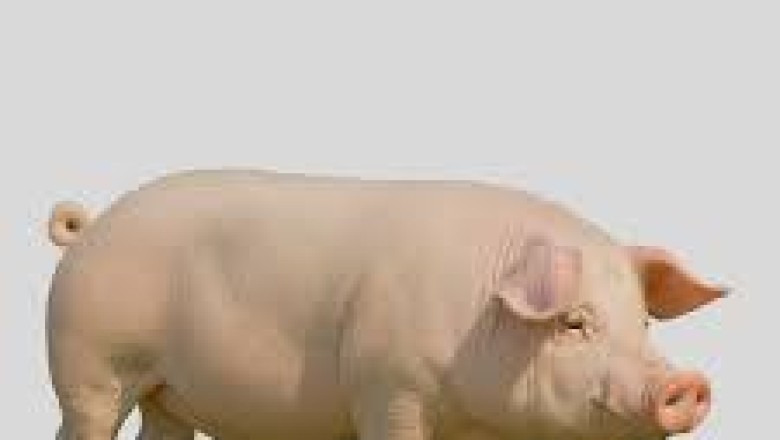

= History of the Yorkshire (Large White)
The Yorkshire breed originated in the **county of Yorkshire, England** during the mid-18th century. Farmers in the region aimed to improve local pig populations by breeding animals that were hardy, fast-growing, and capable of producing lean meat. The Large White was officially recognized in the late 1800s, and its reputation quickly spread across Europe and beyond.
By the early 20th century, Yorkshire pigs were exported widely, particularly to **North America, Asia, and Africa**, where they adapted to various climates and farming systems. Today, the Large White is considered one of the most important foundation breeds in the pork industry. It is commonly used in **crossbreeding programs** to enhance productivity and meat quality in other breeds.
---
= Physical Characteristics
The Yorkshire pig is easily identified by its distinct features:
* **Size**: True to its name, the Large White is a big-framed pig, with mature boars weighing between 300–450 kg and sows around 250–350 kg.
* **Color**: They are completely white, although some may have freckles or dark spots on the skin.
* **Ears**: Erect and medium-sized, giving them an alert appearance.
* **Body Shape**: Long, deep-bodied, and well-muscled, ideal for producing lean meat.
* **Legs**: Strong and straight, allowing them to carry their large frame effectively.
This combination of physical traits makes the Yorkshire highly suited for both intensive commercial farming and more traditional outdoor rearing.
---
= Temperament and Adaptability
Yorkshires are known for being **docile and manageable**, which makes them easier to handle compared to some other pig breeds. However, they are also active and curious animals. One of the reasons for their global popularity is their **adaptability**:
* They can thrive in **varied climates**, from the cold environments of Europe to the hotter conditions of Africa and Asia.
* They perform well in **intensive indoor production systems** and also adapt to outdoor or free-range systems.
This versatility ensures that Yorkshire pigs remain valuable to farmers worldwide.
---
= Growth and Production Traits
Yorkshire pigs are prized for their **rapid growth rate** and **efficient feed conversion**. They are capable of reaching market weight (about 90–120 kg live weight) in just 5–6 months, depending on feed quality and management.
=# Meat Quality
The Large White produces pork that is:
* **Lean** with minimal back fat.
* **Well-marbled**, making it tender and flavorful.
* **High-yielding**, meaning more usable meat per carcass compared to some traditional breeds.
This makes Yorkshire pork highly desirable in commercial markets where lean cuts and high meat yields are prioritized.
---
= Breeding and Reproduction
Yorkshire sows are some of the most prolific breeders in the pig world.
* **Litter Size**: They typically produce **10–12 piglets per litter**, though larger litters are not uncommon.
* **Mothering Ability**: Yorkshire sows are excellent mothers, known for their strong maternal instincts, high milk production, and ability to wean large numbers of piglets successfully.
* **Longevity**: They remain productive for multiple farrowing cycles, which reduces replacement costs for farmers.
For these reasons, Yorkshires are frequently used as the **maternal line** in crossbreeding programs, where their reproductive strengths are combined with the meat quality traits of other breeds.
---
= Role in Crossbreeding Programs
One of the most significant contributions of Yorkshire pigs is their role in **genetic improvement of global pig populations**. They are often crossed with other breeds to produce hybrids that combine the best traits.
* **Yorkshire × Landrace**: Produces sows with exceptional fertility and mothering ability.
* **Yorkshire × Duroc or Hampshire**: Produces market hogs with rapid growth, feed efficiency, and superior meat quality.
* **Three-way crosses**: Yorkshire sows are commonly bred to terminal boars from meat breeds, resulting in pigs optimized for pork production.
This hybrid vigor ensures commercial farmers get pigs that are efficient, healthy, and profitable.
---
= Feeding and Nutrition
Like all pigs, Yorkshires are **omnivores** and require a balanced diet for optimal growth and reproduction. Their diet usually consists of:
* **Cereal grains** (maize, barley, wheat) for energy.
* **Soybean meal or fishmeal** for protein.
* **Minerals and vitamins** to support bone health and immunity.
* **Green forage or root crops** in traditional systems.
Because of their large size and rapid growth, Yorkshires require nutrient-rich feed, but they also show **excellent feed efficiency**, meaning they produce more weight gain per kilogram of feed consumed compared to some other breeds.
---
= Health and Hardiness
Yorkshire pigs are considered **hardy and disease-resistant** compared to more delicate breeds. However, good husbandry practices remain essential:
* **Vaccination** against common pig diseases.
* **Parasite control** through regular deworming.
* **Proper housing** with adequate ventilation and hygiene.
* **Biosecurity measures** to prevent the introduction of new diseases.
Their ability to adapt to different conditions reduces mortality rates and makes them attractive for commercial operations.
---
= Economic Importance
The Yorkshire breed is the **most widely distributed pig breed in the world**. Its economic importance can be summarized as follows:
* **Foundation breed**: It serves as the genetic base for many commercial hybrid pigs.
* **High pork demand**: As global demand for lean, high-quality pork grows, Yorkshires remain central to supply.
* **Sustainability**: Their efficient feed-to-meat conversion reduces production costs and environmental impact.
* **Breeding stock**: Purebred Yorkshires are valuable for genetic improvement, and breeding companies invest heavily in maintaining strong bloodlines.
---
= Challenges in Keeping Yorkshire Pigs
While they are highly productive, there are some challenges associated with the breed:
* **Sunburn**: Due to their white skin, Yorkshires are prone to sunburn when raised outdoors in hot climates. Shade and mud wallows help mitigate this.
* **Size**: Their large frame requires more feed and space, which can increase production costs.
* **Intensive demands**: High-yield sows may require careful nutritional and health management to sustain large litters.
Farmers must address these challenges to ensure sustainable and profitable production.
---
= Yorkshire Pork in the Global Market
Yorkshire pork is in high demand across the globe. Lean cuts such as pork chops, loins, and hams are especially valued. In some markets, pork from Yorkshire crosses is processed into **sausages, bacon, and cured products**, while in others, fresh cuts dominate consumer demand. Their ability to provide both quality fresh meat and excellent processed pork makes the breed indispensable in the global pork industry.
---
= Conclusion
The **Yorkshire (Large White) pig** is more than just a breed—it is the foundation of modern pork production. Known for its size, adaptability, reproductive performance, and meat quality, the Yorkshire has earned its reputation as the “universal breed.” Whether raised in smallholder systems or massive commercial operations, Yorkshire pigs continue to deliver economic value and food security worldwide.
From its humble origins in 18th-century England to its dominance in the global pork market today, the Yorkshire remains a shining example of how selective breeding and adaptability can shape agriculture. For farmers seeking efficiency, productivity, and profitability, the Yorkshire pig stands tall as one of the best choices in pig farming.
-










Comments
0 comment