





=# 🌱 Origins and History
Sudan grass originated in the **Sudan region of Africa**, where it was first domesticated as a wild relative of sorghum. From there, it spread to **India, the Middle East, and later to the Americas** during the 20th century.
Its adaptability to dry and semi-arid regions made it a valuable crop for farmers in areas where traditional temperate grasses, like ryegrass or timothy, could not thrive. Today, Sudan grass and its hybrids (particularly **sorghum-sudan hybrids**) are cultivated globally across **Africa, Asia, North and South America, and Australia**, where it plays a key role in forage systems.
---
=# 🌾 Botanical Characteristics
Sudan grass is a **warm-season annual grass**, meaning it completes its life cycle in a single growing season. It grows upright in clumps and has slender stems and fine leaves.
**Key features include:**
* **Height:** 1.5 to 3 meters (5–10 feet) tall under favorable conditions.
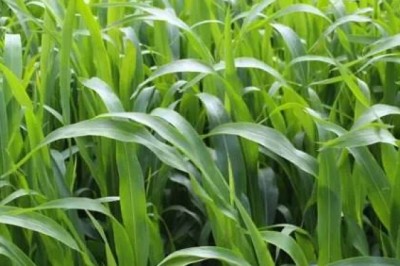
* **Leaves:** Long, narrow, and soft green blades similar to maize or sorghum.
* **Roots:** Deep and fibrous root system that enhances drought resistance.
* **Seed head:** A loose, open panicle that distinguishes it from the tighter heads of grain sorghum.
* **Regrowth:** Excellent regrowth ability after cutting or grazing.
These traits make Sudan grass a hardy and flexible forage option across a wide range of farming environments.
---
=# 🌿 Ideal Growing Conditions
Sudan grass thrives in **hot, sunny climates** and performs well where temperatures are too high for most temperate grasses.
**Optimal conditions include:**
* **Temperature:** 25°C–35°C for best growth (minimum 15°C for germination).
* **Rainfall:** 400–800 mm annually, though it can tolerate drought once established.
* **Soil:** Well-drained loamy to sandy soils; pH 5.5–7.5.
* **Sunlight:** Requires full sunlight for vigorous growth.
* **Altitude:** Grows well up to 1,800 meters above sea level.
Because of its adaptability, Sudan grass is particularly valuable in **semi-arid regions** where irrigation is limited.
---
=# 🌾 Planting and Cultivation Practices
**1. Land Preparation:**
The field should be well-prepared, weed-free, and fine-tilled to ensure even seed germination. Sudan grass is best planted at the start of the rainy season in rainfed systems.
**2. Seed Rate and Spacing:**
* **Seed rate:** 25–35 kg per hectare for broadcasting; 15–20 kg/ha for drilling.
* **Row spacing:** 30–45 cm for rainfed and 20–30 cm for irrigated systems.
* **Depth:** Sow seeds 2–3 cm deep.
**3. Sowing Time:**
* **Tropical regions:** Start of the wet season.
* **Temperate zones:** Late spring to early summer after frost danger has passed.
**4. Fertilization:**
Sudan grass responds well to nitrogen, which promotes lush vegetative growth.
* **Nitrogen:** 40–60 kg/ha after emergence and after each cut.
* **Phosphorus and Potassium:** Moderate applications improve root strength and disease resistance.
**5. Irrigation:**
Although drought-tolerant, Sudan grass benefits from supplemental irrigation during long dry periods for higher yields.
---
=# 🌿 Growth and Harvesting
Sudan grass is fast-growing and can be ready for the **first cut within 45–60 days** of sowing. It regrows quickly after cutting or grazing, allowing multiple harvests in one season.
**Cutting Management:**
* First cut: When the grass is about **1–1.2 meters** tall or before flowering.
* Subsequent cuts: Every 30–40 days depending on regrowth.
* Leave 10–15 cm of stubble to promote regrowth.
**Yield:**
* **Green fodder:** 40–80 tons per hectare (depending on soil and rainfall).
* **Dry matter (hay):** 8–15 tons per hectare.
It can provide **3–5 cuts per year** in irrigated systems, making it a reliable, high-yielding forage source.
---
=# 🐄 Nutritional Value and Livestock Benefits
Sudan grass offers **good nutritional quality**, especially when harvested at the pre-flowering stage. It is highly palatable to cattle, goats, and sheep.
**Average nutritional composition (dry matter basis):**
* **Crude Protein:** 9–14%
* **Crude Fiber:** 28–35%
* **Digestibility:** 55–65%
* **Total Digestible Nutrients (TDN):** 55–60%
**Livestock benefits:**
* Provides abundant and balanced green fodder during summer.
* Promotes milk production in dairy cattle due to its high succulence.
* Suitable for hay and silage, ensuring feed availability in the dry season.
* Excellent for rotational grazing and soil protection.
However, care must be taken during early growth or drought recovery periods because Sudan grass can accumulate **prussic acid (hydrogen cyanide, HCN)**, which is toxic to livestock. It is safest to graze or cut the grass **when it is at least 50 cm tall** and free from stress.
---
=# 🌾 Major Producing Regions
Sudan grass is cultivated widely across tropical and subtropical regions, including:
* **Africa:** Sudan, Ethiopia, Kenya, South Africa, Nigeria.
* **Asia:** India, Pakistan, China, Thailand.
* **North America:** United States and Mexico.
* **South America:** Brazil, Argentina.
* **Oceania:** Australia and New Zealand.
In these regions, it often forms part of mixed forage systems with legumes such as cowpea, lablab, or clover to enhance soil fertility and protein levels in animal feed.
---
=# 🌍 Economic and Agricultural Importance
Sudan grass is an **economically valuable crop** because of its high productivity and adaptability to poor soils and dry climates.
**Economic importance includes:**
* Reduces feed shortages in summer and drought periods.
* Provides cost-effective green fodder compared to commercial feeds.
* Contributes to higher milk and meat yields in livestock.
* Used in **sorghum–Sudan hybrids**, which produce even higher biomass and nutritional value.
* Its seeds are also traded as a forage crop commodity worldwide.
In many developing countries, Sudan grass is a cornerstone of **livestock resilience**, helping maintain animal health and production even in marginal environments.
---
=# 🌿 Sustainability and Environmental Benefits
Sudan grass supports **sustainable agricultural systems** due to its ability to thrive under limited inputs and challenging conditions.
**Sustainability advantages:**
* **Drought tolerance:** Maintains forage supply under water stress.
* **Soil improvement:** Dense root system enhances soil structure and reduces erosion.
* **Low fertilizer needs:** Can be integrated with legumes to minimize synthetic fertilizer use.
* **Carbon sequestration:** Adds organic matter to soil through root turnover and crop residues.
It is also used as a **cover crop** or **green manure**, suppressing weeds and improving soil fertility when plowed under.
---
=# ⚠️ Challenges and Limitations
Despite its resilience, Sudan grass presents a few management challenges:
1. **Prussic Acid (HCN) Poisoning:**
* Risk increases during drought or when young shoots regrow after wilting or frost.
* To prevent poisoning, avoid grazing when plants are below 50 cm in height or after frost.
2. **Nitrate Accumulation:**
* Over-fertilization with nitrogen or drought stress can cause excessive nitrate buildup, harmful to livestock.
3. **Short Growing Season:**
* As an annual, it requires reseeding each year unless intercropped or rotated.
4. **Waterlogging:**
* Sensitive to poorly drained soils.
5. **Pest and Disease Issues:**
* Susceptible to leaf blight, rust, and aphid infestations in humid conditions.
Proper management practices, including balanced fertilization and careful grazing timing, help overcome these challenges.
---
=# 🌾 Conclusion
Sudan grass stands as one of the most **versatile, resilient, and productive** forage crops for warm and dry regions. Its rapid growth, high biomass yield, and adaptability make it an invaluable component of livestock feeding programs, especially in drought-prone areas.
Whether used for **grazing, hay, or silage**, Sudan grass ensures consistent feed availability, soil protection, and agricultural sustainability. With proper management to avoid prussic acid risks, it continues to serve as a dependable green fodder source for farmers worldwide—an essential pillar in sustainable livestock systems. 🌿🐄🐐
---





Comments
0 comment