



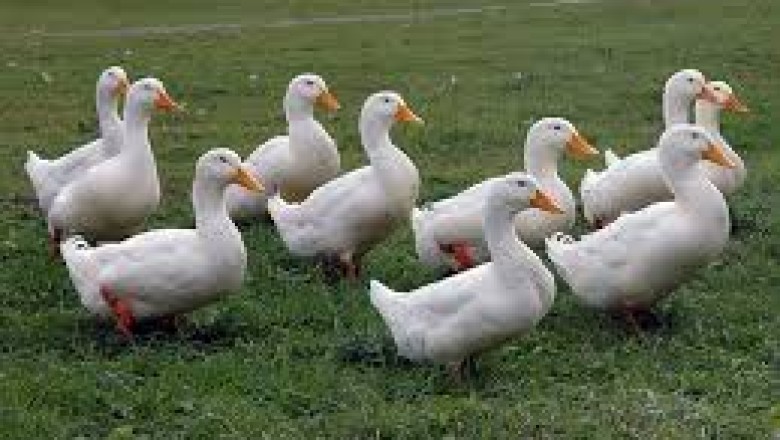

kin duck is prized for its rapid growth, tender meat, and adaptability, while also being a delightful addition to backyard flocks for small-scale farmers and hobbyists.
This article explores the history, characteristics, productivity, care requirements, and economic importance of the Pekin duck.
---
= Origins and History
The Pekin duck has its roots in **China**, where ducks have been domesticated for over 2,000 years. In fact, the Pekin is a direct descendant of the mallard, selectively bred for larger size and white plumage.
In the mid-1800s, Pekin ducks were exported from China to Europe and North America. In **1873**, a group of Pekin ducks arrived in the United States, and their popularity quickly spread due to their fast growth, white feathers (which produce clean carcasses), and flavorful meat.
Today, the Pekin duck is the **most common commercial meat duck** in the U.S., responsible for the majority of duck meat consumed. It remains equally significant in Asia and Europe.
---
= Physical Characteristics
The Pekin duck is instantly recognizable and has several distinctive features:
1. **Plumage** – Bright white feathers, which make them easy to spot and desirable for meat production, as pinfeathers are less visible on carcasses.
2. **Body Shape** – Large, broad, and sturdy with a slightly upright carriage. They have a full, rounded breast and a deep body that makes them excellent meat birds.
3. **Bill and Legs** – They have orange bills and legs, contrasting with their white feathers.
4. **Weight** –
* Adult drakes (males): 4–5 kg (8–11 lbs)
* Adult ducks (females): 3.5–4 kg (7–9 lbs)
5. **Lifespan** – On average, Pekin ducks live **5–9 years** when raised in backyard settings, though commercial meat birds are typically harvested at 7–9 weeks.
---
= Temperament and Behavior
Pekin ducks are known for being **calm, hardy, and friendly** birds, making them suitable for both commercial and small-scale settings.
* **Docile Nature** – They are generally gentle and easy to manage, making them excellent for beginners.
* **Social Birds** – Pekins thrive in groups and are happiest when kept in flocks.
* **Active Foragers** – They enjoy foraging in grassy areas, eating insects, slugs, and plants, which helps supplement their diet.
* **Noisy** – They can be fairly vocal, with females quacking loudly, while drakes have softer raspy voices.
---
= Egg Production
Although Pekin ducks are primarily raised for meat, they also produce a fair number of eggs:
* **Eggs per Year**: 150–200 eggs under good management.
* **Egg Size**: Large, weighing 70–90 grams.
* **Egg Color**: White to off-white.
While not as prolific as specialized egg-laying ducks like the Khaki Campbell, Pekins are capable of supplying a family with a steady source of eggs.
---
= Meat Production
The Pekin duck’s greatest strength lies in its role as a **meat bird**:
* **Fast Growth** – They reach market weight in **7–9 weeks**, making them ideal for commercial production.
* **Carcass Quality** – With their white feathers and meaty bodies, they dress cleanly, yielding tender, flavorful meat.
* **Meat Profile** – The meat is juicy, slightly fattier than chicken, and rich in flavor. It is widely used in Asian cuisine, French dishes, and modern gourmet cooking.
One of the most famous culinary uses is **Peking Duck**, a Chinese delicacy that has been enjoyed for centuries.
---
= Care and Management
Pekin ducks are relatively hardy and easy to raise, but they have specific needs to ensure good health and productivity.
=# Housing
* Ducks need a secure shelter to protect them from predators and weather.
* Provide at least **4–6 square feet of space per bird** indoors, with dry bedding such as straw or wood shavings.
* Ventilation is essential, but avoid drafts.
=# Feeding
* A commercial waterfowl or poultry feed works well.
* Ducklings should be started on **high-protein starter feed (20–22%)** for the first 2–3 weeks, then switched to grower feed.
* Adults do well on **16–18% protein feed**.
* Supplement with greens, vegetables, and free-ranging opportunities.
=# Water Needs
* Ducks must have access to clean drinking water deep enough to dunk their bills.
* While they love ponds, small backyard pools or water troughs are sufficient.
* Swimming water isn’t required but helps keep feathers in good condition.
=# Health Considerations
* Pekins are generally hardy, though they can suffer from **leg problems** due to their rapid growth and heavy weight. Providing proper nutrition and avoiding slippery flooring helps.
* Protect them from parasites like lice and mites, though these are less common in ducks than chickens.
* Vaccination and biosecurity measures may be necessary in larger operations.
---
= Climate Adaptability
* **Cold Weather** – Pekins tolerate cold well if kept dry and provided with shelter. Their thick plumage helps insulate them.
* **Hot Weather** – They are more sensitive to heat stress. Provide plenty of shade and fresh water to prevent overheating.
---
= Breeding and Broodiness
Pekin ducks are not known for broodiness, meaning they rarely sit on their eggs. For breeding, artificial incubation or broody ducks of other breeds are often used.
* **Fertility** – Drakes mate readily, and fertility rates are generally good when maintained in proper ratios (1 drake for every 4–6 hens).
* **Incubation** – Pekin duck eggs take about **28 days to hatch** under an incubator or broody hen.
---
= Economic Importance
The Pekin duck plays a crucial role in the poultry industry:
1. **Commercial Meat Production** – The primary duck breed used in large-scale duck farming worldwide.
2. **Eggs** – While secondary, their eggs are valuable for home use or local sales.
3. **Cultural Cuisine** – Central to dishes like Peking Duck in China and Confit de Canard in France.
4. **Backyard Farming** – Popular among hobby farmers for meat, eggs, and ornamental value.
---
= Advantages of Pekin Ducks
1. Rapid growth and high meat yield.
2. Clean, attractive appearance due to white plumage.
3. Hardy and adaptable to various climates.
4. Calm, friendly temperament suitable for beginners.
5. Dual-purpose potential for both eggs and meat.
---
= Challenges of Pekin Ducks
1. Not naturally broody — need incubators for breeding.
2. Heavy weight may cause leg strain in older birds.
3. Noisier than some other breeds.
4. Require plenty of water access for health and comfort.
5. Shorter lifespan in commercial operations due to fast growth.
---
= Conclusion
The **Pekin duck** stands as one of the most important and iconic waterfowl breeds in the world. From its ancient roots in China to its dominance in global duck farming today, the breed has earned its reputation as the ultimate meat duck. With their rapid growth, excellent carcass quality, and calm disposition, Pekins are ideal for both large-scale commercial production and small-scale backyard flocks.
While they may not be the top










Comments
0 comment